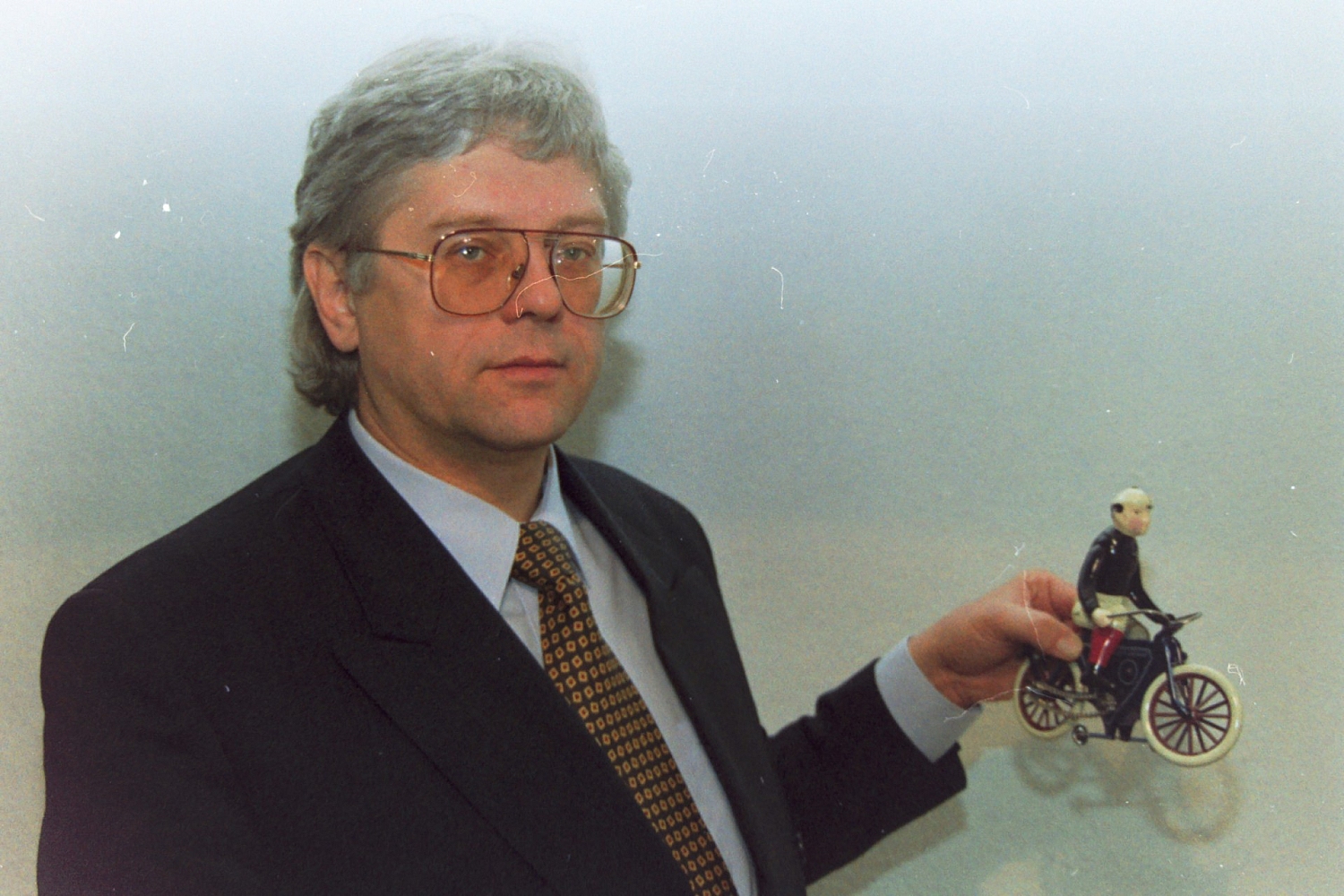
Brandenburg an der Havel, Germany – The story of Ernst Paul Lehmann’s once-thriving toy factory is a poignant reminder of how even innovative spirit and a last-ditch effort to revive a struggling business can be undone by the tides of history. A final, limited production run of mechanical cyclists, assembled from salvaged parts in the twilight years of the factory, ultimately failed to prevent its closure, a fate sealed by post-war political and economic shifts. The tale of these “Null Series” cyclists, and the eventual dismantling of Lehmann’s legacy, offers a fascinating glimpse into the challenges faced by German industry in the 20th century.
Ernst Paul Lehmann, born in Berlin in 1856, was a pivotal figure in the German toy industry. Starting with a patented metal container, he co-founded the Blechspielwaren-Fabrik von Lehmann & Eichner in Brandenburg in 1881. The company quickly gained international recognition for its ingenious, mechanically-driven tin toys – cars, airplanes, and figures that captured the imagination of children and reflected the technological advancements of the era. Lehmann’s factory became a significant employer in Brandenburg, employing as many as 800 people at its peak. Beyond business, Lehmann was actively involved in the community, serving as a city councilor from 1900 to 1927 and receiving the honorary title of Kommerzienrat in 1904.
The Last Ride: A Desperate Attempt at Revival
As the political and economic landscape of Germany shifted in the mid-20th century, Lehmann’s factory faced increasing difficulties. The period between the World Wars brought economic instability, and the rise of National Socialism further complicated matters. Following World War II, Brandenburg fell within the Soviet occupation zone, and the factory was nationalized in 1948, becoming VEB Mechanische Spielwaren Brandenburg. Despite this change in ownership, the legacy of Lehmann’s innovation continued, albeit under different management.
However, a fascinating chapter unfolded in the factory’s final years. Before its complete liquidation, efforts were made to salvage what remained of the business. Tools were prepared for the production of the iconic Lehmann mechanical cyclists, a design originally produced between 1914 and 1941. Johannes Reichenwallner, upon assuming his role, discovered only a single completed cyclist and boxes of disassembled parts. Recognizing the potential historical and collectible value, he ordered the parts to be secured and assembled. The assembly process wasn’t without its flaws; both upper arms of the cyclists bore a punch-hole defect, a testament to the hurried and desperate nature of the operation.
211 of these mechanical cyclists were sold through the factory’s retail outlet. Each cyclist was individually numbered with a small plaque and came with a certificate of authenticity personally signed by the liquidator. This limited “Null Series” production was exclusively sold within the Lehmann’s Jugendstil villa, a stunning example of Art Nouveau architecture that Lehmann had commissioned. The villa itself, designed by Bruno Möhring and featuring contributions from artists like Otto Stichling and Max Laeuger, stands as a lasting monument to Lehmann’s success and aesthetic sensibilities.
A Collector’s Item and a Lost Legacy
At the time, these cyclists were sold for a considerable sum of 295 Marks. Today, original pieces from the Lehmann production command prices averaging around 200 Euros among collectors. The value reflects not only the craftsmanship and historical significance of the toys but also the story of a company that once defined an era of German innovation. The museum in Brandenburg holds a significant collection of Lehmann’s toys, with around 400 objects representing a large portion of the factory’s entire product range. This collection is considered one of the most comprehensive of its kind in Germany.
However, the possibility of recreating these iconic toys after German reunification was tragically lost. In the early 1980s, the VEB Mechanische Spielwaren, under pressure from the state to provide scrap metal, scrapped the original tooling used to manufacture the cyclists. This decision effectively extinguished any hope of resuming production using the original methods. While reproductions have surfaced, selling for as little as 40 Euros online, they lack the authenticity and historical weight of the original Lehmann-produced pieces.
The Fate of the Factory and Lehmann’s Enduring Impact
The story of Lehmann’s factory underscores the fragility of even the most successful businesses in the face of political upheaval and economic pressures. The factory’s nationalization and subsequent dismantling represent a broader pattern of industrial disruption that affected many German companies in the aftermath of World War II. Despite the factory’s closure, the Lehmann name lived on. The family successfully restarted production in Nuremberg in 1950, continuing the tradition of creating high-quality tin toys under the name Ernst Paul Lehmann Patentwerk.
Ernst Paul Lehmann himself passed away in 1934, leaving behind a legacy of innovation and entrepreneurship. He also demonstrated a commitment to his community, donating the Frey-Haus to the Historical Association of Brandenburg in 1912, which was later transformed into the city’s Heimatmuseum (local history museum) in 1923. He was also a member of the Brandenburger Freimaurerloge Friedrich zur Tugend, highlighting his involvement in civic and social organizations.
Key Takeaways
- Ernst Paul Lehmann was a pioneering figure in the German toy industry, founding a company that became internationally renowned for its innovative tin toys.
- A final attempt to revive the factory involved the production of a limited “Null Series” of mechanical cyclists, which ultimately failed to prevent its closure.
- The original tooling for these cyclists was scrapped in the 1980s, making authentic pieces highly sought after by collectors.
- Lehmann’s legacy extends beyond his business ventures, encompassing his contributions to the community and his patronage of the arts.
The story of Ernst Paul Lehmann and his factory serves as a compelling case study in the challenges of navigating economic and political change. While the factory itself may be gone, the enduring appeal of his toys and the architectural beauty of his villa ensure that his legacy will continue to inspire for generations to come. The ongoing preservation of Lehmann’s toys at the Brandenburg museum offers a tangible link to a bygone era of German craftsmanship and ingenuity. Further research into the Lehmann family archives, currently held by descendants, may reveal additional insights into the company’s history and its impact on the toy industry.
The future of Lehmann’s brand remains a topic of interest for collectors and historians alike. Any potential developments regarding the family’s continued production or the preservation of historical artifacts will undoubtedly be closely watched. Share your thoughts on this fascinating story in the comments below, and be sure to share this article with anyone interested in the history of German industry and the enduring appeal of classic toys.
Worth a look