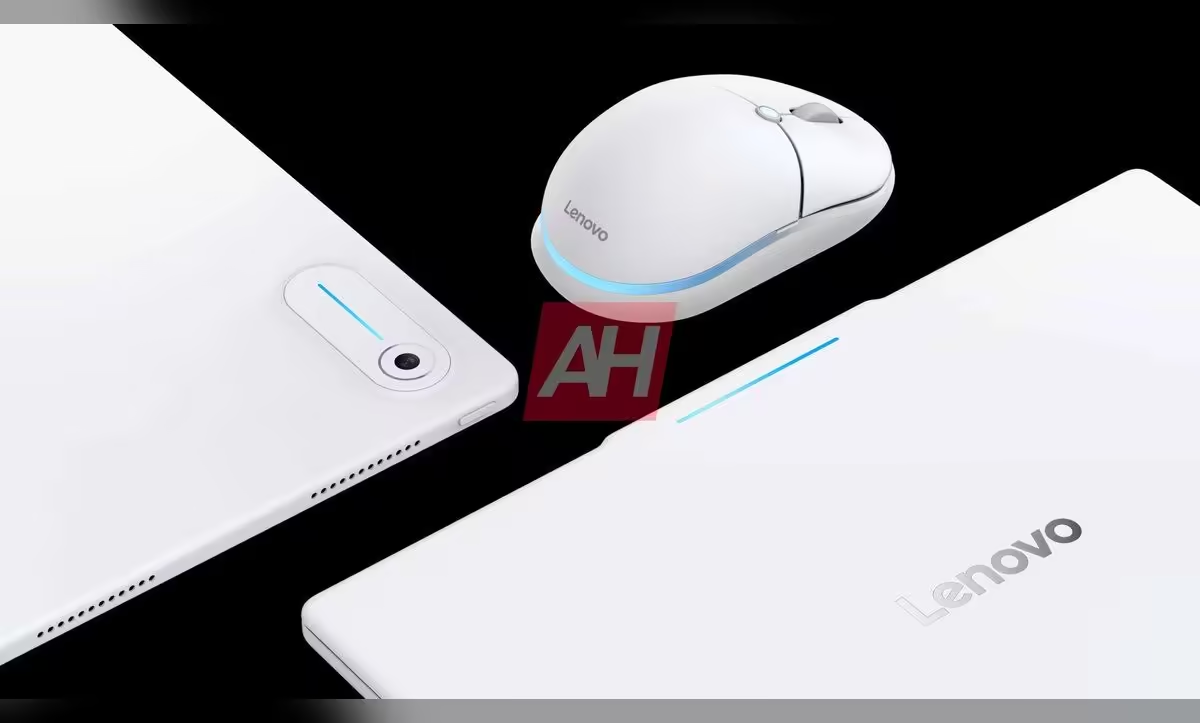
Lenovo expanded its hardware portfolio with the rollout of two new portable computers, a two-in-one convertible tablet, and an artificial intelligence-powered mouse, according to recent product announcements and industry reports. The hardware lineup targets mobile productivity and creative workflows, bringing updated processing hardware and peripheral automation tools to consumer markets.
As the computing industry shifts toward integrated on-device machine learning, manufacturers are updating traditional form factors with dedicated hardware keys and functional software enhancements. Linda Park, technology editor at World Today Journal, examines the specifications and ecosystem impact of Lenovo’s latest device refresh, drawing on hardware disclosures and verified product sheets.
The newly unveiled hardware ecosystem is designed to address diverse user segments, ranging from mobile professionals requiring extended battery life to creative workers needing versatile stylus input. With competition intensifying across the portable PC and peripheral sectors, these releases underscore how hardware manufacturers are embedding AI capabilities directly into everyday desktop tools.
Lenovo Portable Computers and Convertible Form Factors
The centerpiece of the hardware release includes two distinct portable computers built for mobile multitasking. According to official product specifications released by Lenovo, these laptops feature updated multi-core processors, expanded memory configurations, and high-resolution displays designed to reduce eye strain during prolonged use. The chassis designs prioritize thermal efficiency while maintaining thin profiles suitable for frequent travelers.
Alongside the traditional clamshell portables, Lenovo introduced a versatile two-in-one tablet that bridges the gap between laptop productivity and slate-style media consumption. The device utilizes a 360-degree hinge mechanism, allowing users to transition seamlessly between tent, stand, tablet, and laptop modes. Support for active stylus input enables precise digital sketching and note-taking, making the convertible appealing to students and design professionals alike.
Connectivity options across the portable computers and the tablet include multiple USB Type-C ports, Wi-Fi 7 compatibility in select regions, and advanced security features such as hardware-backed fingerprint readers and infrared cameras for facial recognition login. Pricing and regional availability vary by configuration, with initial rollouts scheduled across major global markets.
Integrating Artificial Intelligence Into Everyday Peripherals
Beyond core computing hardware, Lenovo introduced an innovative AI mouse designed to streamline productivity tasks through dedicated software integration. According to hardware documentation, the peripheral features a physical button that triggers voice-to-text dictation, automated translation services, and quick access to generative AI assistants.
The shift toward smart peripherals reflects broader industry trends in human-computer interaction. By offloading repetitive typing and search tasks to a dedicated mouse button, manufacturers aim to reduce friction in daily administrative workflows. Software companions accompanying the mouse require compatible operating systems and active internet connections to process cloud-based language models efficiently.
Industry analysts note that while AI-enabled accessories are gaining traction, user adoption will depend heavily on software reliability, privacy safeguards, and battery longevity for wireless models. Lenovo has integrated security protocols to ensure that voice data transmitted via the peripheral complies with regional data protection standards.
Market Context and What Happens Next
Lenovo’s hardware additions arrive as the global PC market stabilizes following post-pandemic fluctuations. Competitors have similarly introduced specialized laptops and smart accessories equipped with dedicated neural processing units to handle local AI workloads without draining battery reserves.
Consumers looking to purchase the new portables, two-in-one tablet, or AI mouse can monitor official Lenovo regional web portals for local release dates, exact pricing tiers, and authorized retail partner availability. Official product support pages and user manuals will provide ongoing updates regarding firmware enhancements and software driver compatibility as devices ship to early buyers.
What are your thoughts on integrating artificial intelligence directly into computer mice and portable laptops? Share your insights and join the discussion in the comments below.
Worth a look