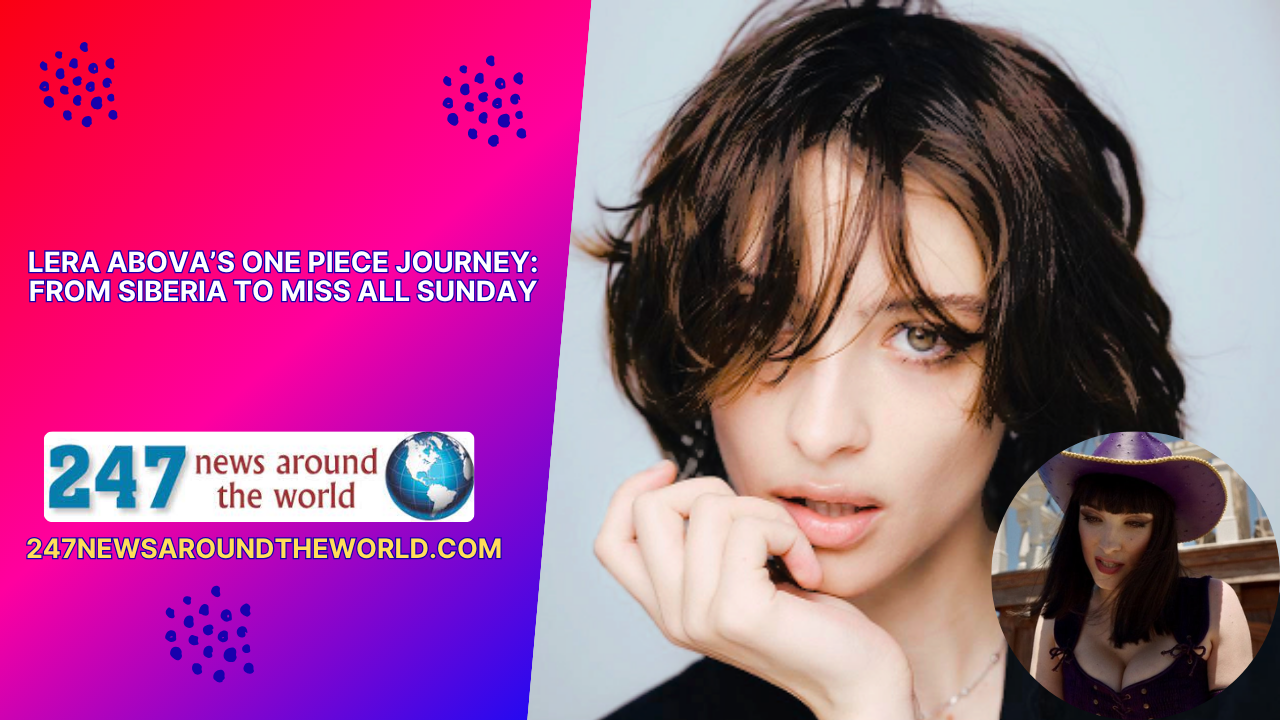
The casting of a live-action adaptation for a global phenomenon like One Piece always invites intense scrutiny, but few roles have sparked as much conversation as that of Nico Robin. The announcement that Russian and German actress and model Lera Abova will step into the role for the second season of Netflix’s adaptation has ignited a complex dialogue online, blending excitement for the character’s portrayal with geopolitical tensions.
For fans of the series, the casting of Lera Abova represents a bridge between the fictional world and reality. Nico Robin, known as “Miss All Sunday” in her early appearances, is a character defined by her intellect, her tragic history of societal rejection and her search for belonging. Abova’s own life story—marked by a move from the depths of Siberia to Western Europe—mirrors the themes of displacement and resilience central to Robin’s journey.
Standing 175 cm tall and fluent in Russian, German, and English, Abova brings a versatile international background to a role that requires both a commanding presence and a nuanced emotional depth. Her transition from the high-fashion runways of Europe to the screen is a trajectory that reflects the very adaptability the character of Nico Robin must employ to survive in a world that feared her abilities.
As the production moves forward, the discourse surrounding Abova’s casting highlights a broader tension in the entertainment industry: the struggle to separate an artist’s nationality from their professional contribution, especially when the character’s own origins—confirmed by author Eiichiro Oda as Russian—craft the casting choice logically sound.
From Slavgorod to the Global Stage
Lera Abova, born Valeria Smirnova on November 4, 1992, grew up in the village of Slavgorod in Siberia Wikipedia. In her own words, the village was “so small they don’t have it on the map,” a detail that underscores the isolation and humility of her early years. This sense of being an outsider was amplified when she moved to Germany at the age of 13.

The transition was not seamless. Arriving in a country where she did not speak the language, Abova relied on an electronic translator to communicate. She has spoken about the struggle to connect with schoolmates, citing both the language barrier and her different cultural background as significant hurdles. During this period, she embraced a distinct personal style, often wearing a pink Pokémon T-shirt and sporting “crazy, long hair.”
Despite these early challenges, Abova eventually mastered the German language and built a social circle. However, her academic path took an unconventional turn; she dropped out of school before her final exams at the age of 18 or 19 Wikipedia. This period of instability and self-discovery set the stage for her entry into the professional world of fashion.
Her career trajectory shifted dramatically in 2016 when she was discovered by David Sims. This encounter launched her as a fashion model, leading to collaborations with renowned photographers such as Mariano Vivanco and Colin Dodgson. Her striking look quickly caught the attention of Vogue stylists globally, and she spent the first two years of her career appearing in numerous advertising campaigns and working with agencies including Select Model Management, Oui Management, and Fabbrica Milano Management.
Transitioning to Acting and the Path to One Piece
Whereas modeling provided her with global visibility, Abova sought to expand her artistic range. In 2017, she made a significant leap into acting when Luc Besson cast her as Maude in the film Anna, starring alongside Sasha Luss Wikipedia. This role served as a catalyst, moving her from the static world of photography into the dynamic environment of cinema.
Following her debut, Abova continued to build her portfolio, often appearing in low-budget indie films KBIZOOM. Her filmography has since expanded to include roles in Pitch Perfect: Bumper in Berlin, where she played Thea, as well as upcoming projects such as Exterritorial (2025) and Honey Don’t! (2025) IMDb.
The casting of Abova as Nico Robin in the second season of Netflix’s One Piece is perhaps her most high-profile role to date. For the production, the choice of Abova is not merely about aesthetic alignment. In the original manga and anime, author Eiichiro Oda stated that Nico Robin’s nationality is Russian. By casting a Russian-born actress, Netflix is adhering to the source material’s internal logic, providing an authentic cultural grounding for the character.
The role of Nico Robin is demanding; she is an archaeologist and the only person capable of reading the Poneglyphs, the ancient stones that hold the secret to the world’s true history. Her character arc is defined by a lifetime of solitude and the trauma of being hunted by the World Government. Abova’s own experiences with cultural isolation and the challenges of adapting to a foreign environment may provide the emotional depth necessary to portray Robin’s guarded nature and eventual trust in the Straw Hat crew.
Navigating Geopolitical Backlash and Fan Support
The announcement of Abova’s casting did not come without controversy. In an era of heightened geopolitical tensions, the choice of a Russian actress has sparked heated debates on social media platforms, particularly X (formerly Twitter) KBIZOOM.
Some critics have argued that casting a Russian national in a major production implicitly supports the Russian government, leading to the emergence of the #CancelLeraAbova campaign. These critics have targeted Abova not for her acting ability or her suitability for the role, but for her nationality, reflecting the way global political conflicts often bleed into the realm of popular culture.
Conversely, a significant portion of the One Piece community has rallied in defense of the actress. Supporters argue that targeting an individual based on their place of birth is discriminatory and contrary to the very themes of the series. One Piece frequently explores the idea that an individual’s character is not defined by their origin or the government they were born under, but by their actions and their bonds with others.
Many fans have pointed out that because the character of Nico Robin is explicitly Russian, casting Abova is a commitment to accuracy. This defense emphasizes a distinction between a state’s political actions and the identity of an artist, suggesting that the “outrage” is misplaced when directed at a professional actress performing a role that aligns with her heritage.
Key Facts: Lera Abova’s Profile
| Category | Details |
|---|---|
| Birth Name | Valeria Smirnova |
| Date of Birth | November 4, 1992 |
| Origin | Slavgorod, Altai Krai, Russia |
| Height | 1.75 m (5 ft 9 in) |
| Languages | Russian, German, English |
| Key Roles | Nico Robin (One Piece), Maude (Anna), Thea (Bumper in Berlin) |
What This Means for the Future of the Series
The casting of Lera Abova suggests that Netflix is prioritizing a blend of physical accuracy and cultural authenticity for the second season of One Piece. As the story moves into the Alabasta arc, the introduction of Nico Robin—first appearing as the mysterious Miss All Sunday—will be a pivotal moment for the narrative. The character’s transition from an antagonist to a trusted ally requires an actress who can convey a sense of mystery and hidden vulnerability.
the reaction to Abova’s casting serves as a case study in the complexities of modern global casting. It highlights the tension between “representative casting” (matching a character’s stated nationality) and the political pressures associated with specific nationalities in the current global climate.
For Abova, the role represents a culmination of a journey that began in a small Siberian village. From using an electronic translator to survive in a German school to performing for a global audience on one of the world’s largest streaming platforms, her path mirrors the resilience and adaptability of the character she now portrays.
As production continues, the focus will likely shift from the politics of her casting to the quality of her performance. The One Piece community remains divided, but the overarching hope is for a portrayal of Nico Robin that honors the depth and complexity of the original character.
The next major checkpoint for fans will be the official release of the second season of One Piece on Netflix, which will provide the first look at Abova’s portrayal of Nico Robin. We encourage our readers to share their thoughts on the casting and the intersection of art and geopolitics in the comments section below.