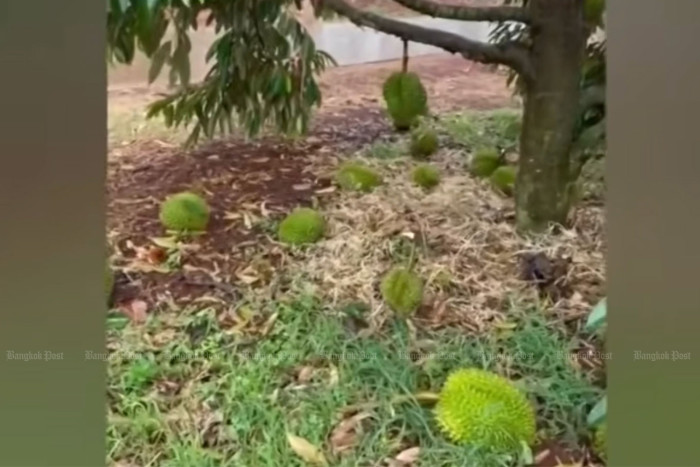
Severe weather has struck Thailand’s eastern Si Sa Ket province, causing significant damage to durian orchards just days before the anticipated harvest season. Local officials reported on Thursday that a summer storm battered plantations in the Kantharalak district, toppling hundreds of trees and destroying substantial quantities of the fruit.
The storm’s impact comes at a critical time for durian farmers, as the crop represents one of Thailand’s key agricultural exports and a major source of income for rural communities in the region. With harvest imminent, the timing of the weather event has exacerbated concerns about both immediate losses and longer-term effects on supply chains.
According to assessments by local agricultural authorities cited in regional news reports, the financial toll from the storm has reached approximately 39 million baht. This figure encompasses direct damage to trees, lost fruit yield, and associated cleanup costs affecting numerous smallholder farms across the affected area.
The durian variety predominantly grown in Si Sa Ket is known locally as “lava durian,” prized for its rich, creamy texture and distinctive flavor profile. This specialty cultivar has been promoted in recent years as part of provincial efforts to attract agricultural tourism and differentiate the region’s produce in competitive markets.
Efforts to assess the full scope of damage are ongoing, with agricultural extension officers conducting field surveys to determine which trees might recover and which will require replanting. Recovery timelines for durian orchards can extend several years, given the tree’s sluggish maturation period before it begins bearing fruit again.
Provincial officials have indicated they are exploring potential support measures for affected farmers, though specific details of any assistance programs have not yet been finalized. The incident highlights the vulnerability of perennial crops to extreme weather events, particularly in regions where agricultural diversification remains limited.
As climate patterns continue to shift, increasing attention is being paid to resilience strategies for fruit orchards, including improved drainage systems, windbreak plantings, and early warning systems designed to mitigate damage from seasonal storms.
The situation in Si Sa Ket serves as a reminder of the interconnected risks facing agricultural producers worldwide, where localized weather events can have outsized economic consequences for communities dependent on specific cash crops.
For ongoing updates on agricultural conditions and recovery efforts in Thailand’s eastern provinces, readers are encouraged to consult official bulletins from the Thai Ministry of Agriculture and Cooperatives.
We welcome your thoughts and experiences regarding agricultural resilience in the face of changing weather patterns. Please share your perspectives in the comments below, and consider sharing this article to help inform others about the challenges facing food producers globally.
Related reading