Lesotho Highlands Water project: Navigating Delays and Ensuring Enduring Development
The Lesotho Highlands Water Project (LHWP), a critical infrastructure undertaking for both Lesotho and South Africa, is facing familiar challenges common to large-scale developments: compensation complexities, environmental management, and construction delays.This article provides an in-depth look at the current status of the Polihali Dam component, outlining progress, hurdles, and mitigation strategies. As experienced engineers and project managers intimately familiar with similar undertakings, we’ll break down the key issues and what they mean for the future of this vital project.
A Notable Undertaking, A Complex Landscape
The Polihali Dam is designed to augment water supply to South Africa while simultaneously providing hydroelectric power and socio-economic benefits to lesotho.Though, realizing these benefits requires careful navigation of a complex landscape – both physical and social.
Resettlement & Compensation: To date, over 7,200 community assets have been expropriated. Nearly 5,600 have been compensated with M154 million disbursed. Challenges Remain: Delays in outstanding payments are frequently linked to issues with land ownership documentation,family disputes,and lack of access to banking facilities. The movement of beneficiaries to South Africa for employment also contributes to processing bottlenecks.
Environmental Stewardship: A core Priority
beyond resettlement, responsible environmental management is paramount.The Matla a Metsi Joint Venture, overseeing the dam construction, is diligently tracking and mitigating environmental impacts.
Waste Management: Contractors have generated 20,500 litres of waste oil, 9,000 kilograms of hazardous waste, and 34,000 cubic metres of wastewater. Over 49 tonnes of general waste have been diverted to landfill.
Community Concerns & Monitoring: Local communities have raised concerns regarding dust, noise, air pollution, and water quality. 40 environmental incidents have been reported, none deemed significant, and are currently under active monitoring.Construction Delays: Addressing the Root Causes
Despite diligent efforts, the project timeline has experienced setbacks.Initial delays occurred during site establishment,impacting excavation,tunnelling,and spillway construction.
Dam Wall Progress: As of late August, only 44 of the 87 interior plinth blocks – crucial for dam wall stability – were completed. Grouting of the external plinths has yet to commence. Revised Timeline: Water impoundment, initially planned for January 2025, is now projected for November 2026. Full project completion is anticipated between August and September 2029.
Bridging the Gap: Critical Infrastructure Development
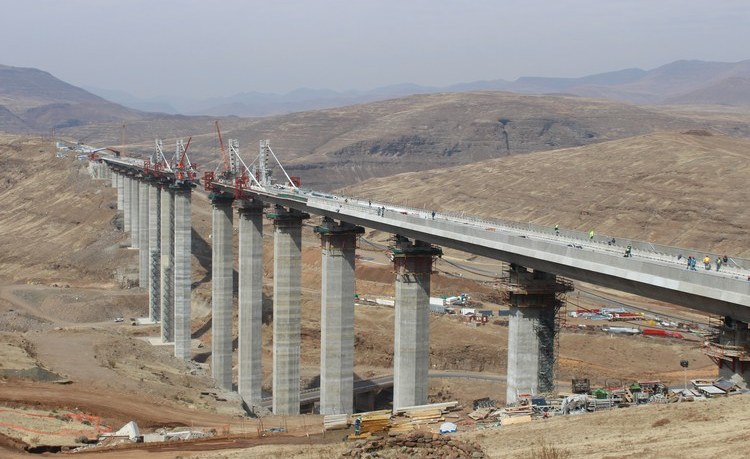
To maintain road access across the future reservoir,three major bridges – Senqu,Khubelu,and Mabunyaneng – are under construction. The existing A1 Road crossings will be submerged once the reservoir fills.
Senqu Bridge: A Landmark Achievement: The senqu Bridge, the largest and most complex of the three, represents a significant engineering feat. It will span 825 metres at a height of 90 metres, costing M2.3 billion.
International Collaboration: Construction, awarded to the WRES Senqu Bridge Joint Venture (Lesotho, South Africa, Italy, Austria, and France), began in late 2022. Completion is now expected in February next year, a delay from the original November 2025 target.
Overcoming Obstacles: Early delays were attributed to design modifications, operational challenges, severe weather, labor disputes, and localized community blockages. However, the bridge is engineered to withstand both floods and seismic activity, ensuring a lifespan of at least a century.
Khubelu & Mabunyaneng Progress: The two smaller bridges, Khubelu and Mabunyaneng, are approximately two-thirds complete.
Expanding Capacity: The Polihali-Katse Transfer Tunnel
A 38-kilometre transfer tunnel is being constructed to connect the Polihali Dam to the existing katse Dam. This will increase the volume of water transferred to South Africa.
Tunnel Boring Technology: Two massive tunnel boring machines (TBMs), imported from China, will simultaneously excavate from both ends of the tunnel, meeting in the middle. Each TBM will bore 17.2km.
Phased approach: Tunnel boring on the Katse