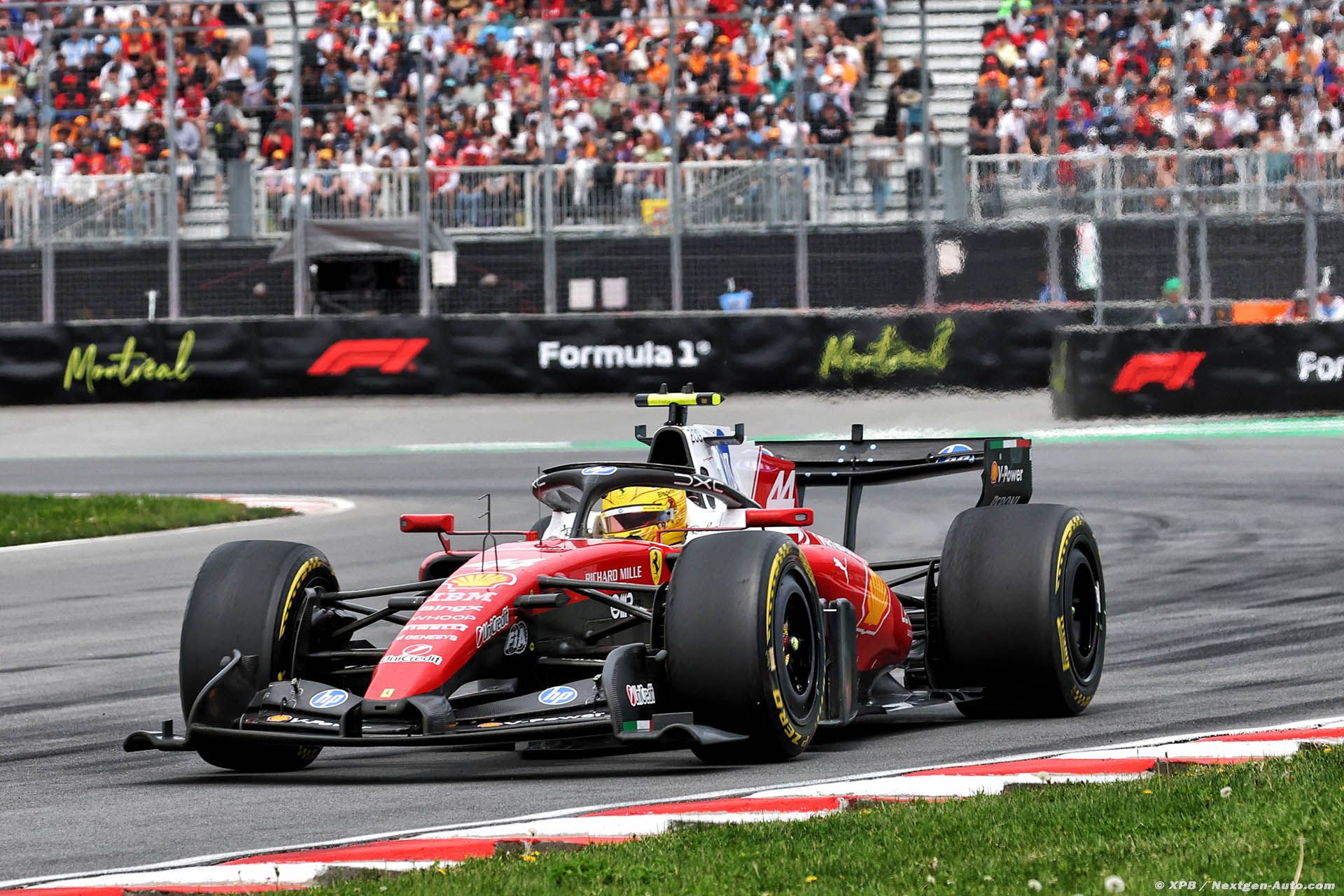
As the 2026 Formula 1 season progresses, the narrative surrounding seven-time world champion Lewis Hamilton has shifted from speculation to the tangible realities of his transition to Ferrari. Following a fifth-place finish at the Canadian Grand Prix, the British driver has offered a candid assessment of his current standing, balancing optimism regarding the team’s technical trajectory with pointed frustrations concerning engine performance.
For those of us tracking the evolution of the grid, Hamilton’s recent comments provide a fascinating insight into the internal pressures at Maranello. While the headline figures—a top-five result in Montreal—suggest a step in the right direction, the granular reality of the sport involves a complex interplay between chassis development and power unit efficiency. According to recent official communications from the FIA regarding the 2026 technical regulations, teams are navigating a significant shift in power unit architecture, which explains the heightened focus on engine reliability and output across the paddock. For more on the current state of the 2026 championship standings, visit the official FIA website.
Evaluating Ferrari’s Technical Progression
Hamilton’s performance in Canada has been described as a “declic” or a turning point by observers closely monitoring his integration into the Ferrari ecosystem. The driver has openly acknowledged that the team is making identifiable progress, particularly in how the car handles varying track conditions. This technical refinement is a critical component of Ferrari’s strategy to bridge the gap to the front-runners.

However, the transition is not without its hurdles. Hamilton has been vocal about his experiences with simulator work, suggesting that previous sessions did not always align with the real-world behavior of the car on track. This discrepancy between digital modeling and asphalt reality is a common challenge in modern F1, where teams rely heavily on virtual testing before arriving at a circuit. The Formula 1 official portal provides ongoing updates on team-specific technical developments and regulatory compliance.
The Engine Performance Dilemma
Despite the positive trajectory of the chassis, Hamilton’s feedback regarding the power unit remains a focal point for engineers. The engine, a vital element in the high-speed sections of the Canadian circuit, appears to be an area where the driver feels the team has more work to do. Unlike the chassis, which can often be adjusted through aerodynamic tweaks and suspension geometry, engine performance is heavily restricted by the FIA’s current homologation rules.
Hamilton’s teammate, Charles Leclerc, has faced his own set of challenges, particularly with brake management. While Hamilton focuses on extracting more from the engine, the internal dynamic at Ferrari remains focused on optimizing the package as a whole. The balance between driver feedback and telemetry data will be the primary driver of their success in the coming rounds.
Looking Ahead: The Path to the Next Checkpoint
As the season moves into the European leg, the focus shifts to how quickly Ferrari can translate these lessons into results. Hamilton’s commitment to his “radical” career choice—leaving Mercedes for the Italian marque—is being tested in real-time, but his public demeanor suggests a driver who is enjoying the process of rebuilding a competitive challenge.

The next official update regarding the 2026 technical development cycle and team power unit modifications is expected following the upcoming scheduled FIA technical advisory committee meeting. Fans and analysts alike will be watching closely to see if the adjustments made in the wake of the Canadian Grand Prix translate to a more consistent performance in the high-speed sectors that define the next few races on the calendar.
What are your thoughts on Hamilton’s move to Ferrari and his current technical feedback? Join the conversation in the comments section below and share your analysis of this season’s evolving power dynamics.
Keep reading