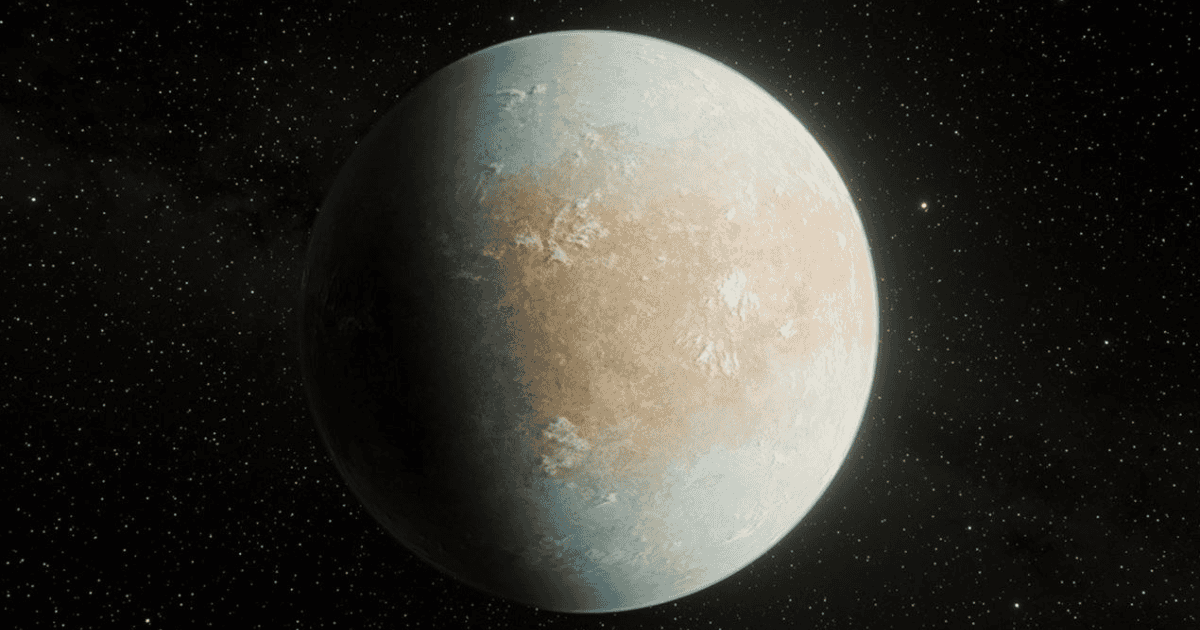
The search for life beyond Earth often focuses on planets orbiting sun-like stars. But a growing body of research suggests that habitable conditions might exist in far more unexpected places – specifically, on moons orbiting “rogue planets,” those celestial bodies ejected from star systems and drifting through the vastness of interstellar space. A fresh study, published in February in the journal Monthly Notices of the Royal Astronomical Society, details how these exomoons could potentially maintain liquid water, and therefore the possibility of life, for billions of years.
The conventional wisdom has long held that a star is essential for life as we know it, providing both energy and a stable temperature range. However, researchers are increasingly challenging this assumption. “The cradle of life does not necessarily require a sun,” explains David Dahlbüdding, the lead author of the recent study and a researcher at the Ludwig Maximilian University of Munich in Germany. The research team’s models indicate that a moon roughly the size of Earth, orbiting a Jupiter-like rogue planet, could sustain liquid water on its surface for up to 4.3 billion years – a timeframe comparable to the entire history of our own planet. This finding dramatically expands the potential environments where life could emerge and thrive.
These potential havens for life are known as exomoons, natural satellites of exoplanets. While the existence of exomoons remains unconfirmed, mounting circumstantial evidence suggests their discovery is imminent. Rogue planets themselves are thought to originate from chaotic gravitational interactions within young planetary systems, resulting in their ejection from their host star’s orbit. Interestingly, previous research indicates that these ejected planets are likely to retain at least some of their moons during the process.
The Role of Tidal Heating and Hydrogen Atmospheres
The key to maintaining habitable temperatures on these distant moons lies in a phenomenon called tidal heating. As a moon orbits its planet in an elliptical path, the immense gravitational pull of the planet repeatedly compresses and deforms the moon’s interior. This constant flexing generates internal friction, producing heat. This process is already observed within our own solar system; it fuels the intense volcanic activity on Jupiter’s moon Io and is believed to maintain subsurface oceans on icy moons like Europa and Enceladus.
New research suggests that moons orbiting rogue planets could potentially harbor liquid water and be habitable for billions of years! 🤯
Learn more about this fascinating discovery: https://t.co/qJqXq9qJ9V pic.twitter.com/wJq9qJqJ9V— MysteryPlanet.com.ar (@MysteryPlanetAR) March 16, 2026
The new study builds on this understanding, proposing that tidal heating alone might not be enough to prevent oceans from freezing in the frigid vacuum of interstellar space. The crucial factor, researchers found, is the composition of the moon’s atmosphere. Earlier studies suggested that carbon dioxide could provide a sufficient greenhouse effect to maintain habitability for up to 1.6 billion years. However, in the extreme cold of interstellar space, carbon dioxide tends to condense, leading to atmospheric collapse and heat loss.
This is where a hydrogen-rich atmosphere comes into play. Under conditions of high pressure and density, hydrogen behaves differently than it does in more typical environments. The simulations conducted by the research team demonstrate that when hydrogen molecules collide, they can briefly absorb heat that would otherwise radiate into space. This allows a dense hydrogen atmosphere to act as an exceptionally effective “insulating blanket,” trapping heat and maintaining surface temperatures conducive to liquid water. According to the study, under these conditions, some exomoons could remain warm enough to support liquid water – and potentially life – for up to 4.3 billion years.
What are Rogue Planets and Exomoons?
Rogue planets, also known as free-floating planets, are planetary-mass objects that do not orbit a star. They are thought to be relatively common, potentially outnumbering stars in the Milky Way galaxy. As reported by Rosario3, these planets are often formed in the same way as planets around stars, but are then ejected from their systems due to gravitational interactions with other planets.
Exomoons, are moons orbiting exoplanets. Their existence is still hypothetical, but astronomers are actively searching for them using various techniques, including transit timing variations and gravitational microlensing. Detecting exomoons is incredibly challenging due to their tiny size and distance from Earth. However, the potential reward – discovering another world capable of supporting life – is driving significant research efforts. The confirmation of even a single exomoon would be a monumental achievement in the search for extraterrestrial life.
The Significance of the Findings
This research has profound implications for our understanding of habitability and the potential distribution of life in the universe. It suggests that life may not be limited to planets orbiting stars, but could also exist in the dark, isolated regions of interstellar space. This dramatically expands the search space for extraterrestrial life, opening up new avenues for exploration and discovery. The study also highlights the importance of considering alternative atmospheric compositions when assessing the habitability of exoplanets and exomoons.
The findings also touch upon the fascinating interplay of cosmic coincidences that allow life to flourish. As noted in a January 2024 article by Avi Loeb in El Confidencial, the Earth’s relationship with the Sun and Moon is remarkably stable and conducive to life, a situation that may be rarer than previously thought. The possibility of life arising on exomoons orbiting rogue planets suggests that similar, albeit different, sets of cosmic circumstances could also lead to the emergence of life elsewhere in the galaxy.
Future Research and Exploration
While the study provides compelling evidence for the potential habitability of exomoons orbiting rogue planets, further research is needed to confirm these findings. Future observations with more powerful telescopes, such as the James Webb Space Telescope, will be crucial for detecting exomoons and characterizing their atmospheres. Scientists are also developing more sophisticated models to simulate the complex interactions between rogue planets, their moons, and their atmospheres.
The search for life beyond Earth is one of the most ambitious and challenging endeavors in human history. This latest research offers a tantalizing glimpse of the possibilities, suggesting that life may be more resilient and adaptable than we previously imagined. The discovery of habitable exomoons orbiting rogue planets would not only revolutionize our understanding of life in the universe, but also force us to reconsider our place within it.
The next step in this research will involve refining the atmospheric models and identifying potential targets for observation. Astronomers will be looking for subtle variations in the light from rogue planets that could indicate the presence of orbiting moons. Continued advancements in telescope technology and data analysis techniques will be essential for unlocking the secrets of these distant worlds.
What are your thoughts on the possibility of life on rogue planet moons? Share your comments below, and don’t forget to share this article with your friends and colleagues!
Worth a look