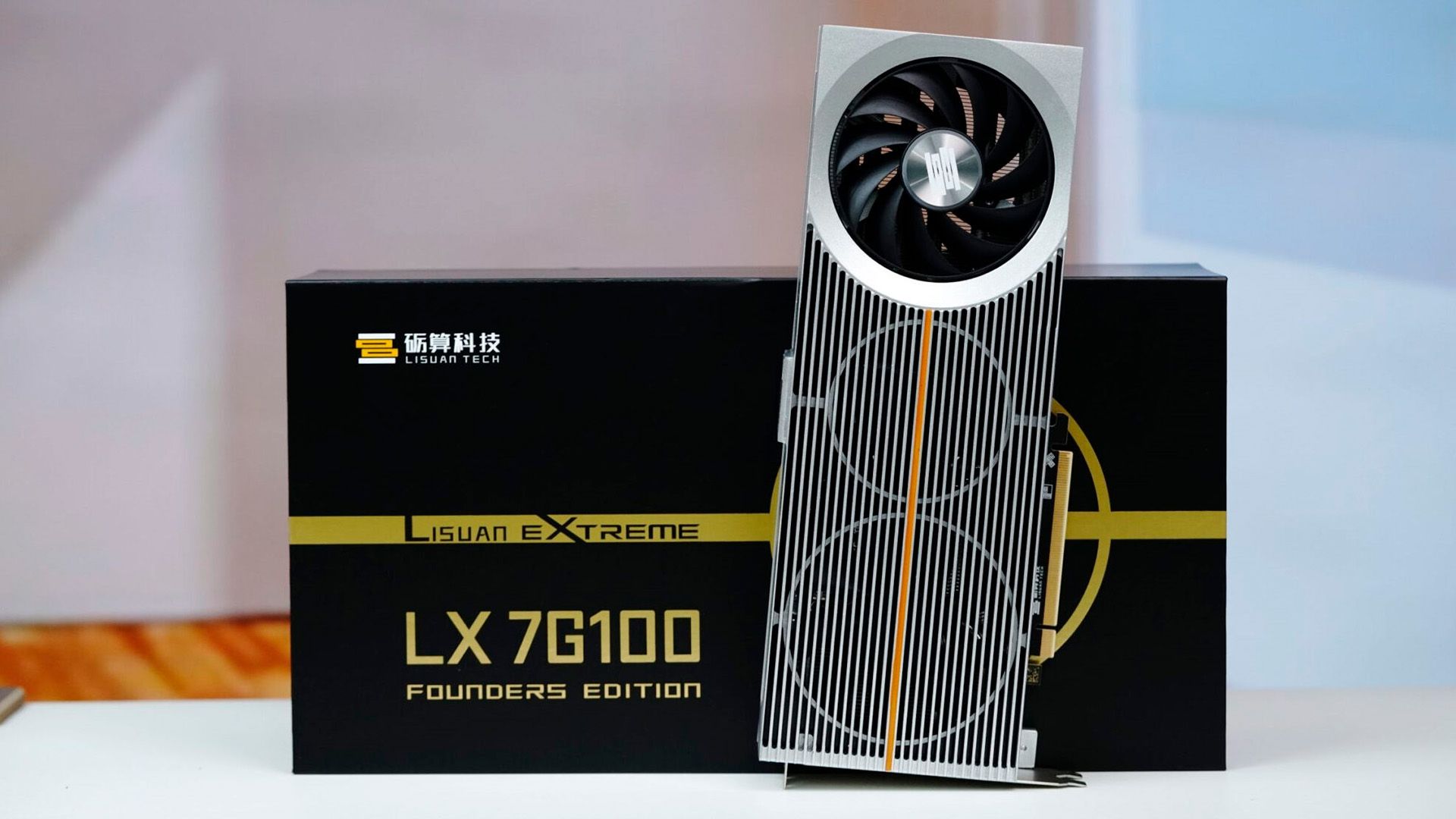
In a move that has captured the attention of the global hardware community, Chinese manufacturer Lisuan Tech has reported the successful sale of 30,000 preorder units of its LX 7G100 graphics card. This rapid sell-through, occurring within a 48-hour window, marks a significant milestone for the emerging domestic brand as it attempts to establish a foothold in a market historically dominated by international industry giants like Nvidia, and AMD.
The LX 7G100, which carries an MSRP of $485 in China, has generated over $14.55 million in advance sales according to company data. This commercial momentum places Lisuan Tech in the sixth position among prominent graphics card manufacturers on JD.com, a major Chinese e-commerce platform for consumer electronics. While the company is currently trailing behind established names such as Asus, Colorful, Gigabyte, and MSI, the sheer volume of preorders suggests a robust consumer appetite for alternatives to current mainstream offerings.
Market Positioning and Performance Realities
The LX 7G100 is frequently marketed as a direct competitor to the GeForce RTX 4060, a move that has invited rigorous scrutiny from hardware enthusiasts and technical reviewers. Despite the strong initial sales, early performance benchmarks have painted a more complex picture. Independent analysis indicates that while the card is a viable domestic option, it has struggled to consistently meet the high performance expectations often associated with contemporary gaming GPUs in its price bracket.
The discrepancy between the high volume of sales and the lukewarm technical reception highlights a growing trend in the consumer electronics sector: the prioritization of brand curiosity and the support of emerging domestic manufacturers over pure benchmark supremacy. For many consumers, the purchase represents a willingness to explore the evolving landscape of Chinese-made hardware, even when those products do not necessarily lead the market in frame rates or thermal efficiency.
Strategic Growth and Future Outlook
Lisuan Tech’s entry into the high-stakes GPU market is a calculated effort to leverage local demand. By securing a top-tier position on major retail platforms, the company has demonstrated an effective marketing strategy that transcends the technical limitations of its current flagship product. The company has already confirmed plans to address continued interest with a second batch of inventory, which is scheduled for release on June 18.
While the exact Bill of Materials (BOM) cost for the LX 7G100 remains undisclosed, the financial success of the initial preorder phase provides the company with a significant runway to refine its manufacturing processes and product design. The industry will be watching closely to see if Lisuan Tech can translate this initial commercial success into long-term technical innovation. As the company prepares for its next release cycle, the focus will likely shift toward closing the performance gap with global competitors to ensure sustained relevance in an increasingly competitive environment.
Key Considerations for Consumers
- Market Standing: Lisuan Tech currently holds the sixth position on JD.com among GPU manufacturers.
- Pricing: The LX 7G100 is positioned at an MSRP of $485 within the Chinese market.
- Inventory Status: The initial run of 30,000 units has been exhausted, with a second batch expected to hit the market on June 18.
- Performance Context: While marketing materials position the card against mainstream alternatives like the RTX 4060, independent testing has shown varied results.
As the June 18 release date approaches, potential buyers are encouraged to monitor official channels on JD.com for updates on availability and any potential revisions to the product specifications. Whether this initial surge in interest is a temporary phenomenon or the beginning of a larger shift in the consumer GPU landscape remains to be seen. We will continue to track the performance of the LX 7G100 and any forthcoming developments from Lisuan Tech as they unfold. We invite our readers to share their thoughts on the shifting GPU market in the comments section below.
Keep reading