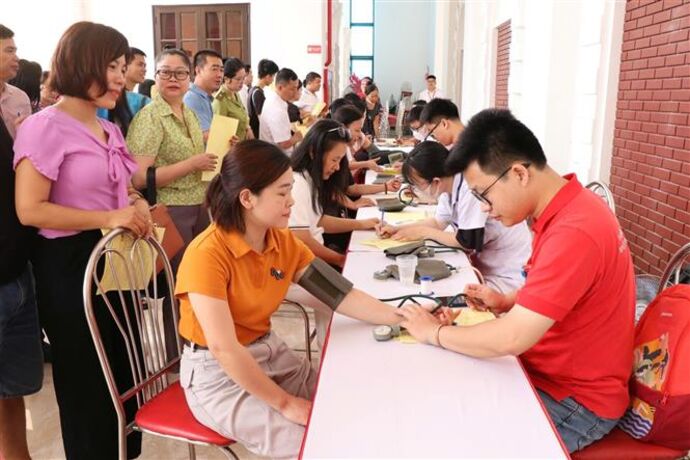
The “Itinéraire rouge” (Red Journey) campaign has set an ambitious target of collecting 120,000 units of blood for the 2026 season, according to recent statements from the National Institute of Hematology and Blood Transfusion (NIHBT) in Vietnam. This nationwide initiative, which has served as a cornerstone of the country’s voluntary blood donation efforts since its inception in 2013, aims to stabilize national blood reserves during the summer months when seasonal shortages are historically common.
As a physician, I have long observed that the success of public health initiatives like the Red Journey depends less on technology and more on consistent, community-based mobilization. By targeting a collection goal of 120,000 units, organizers are attempting to address the persistent gap between the demand for blood products in hospitals and the available supply provided by voluntary donors. According to official data from the National Institute of Hematology and Blood Transfusion, the campaign consistently attracts thousands of participants across dozens of provinces, effectively shifting the culture of blood donation from an emergency-response activity to a routine civic responsibility.
Understanding the Impact of the Red Journey Campaign
Since its launch over a decade ago, the Red Journey has evolved from a regional awareness effort into a comprehensive national movement. The primary objective is to address the “summer blood shortage,” a recurring phenomenon where high temperatures and vacation periods lead to a decline in donor turnout. By organizing mobile blood drives that traverse the country, the campaign reaches populations in rural and underserved areas, thereby decentralizing the donation process.
Data provided by the Ministry of Health of Vietnam indicates that the cumulative impact of these campaigns has significantly bolstered the national blood supply. The strategy relies on a multi-pronged approach: large-scale public rallies to raise awareness, educational workshops on the medical necessity of blood components, and the logistics of mobile collection units. This structural support ensures that blood centers can maintain a consistent inventory, which is critical for treating patients with chronic conditions, trauma victims, and those requiring elective surgeries.
Addressing Strategic Goals for 2026
The 2026 target of 120,000 units represents a strategic scaling of the campaign’s previous performance. To reach this figure, health authorities are expanding partnerships with local governments, youth organizations, and private sector businesses. This collaborative framework is essential for maintaining the momentum required to meet such a high quota. According to reports from the World Health Organization (WHO) in Vietnam, voluntary non-remunerated blood donors remain the safest source of blood, and the Red Journey’s emphasis on volunteerism aligns with international best practices for blood safety and sufficiency.
Beyond the raw numbers, the campaign also serves as a pedagogical tool. In my clinical practice in Berlin, I have seen how public health literacy directly correlates with patient outcomes. The Red Journey educates the public on the physiological benefits of donating and the rigorous screening processes that ensure donor and recipient safety. This transparency is vital for sustaining long-term participation, as it builds trust between the medical establishment and the general population.
Logistics and Public Participation
Participation in the 2026 Red Journey is facilitated through a network of regional blood centers and mobile collection teams. Prospective donors are encouraged to register through official channels managed by the NIHBT or via local health departments. The campaign typically culminates in a series of major events in key urban centers, serving as a symbolic push to meet the final unit milestones before the end of the summer cycle.

For those interested in contributing, the process is standardized to ensure both efficacy and donor well-being. Before donating, individuals undergo a health screening to verify their eligibility, a standard procedure that maintains the integrity of the blood supply. Information regarding specific donation dates and regional events is updated periodically through the National Blood Donation Portal, which serves as the primary hub for scheduling and information dissemination.
Future Outlook and Sustainability
The sustainability of the Red Journey rests on its ability to recruit a new generation of donors. By focusing on youth mobilization, the campaign ensures that the habit of voluntary donation is established early. While the 120,000-unit goal for 2026 is a significant milestone, the ultimate success of the program will be measured by its ability to integrate these donors into a permanent database, ensuring a stable supply throughout the entire calendar year.
As the campaign moves toward its 2026 objectives, stakeholders anticipate further refinements in cold-chain logistics and donor management software. These improvements are necessary to handle the increased volume of donations efficiently. Readers seeking to participate or support the movement should monitor the official announcements from the National Institute of Hematology and Blood Transfusion for upcoming regional drives and safety guidelines. We encourage those with personal experiences or questions regarding the impact of blood donation to share their thoughts in the comments section below.
Worth a look