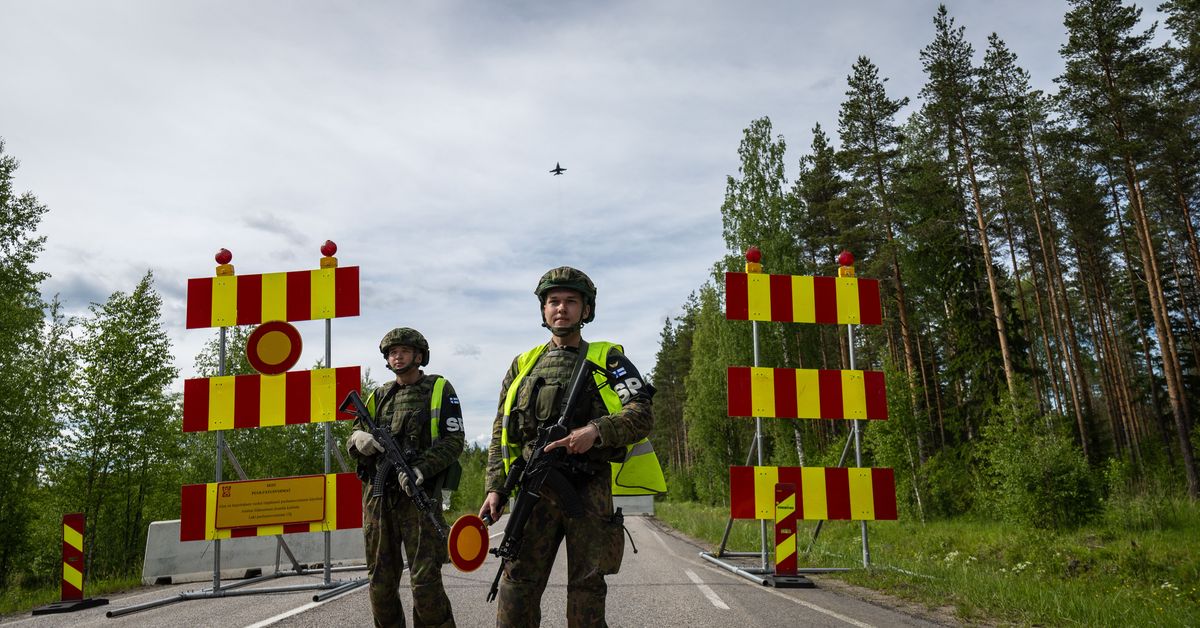
Residents in the rural Finnish municipality of Tervo are navigating significant travel restrictions this week as the Finnish Defence Forces utilize a local public road as a temporary fighter jet runway. The exercise, part of the broader Baana 24 military drills, has necessitated strict security measures, requiring some local inhabitants to present identification and travel with military escorts to access their homes.
The Finnish Air Force, known as Ilmavoimat, is conducting these operations to maintain operational capability by practicing dispersed basing, a strategy that relies on utilizing the national road network for landings and takeoffs. According to the Finnish Air Force official press release, the exercise involves F/A-18 Hornet multirole fighters and Hawk jet trainers operating from a designated highway stretch in the North Savo region. For the affected residents, this means their daily commute is being temporarily shared with combat aircraft.
Why Tervo is hosting military drills
The Finnish military maintains a long-standing doctrine of dispersing its air assets to ensure survivability in the event of a conflict. By training personnel and pilots to operate from improvised airstrips—often repurposed sections of public highways—the Air Force prevents its fleet from becoming vulnerable at a few fixed, easily targeted airbases. The decision to select Tervo for the Baana 24 exercise is rooted in this strategic requirement for geographic flexibility.
The Finnish Defence Forces confirmed that these exercises are essential for testing the ability of logistics, ground crews, and pilots to operate in austere conditions. The mobilization of personnel required to maintain these temporary bases involves not just flight crews, but also significant ground support to ensure the runway meets safety standards for high-performance aircraft. While the disruption to local traffic is substantial, officials state that these drills are critical to national security, particularly as Finland integrates more closely with NATO infrastructure.
Impact on local residents
For those living directly adjacent to the designated runway, the week has brought an unprecedented level of oversight. Reports indicate that access to certain private properties is restricted to authorized personnel or residents who have been vetted and are accompanied by military escorts. This measure is intended to ensure the safety of both the citizens and the flight operations, as the proximity to high-speed jet blast and debris poses a significant risk to civilians.

Local authorities and the military have communicated these changes to the community through public notices and direct outreach. The Centre for Economic Development, Transport and the Environment (ELY Centre) typically coordinates the temporary closure of public road segments during such exercises to ensure that traffic flow is managed and that public safety is maintained. Residents are encouraged to monitor official government channels for updates regarding road reopening schedules and restricted zones.
The strategic importance of dispersed basing
Finland’s approach to air defense is distinct in Europe due to its reliance on the “dispersed basing” concept. Historically, the Finnish Air Force identified dozens of potential road segments across the country that could be converted into runways within hours. This infrastructure, often referred to as “Baana” in Finnish, is maintained with reinforced surfaces capable of handling the weight and heat generated by military jets.
This training takes on added significance following Finland’s accession to the North Atlantic Treaty Organization (NATO). As part of the alliance, Finland’s ability to maintain a resilient, mobile air force contributes to the collective defense of the Baltic and Nordic regions. Exercises like Baana 24 allow Allied partners to observe and understand how Finland’s unique logistical model functions in practice, potentially serving as a template for other nations looking to enhance their own air power resilience.
What happens next
The Baana 24 exercise is scheduled to conclude later this week, at which point the temporary runway restrictions will be lifted and the public road will return to civilian use. Following the conclusion of the drills, the Finnish Defence Forces typically conduct a review of the exercise to assess the performance of ground crews and the viability of the chosen sites for future operations. No official date has been set for the next round of highway-based exercises, though the military continues to conduct periodic training throughout the year.
Residents affected by the current closures are advised to keep their identification documents accessible and to follow the instructions provided by military personnel on-site. For the latest updates regarding road closures and security protocols, citizens should refer to the official bulletins released by the Finnish Defence Forces newsroom. We invite our readers to share their thoughts or experiences regarding these military exercises in the comments section below.
Keep reading
- How Chilean Pension Funds (AFP) are Rescuing the Matte and Angelini Forestry Empire
- US-Iran Relations: Negotiating a Path to Recovery
- Security Measures Deployed in AJK Ahead of Elections Over Allegations of Electoral Irregularities (newsdirectory3.com)
- What is Pando? The World’s Heaviest Living Organism (archyde.com)