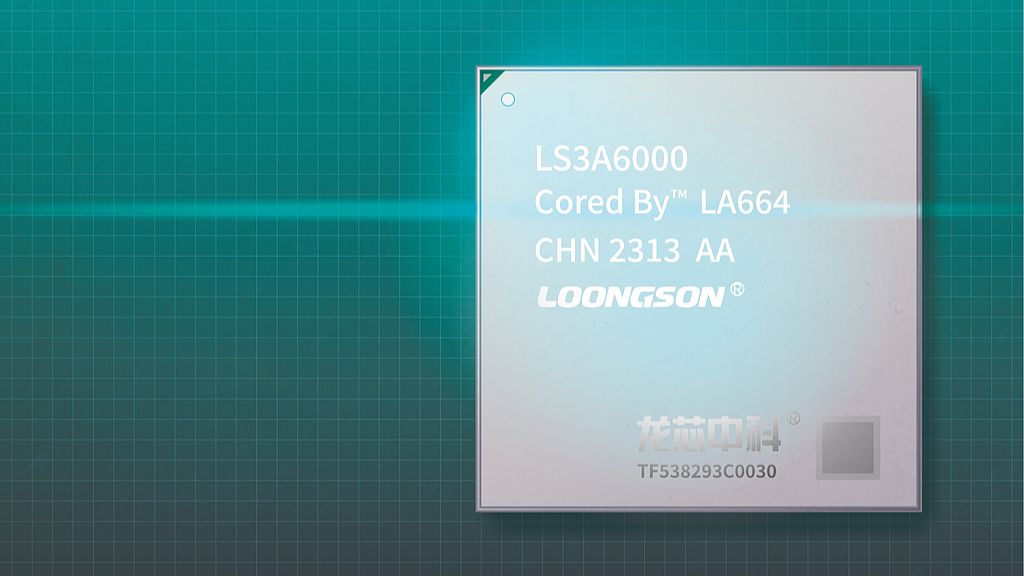
The global semiconductor landscape is witnessing a significant shift as China accelerates its quest for silicon independence. In a move that signals a growing departure from Western architectural dominance, Loongson processors have reportedly surpassed the milestone of one million units shipped. This achievement is more than a mere sales figure; it represents a strategic pivot toward a domestic hardware ecosystem designed to withstand geopolitical volatility and supply chain disruptions.
For years, the computing world has been a duopoly of x86 architecture, held by Intel and AMD, and the ARM architecture, licensed by ARM Ltd. By developing its own instruction set architecture (ISA), known as LoongArch, Loongson is attempting to break this cycle. This transition allows China to design chips that are not subject to the licensing restrictions or potential “kill switches” associated with foreign-owned intellectual property.
As a technology editor who has tracked the evolution of software and hardware since my time at Stanford, I see this not just as a business expansion, but as a fundamental architectural gamble. The success of a processor depends less on the silicon itself and more on the software ecosystem—the compilers, operating systems, and applications—that support it. Loongson’s milestone suggests that the “domestic substitution” movement within China’s government and critical infrastructure is gaining tangible momentum.
The Architecture of Independence: Understanding LoongArch
To understand why the growth of Loongson processors is significant, one must understand the role of the Instruction Set Architecture (ISA). The ISA is essentially the language a CPU speaks. Most of the world’s PCs speak x86, while smartphones speak ARM. Historically, Loongson relied on MIPS architecture, but the shift to LoongArch marked a turning point in the company’s strategy.

By creating LoongArch, Loongson has gained full control over its hardware roadmap. This independence is critical because it removes the risk of license revocation, a threat that has become real for many Chinese firms following the imposition of stringent U.S. Export controls. The move to a proprietary ISA allows Loongson to optimize its chips specifically for the workloads required by Chinese state enterprises and high-performance computing centers.
However, the “ISA trap” is a well-known hurdle in computer science. When you create a new language, you must convince every software developer in the world to translate their apps into that language. Loongson is addressing this by focusing on Linux-based environments and creating translation layers that allow legacy software to run on LoongArch, though this often comes with a performance penalty compared to native execution.
Roadmap to 2027: The 3B6600 and 9A1000
The company is not resting on its current success. Industry roadmaps indicate an aggressive push toward higher performance and broader integration. Emerging reports suggest that Loongson is targeting 2027 for the release of next-generation processors, including the 3B6600 and 9A1000 series. These chips are expected to push the boundaries of domestic Chinese computing, aiming to compete more directly with mid-to-high-end offerings from Intel and AMD.
The 9A1000, in particular, is positioned as a high-performance CPU intended for servers and workstations. If these targets are met, it would signal that China has moved beyond simply “filling a gap” in the market to creating hardware that is competitive on a performance-per-watt basis. This trajectory is closely tied to China’s broader “Made in China 2025” goals, which emphasize the localization of high-tech components.
Beyond the CPU, Loongson is expanding its scope to include integrated GPUs and plans for DRAM development. The goal is a “full-stack” domestic solution. In the current climate, a CPU is only as useful as the memory and graphics processing that accompany it. By developing an entry-level GPU and exploring memory solutions, Loongson aims to provide a complete platform that reduces reliance on NVIDIA or Micron.
The Geopolitical Catalyst: Sanctions as an Accelerator
It is impossible to discuss the rise of Loongson without mentioning the role of the U.S. Department of Commerce’s Entity List. The restrictions on high-end chip exports and the machinery required to make them—such as Extreme Ultraviolet (EUV) lithography machines from ASML—have acted as a catalyst for Chinese innovation. While these sanctions were intended to slow China’s technological progress, they have effectively removed the “easy path” of importing Western tech, forcing companies like Loongson to innovate or fail.
This “forced innovation” is most evident in the adoption rates of Loongson chips. In the past, Chinese companies preferred Intel or AMD because of their superior performance and ecosystem. Today, government procurement policies increasingly mandate the use of “domestic” chips for sensitive sectors, including finance, energy, and defense. This guaranteed market has provided Loongson with the steady revenue needed to fund R&D for the 2027 roadmap.
Despite this, a massive challenge remains: fabrication. Designing a chip is one thing; printing it on silicon is another. Without access to the most advanced nodes (3nm or 5nm), Loongson must rely on older, more mature processes or the efforts of SMIC (Semiconductor Manufacturing International Corporation) to push the limits of existing hardware. This creates a “performance ceiling” that Loongson must overcome through architectural efficiency rather than raw transistor shrinking.
Market Impact and the Global Hardware Balance
The shipment of over one million Loongson units indicates that a viable, albeit niche, ecosystem now exists. For the average global consumer, Loongson processors are unlikely to appear in laptops at Best Buy or Amazon anytime soon. However, for the global enterprise and government market, the emergence of a third major architectural player changes the calculus of risk.
If Loongson successfully scales its ecosystem, we may see a fragmented computing world where different regions rely on different ISAs. This would be a reversal of the globalization trend that defined the last three decades of the tech industry. We are moving toward a “bipolar” silicon world: one side centered around the U.S.-led x86/ARM ecosystem and the other around China’s domestic alternatives.
Key Strategic Objectives for Loongson
- ISA Sovereignty: Fully transitioning all products to LoongArch to eliminate licensing risks.
- Ecosystem Expansion: Increasing the number of native applications and optimized Linux distributions.
- Vertical Integration: Developing companion GPUs and DRAM to create a cohesive hardware stack.
- Node Optimization: Improving performance on available fabrication nodes to compensate for the lack of EUV lithography.
What Happens Next?
The next critical checkpoint for Loongson will be the public benchmarking and official release of the 3B6600 and 9A1000 series as they move toward their 2027 targets. The industry will be watching closely to see if these chips can bridge the performance gap with the latest Zen or Core architectures from AMD and Intel.

the success of these chips will depend heavily on the continued support of the Chinese government’s procurement policies. If the state continues to prioritize “security” over “raw performance,” Loongson’s path to several million more units is virtually guaranteed. However, if they seek to compete in the open global market, they will face a steep climb in software compatibility and brand recognition.
As we move closer to 2027, the battle for semiconductor supremacy will not just be fought in the fabs, but in the code. Loongson has built the engine; now they must build the road.
Do you think a proprietary Chinese ISA can realistically compete with the x86 and ARM ecosystems on a global scale? Share your thoughts in the comments below or share this analysis with your network.
Related reading