
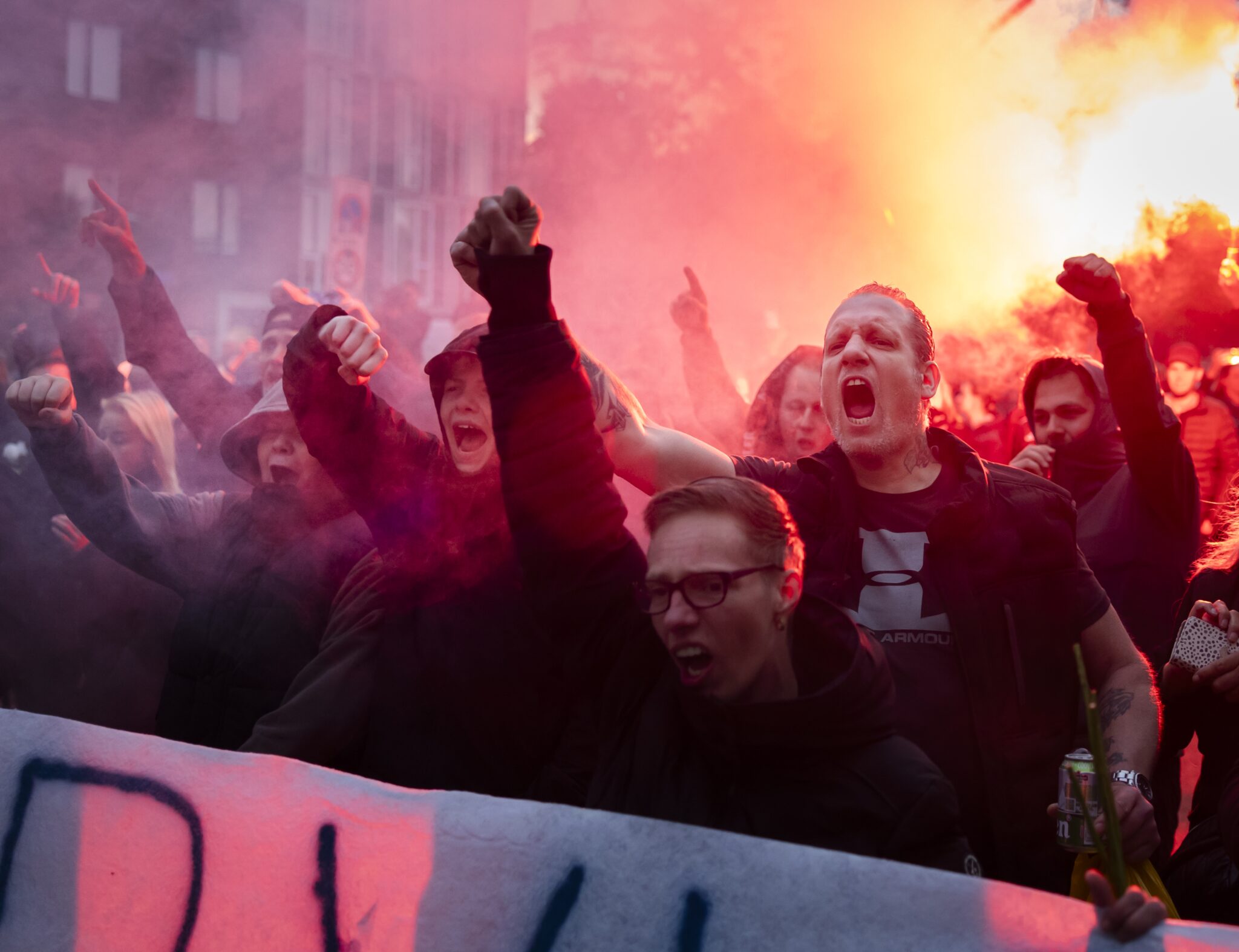
Loosdrecht, Netherlands — Tensions in the Dutch town of Loosdrecht escalated overnight as violent protests erupted near a temporary asylum seeker shelter, despite emergency restrictions imposed by local authorities. Police intervened with water cannons, made four arrests, and reported clashes involving heavy fireworks and attempts to obstruct emergency services. The unrest follows a pattern of escalating demonstrations that have drawn national attention to the handling of asylum seekers in the Netherlands.
The situation unfolded on Thursday, May 14, 2026, as protesters—some of whom ignored a curfew and vehicle control measures—gathered near the shelter housing 15 asylum seekers since early this week. Initial demonstrations remained peaceful, but by late evening, a group of around 50 protesters turned confrontational, hurling fireworks at police officers. In response, authorities deployed a water cannon to disperse the crowd, with police confirming four arrests and clearing the area by approximately 21:45 local time.
This is the second major outbreak of violence in Loosdrecht this week. On Wednesday, May 13, arson attacks and clashes with emergency responders forced the closure of nearby roads and prompted the Dutch government to express “shock and dismay” over the escalation. The Dutch Association of Municipalities (VNG) has since called for an urgent national meeting to address what officials describe as a “breaking point” in local governance.
Emergency Measures and Public Backlash
In response to the unrest, the municipality of Wijdemeren—of which Loosdrecht is a part—implemented sweeping emergency measures, including:
- A no-entry zone around the shelter for vehicles and pedestrians during evening and night hours until Saturday, May 16.
- Mandatory vehicle checks for all incoming traffic.
- Preventive police patrols with expanded authority to conduct searches and ban face-covering clothing.
Despite these restrictions, some protesters defied the curfew, hanging banners near the shelter and continuing demonstrations outside the designated protest area. A police spokesperson described the atmosphere as “highly volatile,” though not as extreme as the previous night, when arson and roadblocks delayed emergency services.
Key Takeaways:
- Four arrests made after police used water cannons to disperse protesters.
- Emergency restrictions remain in place until at least Saturday, May 16.
- Dutch government officials have condemned the violence, with calls for a national strategy.
- Local authorities report a surge in counter-protests, including acts of solidarity with asylum seekers.
Why This Matters: A Test for Dutch Asylum Policy
The unrest in Loosdrecht reflects broader tensions in the Netherlands over immigration and local governance. With asylum applications rising in recent years, Dutch municipalities have struggled to balance humanitarian obligations with community concerns. The VNG’s call for an emergency meeting signals growing frustration among local leaders, who argue that the federal government has failed to provide adequate support for managing asylum seekers.

In a rare public statement, a senior Dutch cabinet official was quoted as saying the government viewed the violence with “shock and disgust,” though no specific policy changes have been announced. Meanwhile, local residents and activists have taken opposing stances: some condemn the protests as xenophobic, while others argue the shelter was imposed without sufficient consultation.
For updates on the situation, residents are advised to monitor official channels, including the Dutch National Police and the Dutch Government. The next critical checkpoint will be the VNG’s emergency meeting, expected to address long-term solutions for asylum management.
Human Impact: Voices from Loosdrecht
Amid the protests, a few residents have stepped forward to share their perspectives. One local resident, identified as Dirk (78), brought chocolate to the asylum seekers, calling the violence “criminal.” His act of solidarity contrasts with the protests, highlighting the divided sentiments in the community.
As the situation remains fluid, authorities urge calm and adherence to emergency measures. The Dutch Red Cross has offered support to asylum seekers, while local businesses report disruptions due to the heightened security presence.
Next Steps: What Happens Now?
The immediate focus is on maintaining order in Loosdrecht. Police have increased patrols, and the shelter’s operators are working with local officials to ensure the safety of asylum seekers. The VNG’s emergency meeting, expected in the coming days, will likely address:

- Federal support for municipalities handling asylum seekers.
- Long-term solutions for temporary shelters.
- Community engagement strategies to prevent further unrest.
For readers seeking official updates, the following resources are recommended:
- Dutch National Police (for real-time safety alerts).
- Dutch Government (for policy statements).
- Dutch Association of Municipalities (VNG) (for local authority updates).
We welcome your insights and experiences. Share your thoughts in the comments below or share this article to raise awareness about the situation in Loosdrecht.