The Moon’s Origin Story: New Research Pinpoints Theia‘s Birthplace and Reveals a missing Piece of the Early Solar system
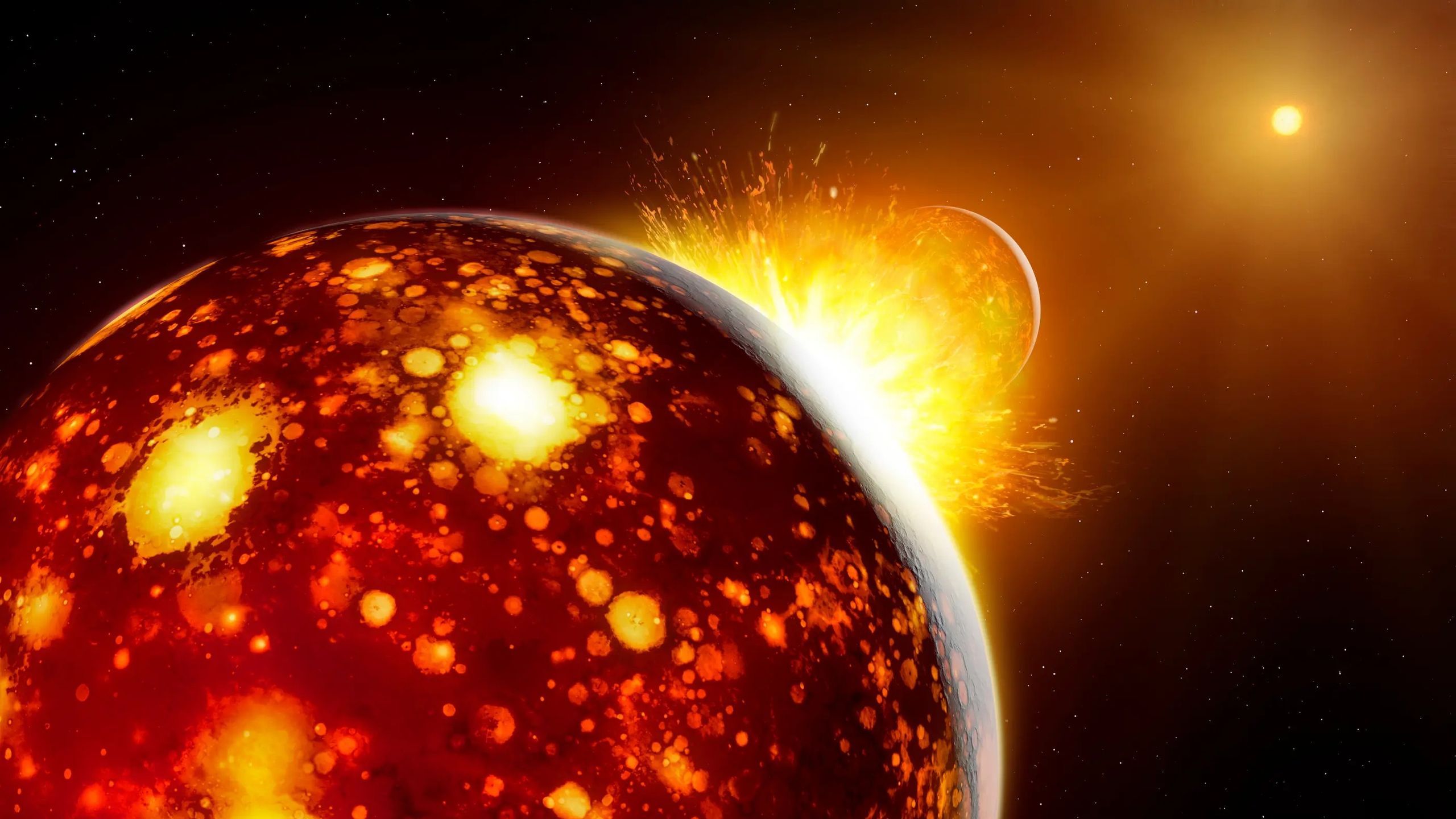
For decades, scientists have debated the origins of our Moon. The leading theory – the Giant Impact Hypothesis – proposes a Mars-sized object named Theia collided with early Earth, resulting in the formation of our lunar companion. Now, groundbreaking research analyzing lunar samples and terrestrial rocks is refining this understanding, pinpointing where Theia formed and uncovering evidence of a previously unknown component of the early solar system.
This isn’t just about the Moon; it’s about understanding the very building blocks of our planet and the conditions that allowed life too flourish. Let’s dive into the details.
Unlocking the Secrets Within Lunar Rocks
A team led by Dr. Rajdeep Dutta at the University of Chicago meticulously analyzed six lunar samples collected during the Apollo 12 and 17 missions.They also examined 15 terrestrial rocks, including those from Hawaii’s Kīlauea volcano and meteorites from Antarctica.
The key? Extremely subtle variations in iron isotopes.Recent research demonstrates these variations act like fingerprints, revealing where material originated in relation to the sun. By combining these iron measurements with signatures of molybdenum and zirconium, researchers compared the results to known meteorite compositions.
Theia’s Origins: An Inner Solar System Native
The team ran hundreds of simulations, varying the size and impact angle of Theia. The results were striking. Only one scenario consistently matched the chemical composition of both Earth and the Moon: Theia formed in the inner solar system.
Specifically,the study suggests Theia was a rocky,metal-cored world containing roughly 5-10% of Earth’s mass. This places its formation closer to the sun than previously thought.
* Key Finding: Theia wasn’t a wanderer from the outer solar system, but a sibling born in the same neighborhood as Earth.
A Missing Ingredient: The “Unsampled” Reservoir
The models revealed something even more intriguing. both proto-earth and Theia appear to contain material from a previously unknown reservoir within the inner solar system. This material isn’t found in any known meteorite collections.
what does this mean? It suggests a type of matter formed incredibly close to the sun, in a region where early material was either:
* Absorbed by Mercury, Venus, Earth, and Theia.
* Destroyed before it could become meteorites.
“It might be only sample bias,” explains Dr. Hopp, a researcher involved in the study. Future samples from Venus or Mercury could potentially confirm or refute this conclusion.
Implications for Understanding Earth and Moon formation
This research doesn’t just refine our understanding of Theia’s origins.It also highlights how thoroughly the giant impact mixed Earth and Theia’s material. the resulting chemical homogeneity is a puzzle scientists are still trying to solve.
* The Remaining Question: How did the impact blend the two worlds so fully, erasing much of their individual chemical signatures?
Answering this question is crucial to fully understanding the moon’s violent birth and the evolution of our planet. It’s a complex story, but with each new finding, we get closer to unraveling the mysteries of our cosmic origins.
Image Credit: NASA
Sources:
* ScienceDirect Article on Iron Isotopes
Keep reading