
The landscape of global correspondence is undergoing a fundamental structural shift, moving away from the traditional institutional support of major newsrooms toward a more fragmented, independent model. For decades, the international correspondent was a staple of the prestige press, funded by large editorial budgets that allowed for deep-dive reporting in volatile regions. Today, however, that model is fraying.
This transition is becoming increasingly evident in the professional trajectories of seasoned journalists and photographers who find that the appetite for long-form international reporting is waning. The declining interest in international reporting among traditional editorial boards is not merely a change in taste, but a reflection of broader economic pressures within the media industry, forcing creators to seek alternative revenue streams to sustain their work.
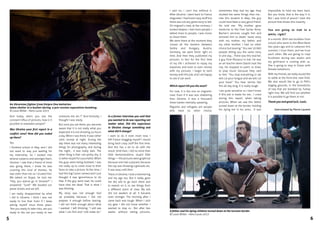
Paris-based journalist and photographer Louis Witter has highlighted this trend, noting a perceptible decrease in interest from newsrooms regarding international assignments. This shift suggests a growing gap in global coverage, where the stories that do not generate immediate, high-volume digital traffic are increasingly sidelined by editorial desks.
Plus que dans mon travail à l’international où j’ai constaté l’intérêt décroissant des rédacs à …
The Pivot to Independent Journalism and Authorship
As traditional newsroom support diminishes, many international journalists are pivoting toward authorship and direct-to-consumer funding. This evolution allows reporters to maintain editorial control and explore complex sociological themes that may no longer fit the restrictive windows of daily news cycles.

A primary example of this shift is the move toward long-form publishing. Louis Witter, for instance, transitioned his investigative focus into a comprehensive book titled “La Battue. L’Etat, la police et les étrangers”, published by Seuil in 2023. By moving from the ephemeral nature of news articles to a published volume, journalists can provide the depth and context that current editorial priorities often overlook.
This trend toward authorship is often coupled with the adoption of crowdfunding platforms. To sustain ongoing reportages, Witter utilizes Tipeee, a platform that allows readers to provide direct financial support. This model transforms the relationship between the journalist and the audience, shifting the “employer” from an editorial board to a community of interested readers who value specific global perspectives.
Mapping the Gaps in Global Coverage
The decline in newsroom interest is particularly concerning when examining the diversity of regions that require consistent, nuanced reporting. When editorial budgets are slashed, “peripheral” conflicts and humanitarian crises often lose visibility, leaving only the most dominant global headlines in the public eye.
The portfolio of work maintained by Louis Witter’s professional portfolio illustrates the breadth of coverage that is at risk. His work has spanned a vast array of critical geopolitical zones and social issues, including:
- Conflict Zones: Extensive reporting in Ukraine (2015–2022), Palestine, and Iraq (specifically Sinjar City).
- Migration and Borders: Documentation of the situation in Calais, France, and the experiences of refugees.
- Regional Instability: Reports from Lebanon, Kosovo, and Mayotte (Opération Wuambushu).
- Political Movements: Coverage of the FARC in Colombia and Catalan history (“Lliure”).
When newsrooms exhibit a decreasing interest in these types of assignments, the result is a “blind spot” in global consciousness. The ability to track the evolution of a conflict over several years—such as the transition in Ukraine from 2015 to 2022—requires a level of institutional commitment that is becoming increasingly rare in the era of click-driven metrics.
The Economic Reality of the Modern Correspondent
From a business perspective, the crisis in international reporting is a symptom of the collapse of the traditional advertising-funded media model. The high cost of deploying a journalist and photographer to remote or dangerous locations is often seen as a poor return on investment compared to low-cost, high-traffic digital content.
This has created a new class of “hybrid journalists.” These professionals are no longer just reporters; they are authors, photographers, and entrepreneurs. They must manage their own branding, handle their own security and logistics, and cultivate a loyal donor base to fund their expeditions. Even as this provides a degree of intellectual freedom, it also places a significant financial burden on the individual journalist.
The shift toward platforms like Louis Witter’s Instagram and other social media channels allows journalists to bypass the traditional gatekeepers. However, these platforms often prioritize brevity over depth, creating a paradox where the journalist has more reach but less space to provide the rigorous analysis that international reporting demands.
Key Takeaways on the State of International Reporting
- Editorial Retreat: Major newsrooms are showing a declining interest in funding long-term international assignments.
- Alternative Funding: Journalists are increasingly relying on crowdfunding (e.g., Tipeee) and book publishing (e.g., Seuil) to sustain their work.
- Coverage Loss: There is a risk of losing nuanced, long-term documentation of regions like Palestine, Iraq, and the Comores.
- Professional Evolution: The role of the correspondent is shifting from a staff position to a hybrid entrepreneurial model.
The future of global storytelling now depends on the willingness of the public to fund independent journalism. As newsrooms continue to contract their international footprints, the responsibility for preserving the historical record of global crises shifts from the institution to the individual and their supporters.
The next critical checkpoint for this industry will be the continued adaptation of funding models as more journalists move toward independent publishing and subscription-based reporting to fill the void left by traditional media.
We invite our readers to share their thoughts on the shifting nature of global news. Do you feel that international coverage has become more limited? Let us know in the comments below.