
Jonathan M. Gitlin
2026-01-23 12:00:00
The curved display floats above the textile-covered dash, and the daylight visible between them helps the cabin’s sense of spaciousness, even without a panoramic glass roof. A stowable touchscreen display lower down on the center console is where you control vehicle, climate, seat, and lighting settings, although there are also physical controls for temperature and volume on the dash. The relatively good overall ergonomics take a bit of a hit from the steeply raked A pillar, which creates a blind spot for the driver.
The layout is mostly great, although the A pillar causes a blind spot.
Jonathan Gitlin
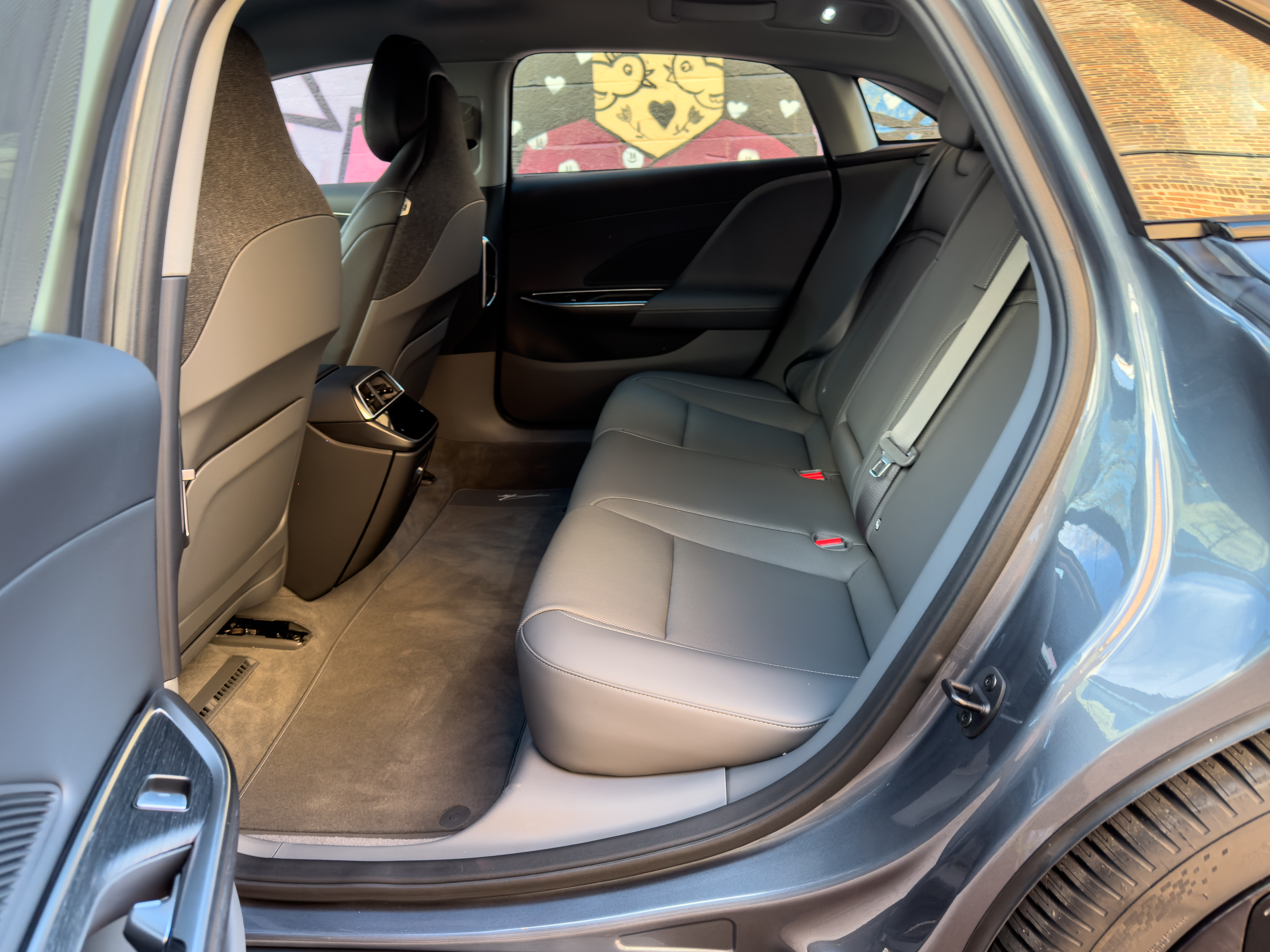
The experience back here really is limo-like, even if we never got the captain’s chairs of the original prototype.
Jonathan Gitlin
The experience back here really is limo-like, even if we never got the captain’s chairs of the original prototype.
Jonathan Gitlin
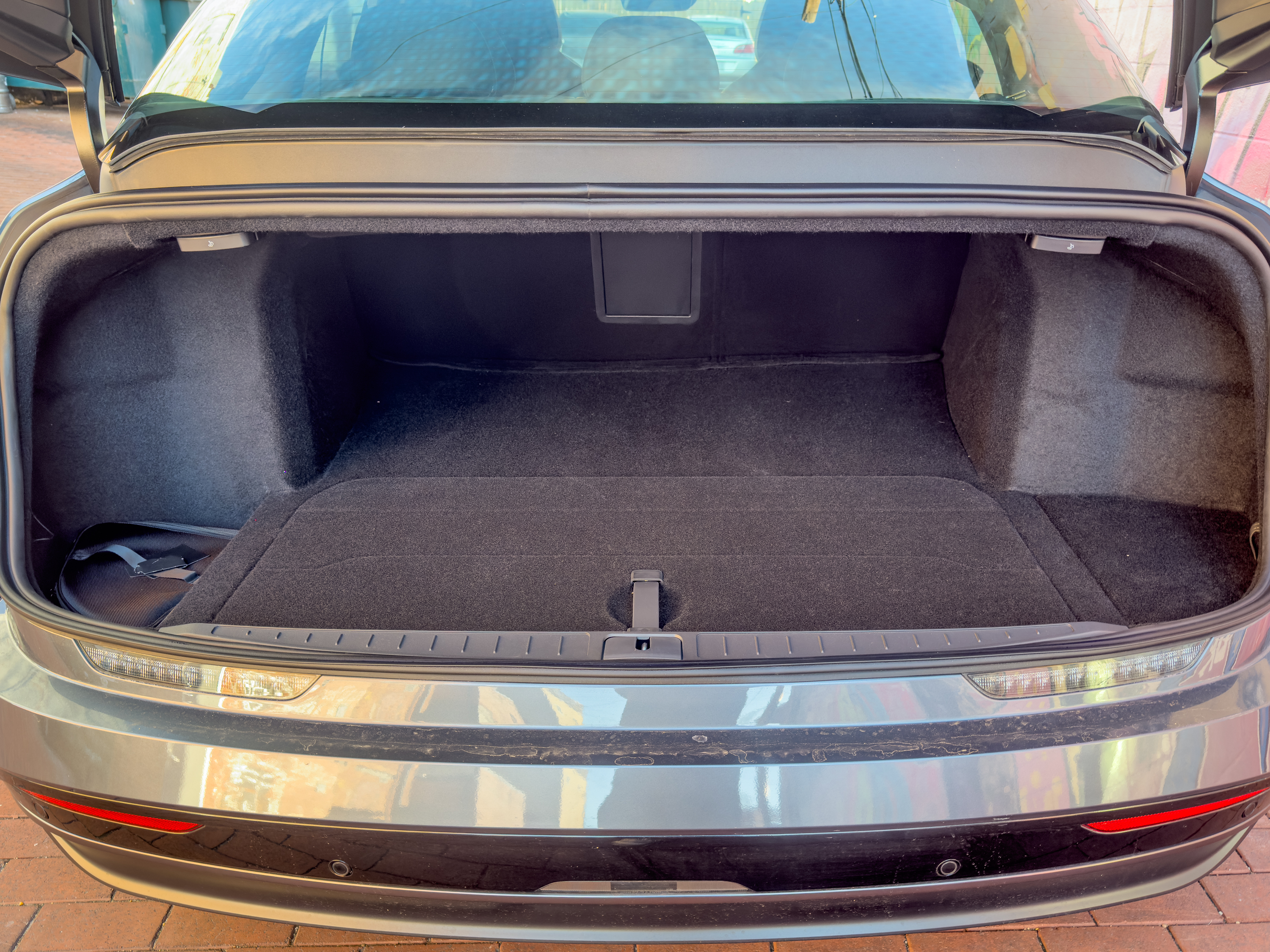
The trunk is very easy to load, with basically no lip.
Jonathan Gitlin
The trunk is very easy to load, with basically no lip.
Jonathan Gitlin
The experience back here really is limo-like, even if we never got the captain’s chairs of the original prototype.
Jonathan Gitlin
The trunk is very easy to load, with basically no lip.
Jonathan Gitlin
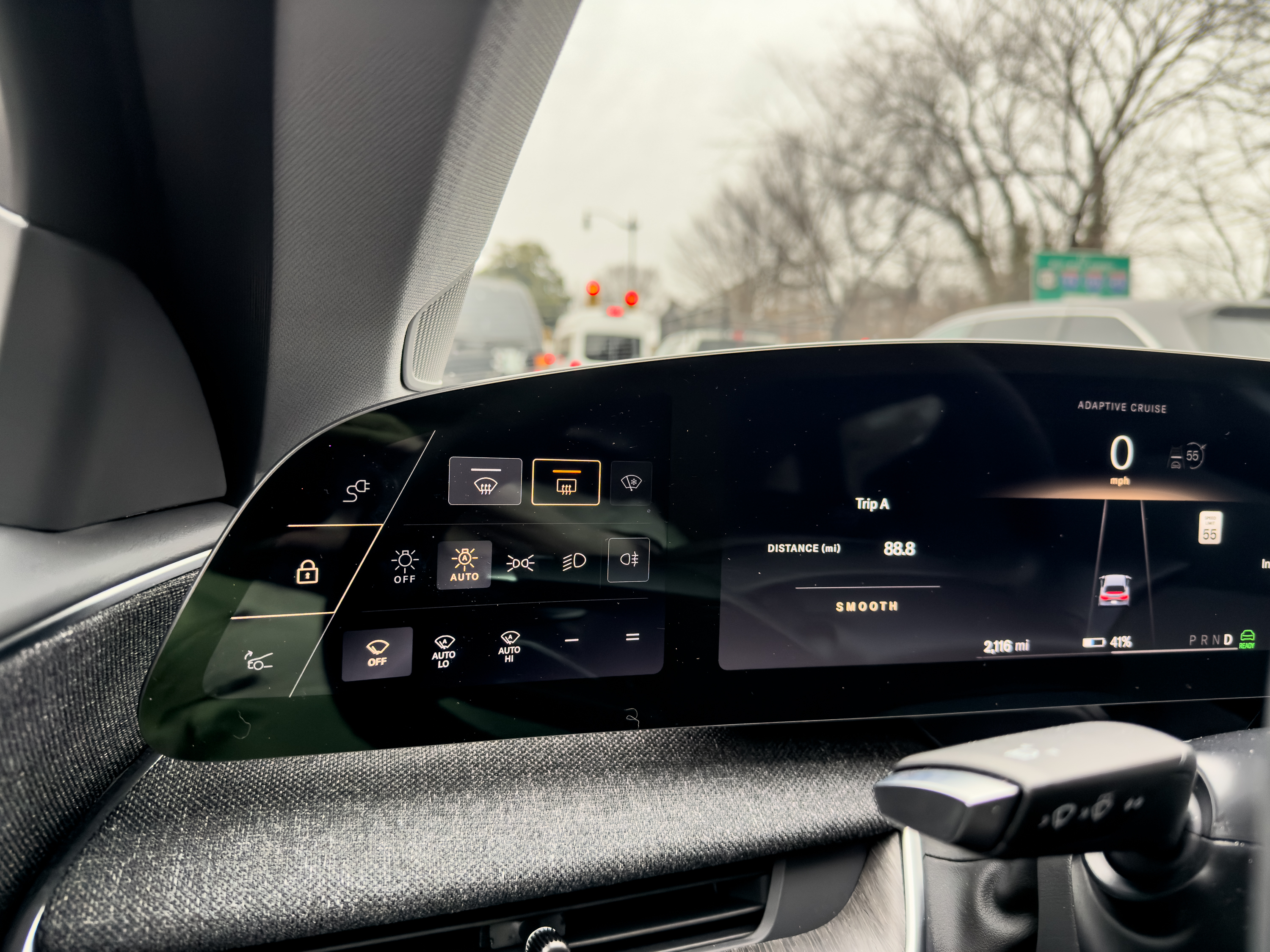
These controls always live here.
Jonathan Gitlin
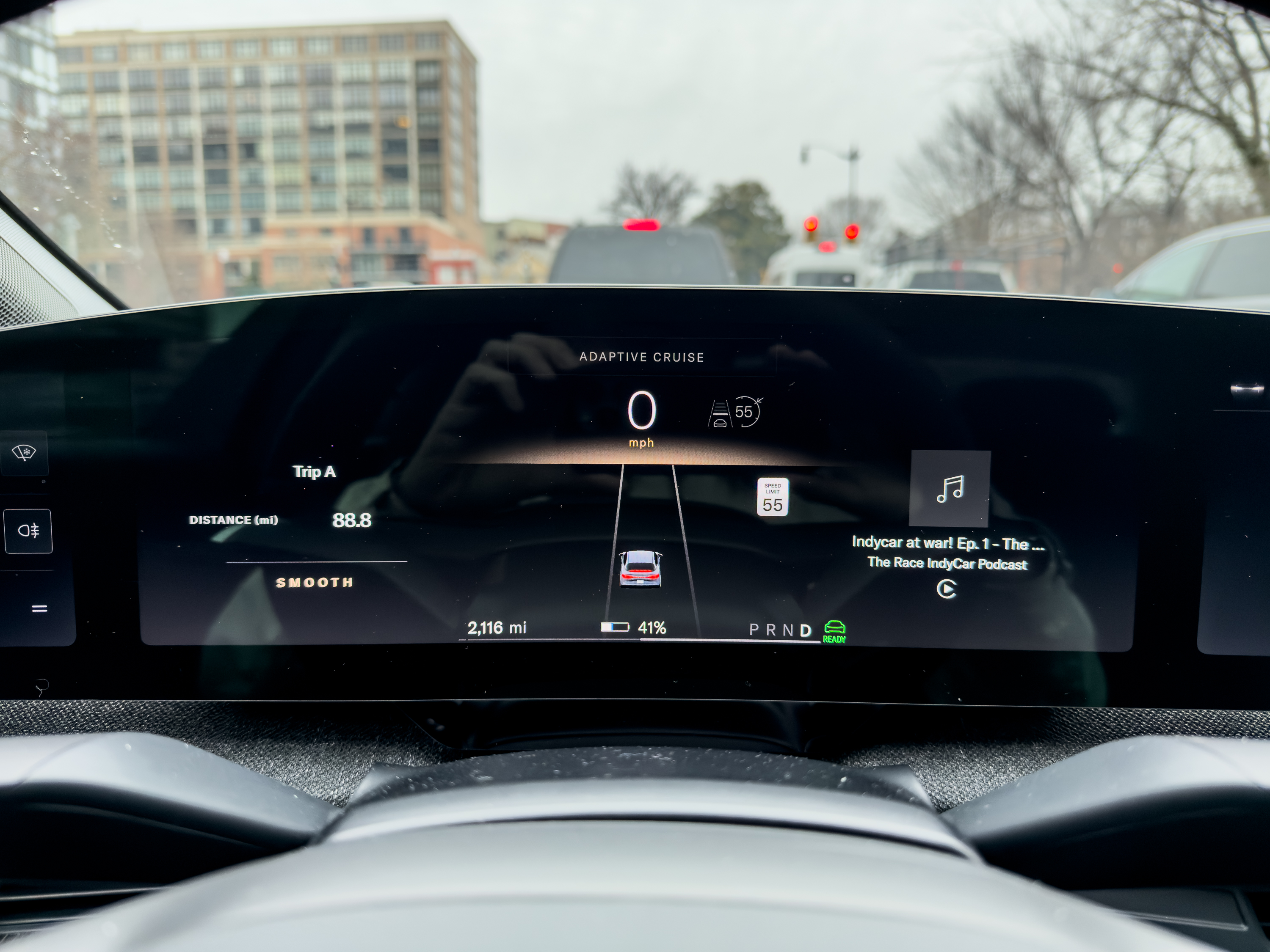
The main display for the driver is not overwhelming or flashy.
Jonathan Gitlin
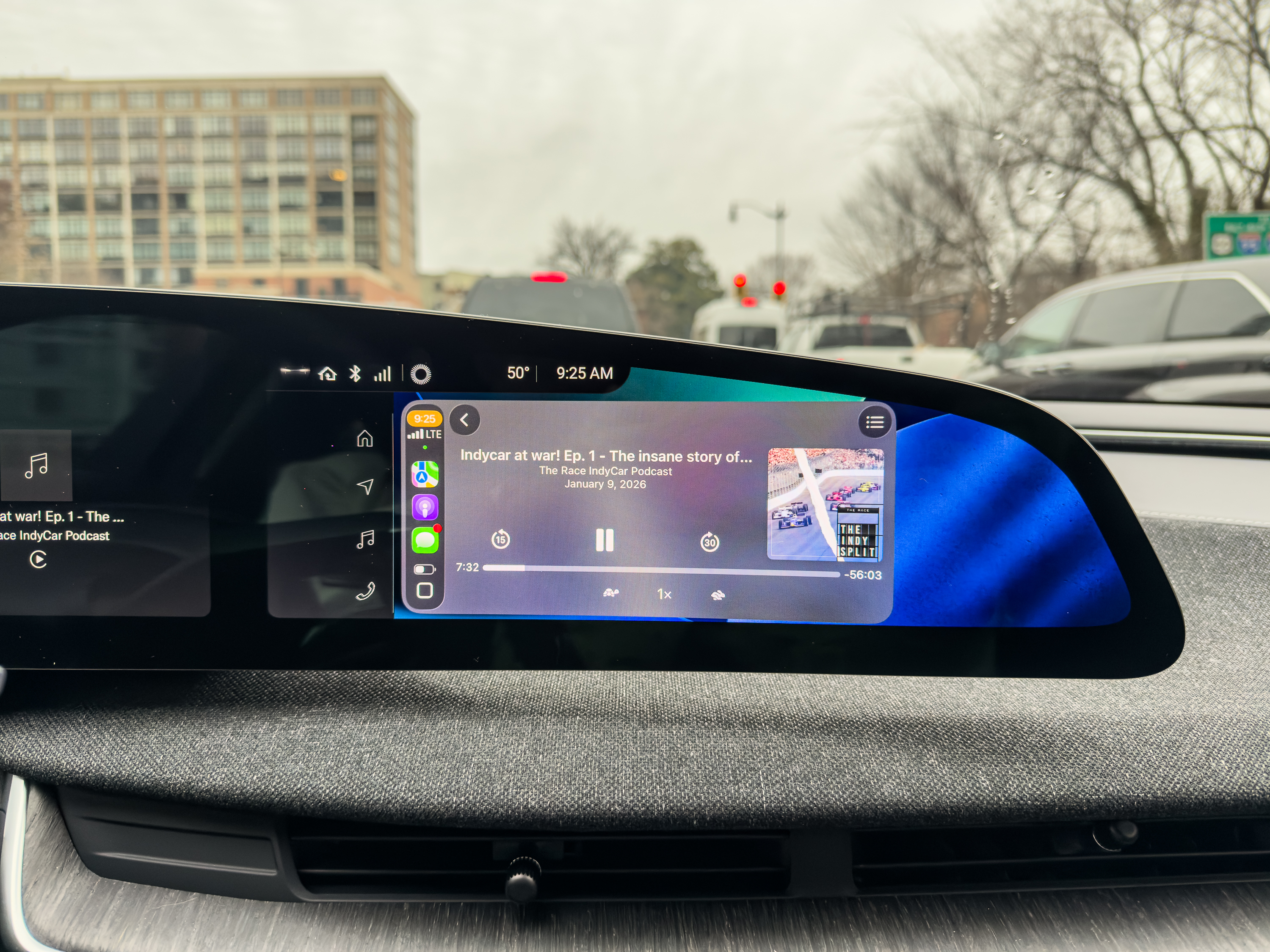
Here’s Apple CarPlay.
Jonathan Gitlin
For all the Air Touring’s power, it isn’t a car that goads you into using it all. In fact, I spent most of the week in the gentlest setting, Smooth. It’s an easy car to drive slowly, and the rather artificial feel of the steering at low speeds means you probably won’t take it hunting apices on back roads. I should note, though, that each drive mode has its own steering calibration.
On the other hand, as a daily driver and particularly on longer drives, the Touring did a fine job. Despite being relatively low to the ground, it’s easy to get into and out of. The rear seat is capacious, and the ride is smooth, so passengers will enjoy it. Even more so if they sit up front—Lucid has some of the best (optional, $3,750) massaging seats in the business, which vibrate as well as kneading you. There’s a very accessible 22 cubic foot (623 L) trunk as well as a 10 cubic foot (283 L) frunk, so it’s practical, too.
Future-proof?
Our test Air was fitted with Lucid’s DreamDrive Pro advanced driver assistance system ($6,750), which includes a hands-free “level 2+” assist that requires you to pay attention to the road ahead but which handles accelerating, braking, and steering. Using the turn signal tells the car to perform a lane change if it’s safe, and I found it to be an effective driver assist with an active driver monitoring system (which uses a gaze-tracking camera to ensure the driver is doing their part).





