
Luka Modrić’s Injury Casts Shadow Over Croatia’s 2026 World Cup Hopes
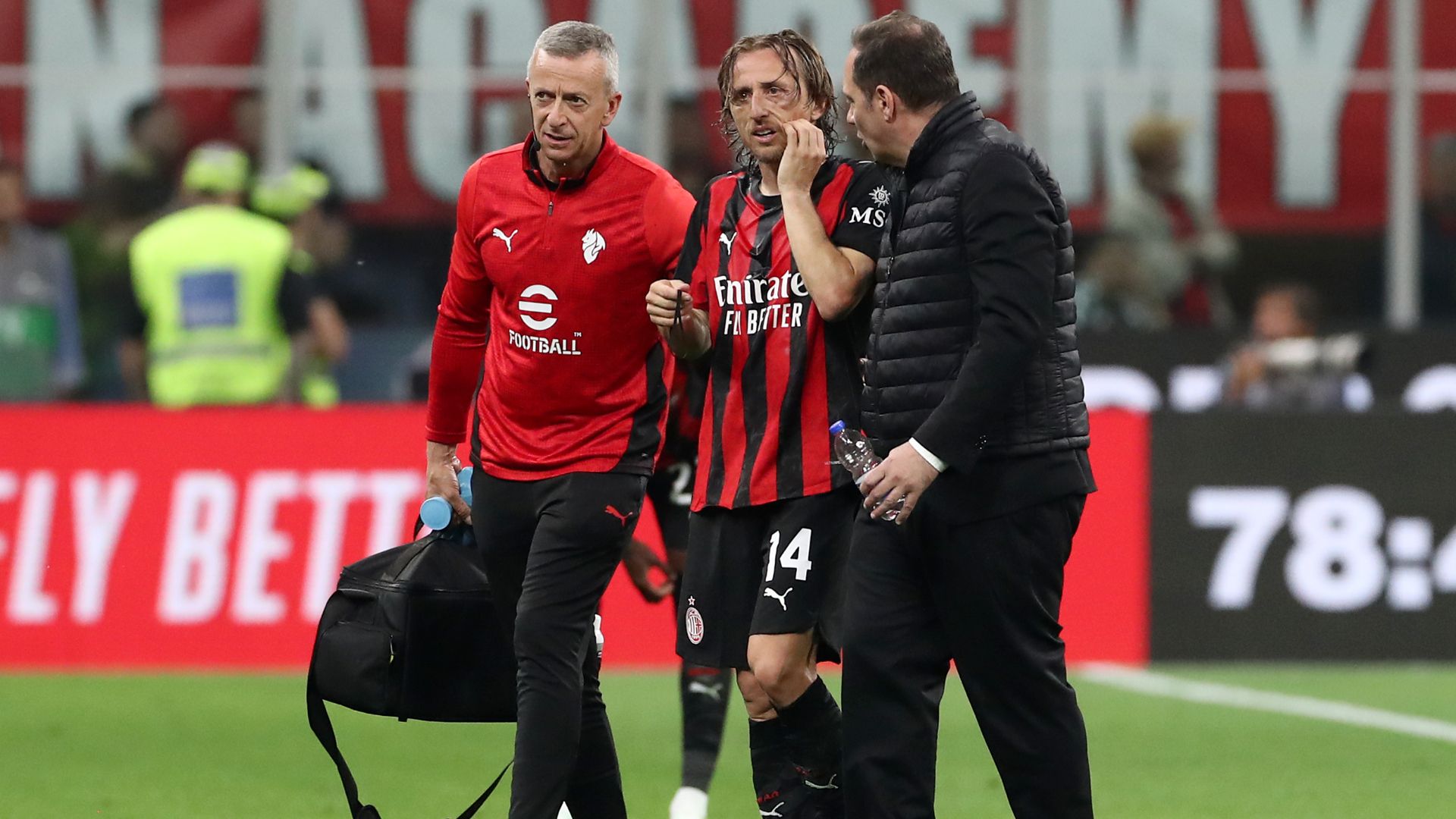
Six weeks before the 2026 FIFA World Cup kicks off in North America, Croatian football is facing a crisis. Luka Modrić, the 40-year-old captain and talismanic midfielder, has suffered a serious facial injury that threatens his participation in what could be his final major tournament. The veteran playmaker, who led Croatia to its greatest footballing achievements, underwent surgery on Monday after fracturing his left cheekbone in a collision during a Serie A match. Medical sources suggest he faces a recovery period of six to eight weeks—leaving his World Cup dreams hanging by a thread.
The injury occurred during AC Milan’s 2-1 victory over Juventus on Sunday, when Modrić collided with Manuel Locatelli in the 38th minute. He was immediately substituted, clutching his face, and later diagnosed with a “complex, multi-fragmented fracture of the left zygomatic bone,” according to a statement from the Milan club. While the surgery was deemed successful, the timeline for his return remains uncertain. The World Cup begins on June 11, meaning Modrić would need to defy medical expectations to take the field in Canada, Mexico, or the United States.
For Croatia, the stakes could not be higher. Modrić has been the heartbeat of the national team for nearly two decades, guiding them to the 2018 World Cup final—a historic run that earned him the Ballon d’Or—and a third-place finish in Qatar 2022. His leadership, vision, and clutch performances have made him indispensable, even as younger players have emerged. Without him, Croatia’s path through a challenging group—likely featuring opponents like Brazil, Japan, or Spain—becomes far more daunting.
The Injury: What We Know
Modrić’s injury was sustained in a physical duel with Juventus midfielder Manuel Locatelli, a former teammate at the Italian club. After the collision, he was seen leaving the pitch with an ice pack pressed to his face, a clear sign of distress. AC Milan later confirmed the diagnosis in a brief statement, noting that the surgery “went perfectly” but offering no guarantees about his availability for the World Cup.
According to Agence France-Presse (AFP), citing an unnamed source, Modrić is expected to miss six to eight weeks of action. This timeline would place his return squarely in mid-to-late June, just as the World Cup’s knockout stages begin. While some players have returned from similar injuries with protective masks—such as England’s Jack Grealish during Euro 2020—such a scenario would require Modrić to accept significant discomfort and reduced performance levels.
The Croatian Football Federation (HNS) has not yet issued an official update on Modrić’s condition, but sources close to the team have expressed pessimism. “It’s a race against time,” one insider told Goal.com. “Luka wants to play, but the body has to cooperate. At his age, every day counts.”
A Career Defined by Resilience
Modrić’s career has been a testament to perseverance. Born in the war-torn town of Zadar during the Croatian War of Independence, he overcame childhood displacement and poverty to become one of the greatest midfielders of his generation. His technical brilliance, work rate, and ability to dictate the tempo of games have earned him comparisons to legends like Andrea Pirlo and Xavi Hernández.

His international career has been equally storied. Since making his debut for Croatia in 2006, Modrić has appeared in five major tournaments, including three World Cups (2014, 2018, 2022) and two European Championships (2008, 2016). His performances in Russia 2018—where he captained Croatia to the final and won the Golden Ball as the tournament’s best player—cemented his legacy as one of the nation’s greatest athletes. Four years later in Qatar, he led the team to a third-place finish, further proving his enduring quality.
Now, at 40, Modrić is on the cusp of what could be his final World Cup. His age and the physical demands of modern football have led to speculation about his retirement, but he has repeatedly expressed his desire to continue as long as his body allows. “I still perceive good, I still enjoy playing,” he said in a recent interview with The Guardian. “Football is my life, and I want to give everything until the very end.”
Croatia’s World Cup Prospects Without Modrić
Croatia’s qualification for the 2026 World Cup was far from straightforward. Under the guidance of longtime coach Zlatko Dalić, the team navigated a challenging UEFA qualifying group that included the Czech Republic, Montenegro, the Faroe Islands, and Gibraltar. After a slow start—delayed by their participation in the UEFA Nations League quarterfinals—they secured their spot with a 3-1 victory over the Faroe Islands in October 2025.
The squad that will travel to North America is a mix of aging stars and emerging talent. Alongside Modrić, veterans like Andrej Kramarić and Ivan Perišić—both of whom appeared in all eight qualifying matches—will be crucial. However, the team’s depth in midfield is a concern. Younger players like Marcelo Brozović and Mateo Kovačić have struggled with injuries and inconsistent form, leaving Croatia vulnerable in the center of the park.
Without Modrić, the burden of leadership and creativity will fall on the shoulders of players like Luka Ivanušec and Lovro Majer, both of whom have shown promise but lack Modrić’s experience in high-stakes matches. Dalić may also need to adjust his tactical approach, potentially shifting to a more defensive setup to compensate for the loss of his playmaker.
Croatia’s group-stage opponents are yet to be finalized, but they are expected to face a mix of traditional powerhouses and rising teams. A potential clash with Brazil, Spain, or even hosts Canada could test their resilience. With Modrić, Croatia would have been a dark horse for a deep run. Without him, their path becomes far more precarious.
What Happens Next?
Modrić’s recovery will be closely monitored in the coming weeks. AC Milan’s medical team is expected to provide an update in early May, which could offer more clarity on his World Cup prospects. If he is deemed fit to travel, he may still require a protective mask—a solution that has been used by other players in similar situations, though it can be cumbersome and limit peripheral vision.
For Croatia, the next few weeks will be critical. The team is scheduled to play two international friendlies in late May—likely against high-profile opponents—as part of their World Cup preparations. These matches will serve as a test for the squad’s cohesion and adaptability in Modrić’s absence. Dalić has hinted at calling up additional midfielders to bolster the squad, though no official announcements have been made.
The Croatian Football Federation has also not ruled out the possibility of Modrić traveling with the team as a non-playing captain, a role that would allow him to provide leadership and support from the sidelines. However, such a scenario would be a bittersweet end to his World Cup journey.
Key Takeaways
- Injury Details: Modrić suffered a “complex, multi-fragmented fracture of the left zygomatic bone” in a collision during AC Milan’s match against Juventus. He underwent successful surgery but faces a six-to-eight-week recovery period.
- World Cup Timeline: The tournament begins on June 11, meaning Modrić would need to recover ahead of schedule to participate. Even if he returns, he may require a protective mask, which could impact his performance.
- Impact on Croatia: Modrić’s absence would be a significant blow to Croatia’s World Cup hopes. His leadership, experience, and creativity are irreplaceable, and the team’s midfield depth is already a concern.
- Career Legacy: At 40, this could be Modrić’s final World Cup. His career has been defined by resilience, from his childhood during the Croatian War of Independence to leading his nation to its greatest footballing achievements.
- Next Steps: AC Milan is expected to provide an update on Modrić’s condition in early May. Croatia’s upcoming friendlies will be crucial in assessing the team’s readiness without their captain.
The Broader Context: Aging Stars and the 2026 World Cup
Modrić’s injury highlights a broader trend in international football: the challenge of aging stars balancing club and country commitments. The 2026 World Cup, expanded to 48 teams, will feature several veteran players aiming to cap their careers with one final tournament. Alongside Modrić, Portugal’s Cristiano Ronaldo (41), Argentina’s Lionel Messi (39 in June 2026), and Mexico’s Andrés Guardado (40) are all expected to participate, assuming their clubs and bodies cooperate.

The physical demands of modern football make such longevity increasingly rare. Modrić’s ability to maintain his performance levels at 40 is a testament to his professionalism and adaptability. However, injuries like his serve as a reminder of the fine line between extending a career and pushing the body too far.
For Croatia, Modrić’s potential absence is also a symbolic moment. His career has spanned an era of Croatian football, from the post-war generation of the 1990s to the golden age of the 2010s. His leadership has been instrumental in shaping the national team’s identity, and his departure—whenever it comes—will mark the end of an era.
What Fans Can Do
Croatian fans eager for updates on Modrić’s condition can follow official channels from the Croatian Football Federation (HNS) and AC Milan. Both organizations are expected to provide regular updates as the situation develops. Supporters can also engage with the team’s preparations by following their social media accounts, where behind-the-scenes content and training updates are often shared.
For those planning to attend the World Cup, tickets are available through FIFA’s official ticketing portal. Croatia’s group-stage matches are likely to be among the most sought-after, given the team’s recent success and passionate fanbase.
The Road Ahead
The next few weeks will be critical for Luka Modrić and Croatian football. While the injury is a setback, it is not yet the end of the story. If Modrić can defy the odds and recover in time, he will have one last chance to lead his nation on the world’s biggest stage. If not, his legacy as one of Croatia’s greatest players is already secure—but the 2026 World Cup will feel incomplete without him.
The Croatian Football Federation is expected to announce its final squad for the tournament in late May. Until then, fans, teammates, and football lovers around the world will be watching Modrić’s recovery closely, hoping for a fairytale ending to an extraordinary career.
What do you think? Will Luka Modrić make it to the 2026 World Cup? Share your thoughts in the comments below and join the conversation on social media.