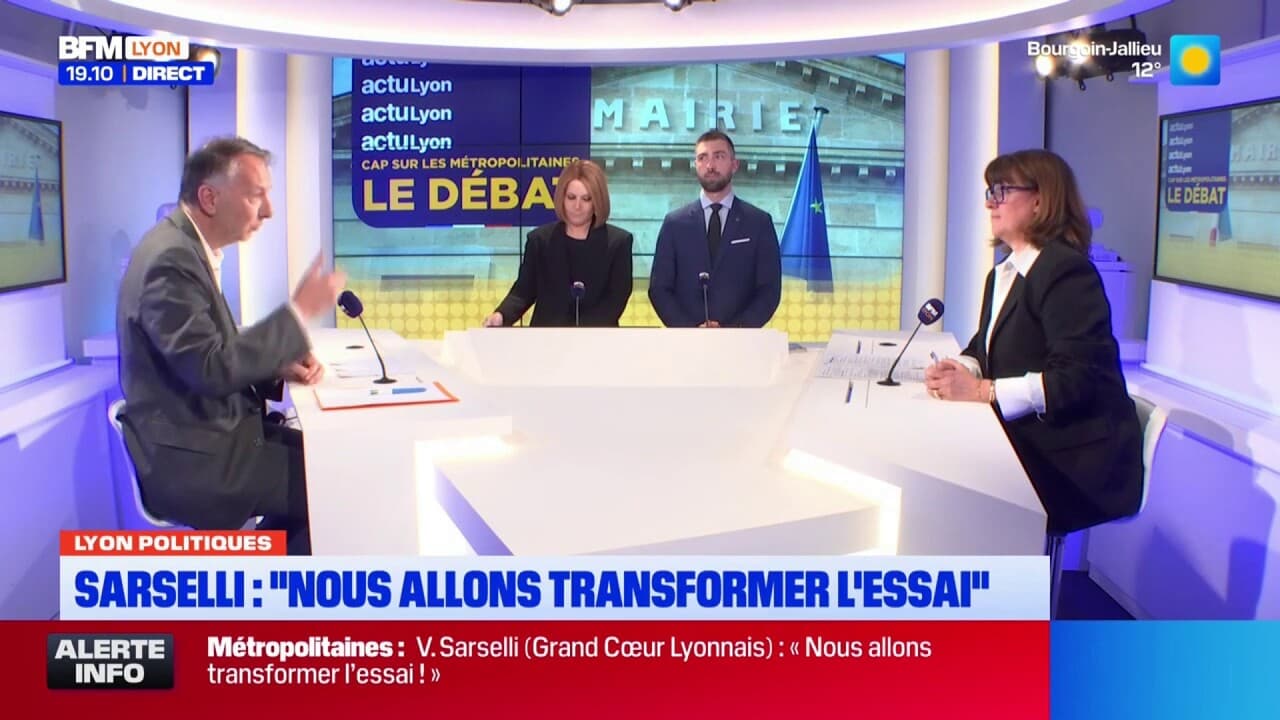
Lyon, France – As the second round of the 2026 Metropolitan Council of Lyon election approaches, candidates Bruno Bernard and Véronique Sarselli faced off in a televised debate on BFM Lyon on Thursday, March 19th. The debate, held just three days before voters head to the polls on March 22nd, provided a crucial platform for the candidates to articulate their visions for the future of the Lyon metropolitan area. The election will determine all 150 members of the Metropolitan Council, with 76 seats needed to secure a majority.
Bernard, representing the Union of the Left and Ecologists (LÉ–EELV), is seeking to retain his position as President of the Metropolis, a role he currently holds. Sarselli, representing Les Républicains (LR), aims to unseat him and steer the metropolitan area in a different direction. The debate offered voters a direct comparison of their policy proposals and leadership styles, covering a range of issues pertinent to the region, from transportation and housing to economic development and environmental sustainability. The stakes are high, as the outcome will significantly shape the governance and priorities of the Lyon metropolitan area for the next several years.
The Candidates and Their Platforms
Bruno Bernard’s campaign has centered on continuing the policies implemented during his current term, emphasizing ecological transition, social justice, and citizen participation. He has advocated for increased investment in public transportation, the development of affordable housing, and the promotion of sustainable economic practices. Bernard’s LÉ–EELV coalition aims to position Lyon as a leader in environmental innovation and social equity. He previously won the election in 2020, and is hoping to secure another term to continue his work.
Véronique Sarselli, has presented a platform focused on restoring economic competitiveness, enhancing security, and streamlining public services. She has criticized Bernard’s administration for what she perceives as excessive spending and a lack of focus on practical concerns facing residents and businesses. Sarselli’s LR party emphasizes fiscal responsibility, public safety, and support for local businesses. She aims to present a vision of a more efficient and responsive metropolitan government.
Key Issues Discussed During the Debate
The debate on BFM Lyon covered a wide array of topics crucial to the future of the Lyon metropolitan area. Transportation emerged as a central point of contention, with both candidates outlining their plans for improving public transit and addressing traffic congestion. Bernard championed further expansion of the tram network and investment in cycling infrastructure, even as Sarselli advocated for optimizing existing transportation systems and prioritizing road maintenance. The election is crucial for determining the future direction of these policies.
Housing affordability was another key issue, with both candidates acknowledging the challenges faced by residents in accessing adequate and affordable housing. Bernard proposed measures to increase the supply of social housing and regulate rental prices, while Sarselli emphasized the demand to incentivize private sector investment in housing development and reduce bureaucratic obstacles. The differing approaches reflect the broader ideological divide between the candidates.
Economic development also featured prominently in the debate. Bernard highlighted the importance of supporting local businesses and promoting innovation in sectors such as technology and green energy. Sarselli stressed the need to attract foreign investment and reduce the tax burden on businesses to stimulate economic growth. Both candidates acknowledged the importance of creating jobs and fostering a vibrant economy, but they differed on the best strategies to achieve these goals.
The Political Landscape and Potential Outcomes
The 2026 Lyon metropolitan election is taking place in a complex political landscape. The French political system is characterized by a multi-party system, and the outcome of the election is likely to depend on the ability of candidates to forge alliances and mobilize their supporters. According to the Wikipedia entry, in the last election, Bruno Bernard’s LÉ–EELV secured 84 seats, while Véronique Sarselli’s LR party held 43. The Rassemblement National (RN) party held no seats in the previous council.
Recent polling data suggests a close race between Bernard and Sarselli. While Bernard enjoys the advantage of incumbency, Sarselli has gained momentum in recent weeks by focusing on concerns about economic security and public safety. The outcome of the election could have significant implications for the broader political landscape in France, as it will be seen as a test of the strength of the left-wing and right-wing parties. The election is scheduled for two rounds, March 15th and March 22nd, 2026, to elect the metropolitan council.
The Role of the Rassemblement National
While not directly involved in the final debate between Bernard and Sarselli, the presence of the Rassemblement National (RN) in the election is a notable factor. The RN, led by Marine Le Pen, has been gaining support in recent years, and its performance in the Lyon metropolitan election could signal a shift in the political landscape. Whereas the RN held no seats in the previous council, their participation in the election adds another layer of complexity to the race. Their voters could potentially swing the election in either direction, depending on their strategic choices.
What’s Next for Lyon?
Following the debate, both Bernard and Sarselli are expected to intensify their campaign efforts in the final days leading up to the election. They will likely focus on mobilizing their base supporters and reaching out to undecided voters. The outcome of the election will determine the direction of the Lyon metropolitan area for the next several years, impacting everything from transportation and housing to economic development and environmental policy.
The second round of voting is scheduled for March 22nd, 2026. Voters will be closely watching the candidates’ final pitches and evaluating their plans for the future of the region. The election represents a critical moment for Lyon, and the choices made by voters will have lasting consequences. The election will determine the composition of the 150-member Metropolitan Council, with a majority requiring 76 seats.
The next key date will be the official announcement of the election results on March 22nd. Following the results, the newly elected Metropolitan Council will convene to elect the President of the Metropolis. The identity of the next President will be a crucial indicator of the direction the Lyon metropolitan area will take in the years to come.
What are your thoughts on the Lyon Metropolitan election? Share your opinions and predictions in the comments below. Don’t forget to share this article with your friends and colleagues to keep them informed about this important event.
Keep reading