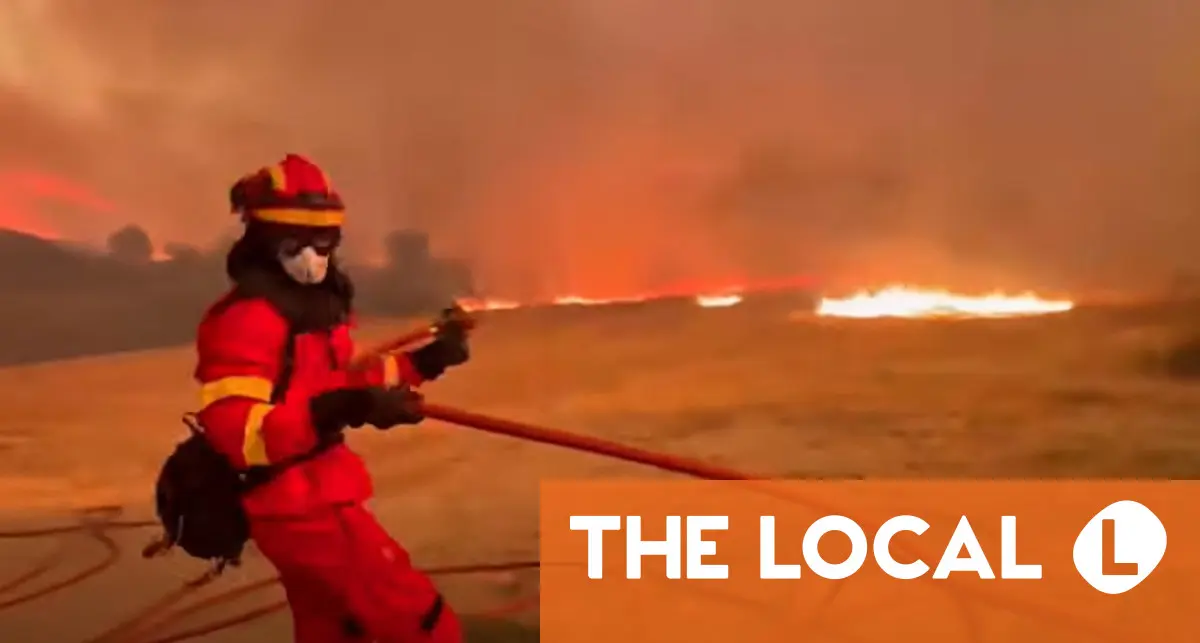
Firefighters in Spain are battling a significant wildfire that has scorched more than 12,000 hectares of land in the province of Segovia, approximately 100 kilometers north of Madrid. The blaze, which began in the municipality of Cerezo de Arriba, has prompted the evacuation of several hundred residents as emergency crews struggle to contain the flames amid challenging weather conditions.
According to the Junta de Castilla y León, the regional government responsible for coordinating the emergency response, the fire reached a Level 2 alert status on the scale of the regional forest fire protection plan (INFOCAL), indicating a high degree of danger that necessitates the mobilization of resources beyond those immediately available at the local level. The scale of the destruction highlights the ongoing vulnerability of Spain’s central plateau to extreme wildfire events during the summer season.
Emergency Response and Evacuation Efforts
The fire, which broke out on Saturday, quickly escalated due to strong winds and high temperatures, conditions that have become increasingly common during Mediterranean summers. Local authorities reported that residents from several nearby villages were evacuated as a precautionary measure to ensure public safety as the fire front advanced through rugged, forested terrain. The Ministry for the Ecological Transition and the Demographic Challenge has deployed specialized aerial and ground units to assist regional forces, including brigades specialized in forest fire extinction (BRIF) and amphibious aircraft capable of scooping water from nearby reservoirs.
Coordinating the response involves multiple agencies, including the Civil Guard (Guardia Civil) and local emergency services, who are working to establish containment lines. The primary objective for ground crews remains the protection of populated areas and critical infrastructure. The regional government has advised citizens to remain alert and follow the instructions of emergency personnel, as smoke plumes have been visible from significant distances, affecting air quality in the surrounding rural areas.
Climate Factors and Regional Vulnerability
The incident in Segovia reflects a broader pattern of climate-driven wildfire risks across the Iberian Peninsula. According to the European Forest Fire Information System (EFFIS), Spain consistently ranks among the most affected nations in Europe regarding total hectares burned annually. Scientists have noted that the combination of prolonged drought periods and record-breaking heat waves creates “fuel-heavy” landscapes, where even minor ignition sources can lead to rapid, uncontrollable fire spread.
The topography of the area north of Madrid—characterized by dense pine forests and steep valleys—complicates the maneuvers of heavy machinery and ground vehicles. Aerial support is essential in these sectors, though firefighters must often pause these operations during the night or when wind gusts exceed safety thresholds for pilots. The regional authorities have emphasized that the investigation into the exact cause of the ignition remains ongoing, with forensic teams expected to survey the area once the fire is declared under control.
What Happens Next
As of the most recent updates from the regional government, the focus remains on stabilization. Once the fire is contained, experts from the environmental agency will begin an assessment of the ecological impact on the affected 12,000 hectares, which includes both timberland and natural habitats. The State Meteorological Agency (AEMET) continues to provide updated weather forecasts for the region, which are critical for determining the shifts in fire behavior over the coming days.
Residents who have been displaced are currently being housed in temporary shelters provided by municipal authorities. The government has stated that they will provide further updates on the containment percentage and the potential for a phased return of residents as safety conditions permit. For those seeking real-time information or safety alerts, the regional government of Castilla y León maintains an active information portal on their official website. We will continue to monitor the situation as official reports are released.
Have you been affected by the fires in the Segovia region, or do you have information regarding official relief efforts? Please share your experiences or questions in the comments section below.