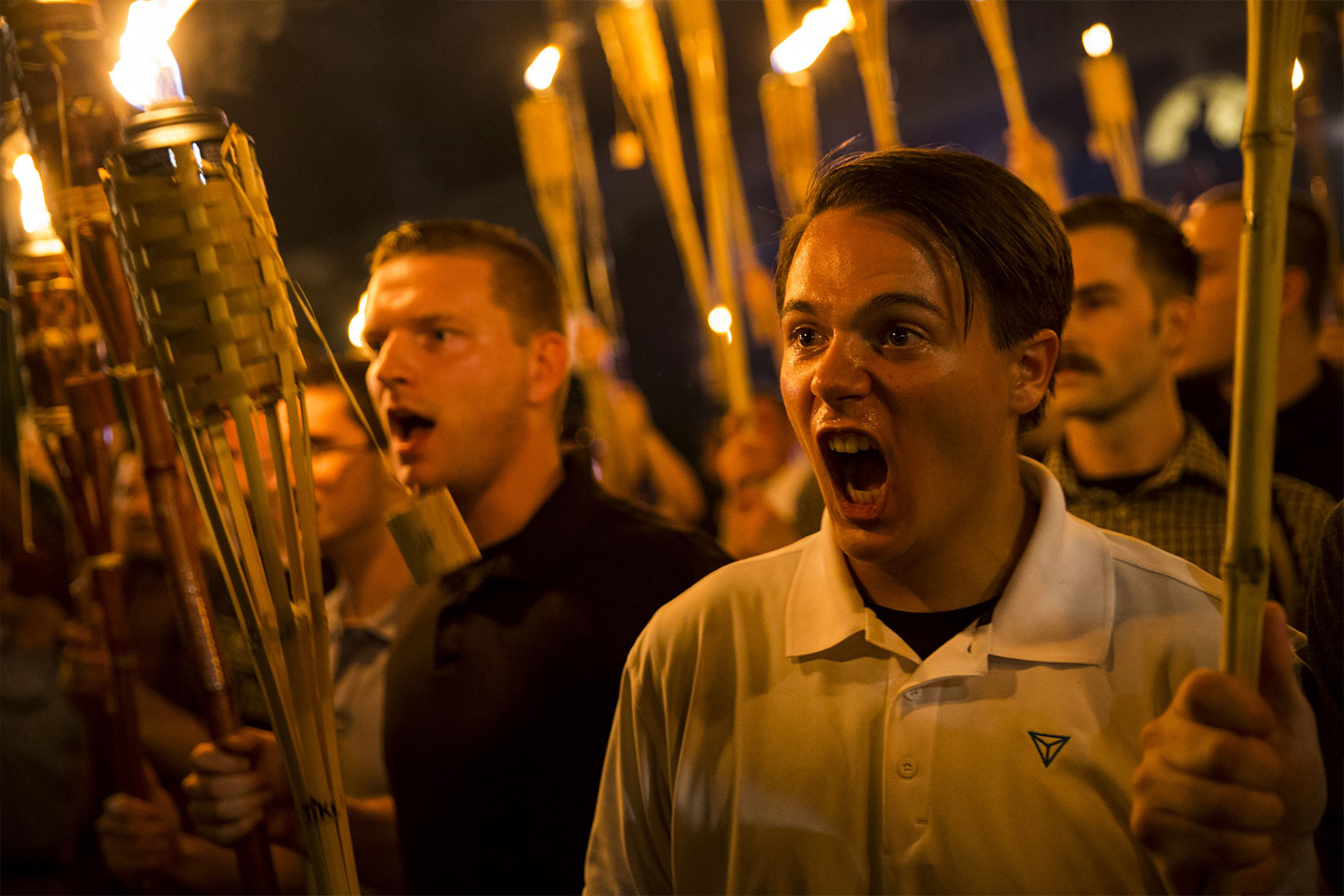
Conservative media figures and political allies have amplified claims that the 2017 Unite the Right rally in Charlottesville, Virginia, was a staged event orchestrated by the Southern Poverty Law Center (SPLC), despite overwhelming evidence confirming the rally occurred and resulted in real violence and loss of life. This narrative has gained traction following a federal indictment of the SPLC in Alabama, which critics argue serves as a foundation for broader disinformation efforts rather than a legally sound prosecution. The allegations center on the SPLC’s long-standing use of paid informants to infiltrate extremist groups—a practice the organization says is essential to its mission of monitoring and combating hate.
The indictment, returned on April 21, 2024, by a federal grand jury in the Middle District of Alabama, charges the SPLC with 11 counts: six counts of wire fraud, four counts of false statements to a federally insured bank and one count of conspiracy to commit money laundering. Prosecutors allege the SPLC misled donors by using funds to pay informants who infiltrated hate groups, then funneled those payments through shell companies to conceal identities. However, legal experts have questioned the validity of the charges, noting that gathering intelligence on extremist organizations aligns with the SPLC’s stated mission and that donors interviewed by The Intercept confirmed they expected their contributions to support such investigative work.
Former federal civil rights prosecutor and FBI agent Kyle Boynton told CBS News that the indictment lacks the elements necessary to prove wire fraud, stating, “I don’t think any prosecutor with white-collar experience would look at this indictment and believe it makes out the elements of a crime.” Similarly, former Justice Department fraud section attorney William Johnston described the theory that paying informants to dismantle hate groups contradicts the SPLC’s mission as “very stretched.” These assessments suggest the case may face significant hurdles in court, with some experts predicting dismissal before trial.
The Charlottesville rally itself took place on August 11–12, 2017, drawing white nationalists, neo-Nazis, and other far-right groups to protest the planned removal of a Confederate statue. On the second day, James Alex Fields Jr. Drove his car into a crowd of counterprotesters, killing 32-year-old Heather Heyer and injuring more than a dozen others. Fields was later convicted of federal hate crime charges and sentenced to life in prison plus 419 years, while the state of Virginia imposed an additional life sentence. The event was widely documented by journalists, law enforcement, and participants, with multiple investigations confirming its authenticity and the role of extremist organizers.
Despite this record, figures within the MAGA media ecosystem have promoted the false flag theory. On Truth Social, former President Donald Trump suggested that if the SPLC indictment were valid, the 2020 election should be vacated. White House press secretary Karoline Leavitt claimed on Fox News that the SPLC had “transformed into a criminal organization run by fraudsters who are paying for and inciting the very racism they claim to stand against.” FBI Director Kash Patel echoed this sentiment in an interview with Sean Hannity, asserting, “The charity that supposedly fought the Klan funded the Klan. The charity that supposedly fought Neo-Nazis funded Neo-Nazis.” On Fox News’ “The Five,” co-host Jesse Watters characterized racism in America as a “big fat psyop,” while Greg Gutfeld suggested the Charlottesville event was a fabricated narrative designed to target conservatives like Charlie Kirk.
Far-right influencer Jack Posobiec posted on X (formerly Twitter) that “Charlottesville was staged by the SPLC,” while the Epoch Times published an opinion piece titled “Unite the Right Was a Left-Wing Front.” Sean Davis, co-founder of The Federalist, argued on X that the SPLC “funded and organized [Unite the Right] while pretending to be scandalized by it.” These claims have been rejected by individuals directly involved in the rally. Richard Spencer, a central organizer of the event and coiner of the term “alt-right,” told X that the indictment resembled “the Epstein Binders” more than a real criminal case. Nick Fuentes, a far-right podcaster who has been accused of ties to extremist groups, denied collaborating with the SPLC and accused media outlets of conducting a “new wave of attacks” against him.
The SPLC, founded in 1971 in Montgomery, Alabama, has long been a target of conservative criticism for its “Hate Map,” which tracks extremist organizations across the United States. Groups such as the Family Research Council and the Federation for American Immigration Reform have objected to being labeled hate groups, arguing the designation unfairly equates them with violent organizations. Elon Musk has also amplified critiques of the SPLC, describing it as a partisan actor rather than a neutral watchdog. Nevertheless, the organization has played a significant role in legal actions against the Ku Klux Klan and other white supremacist groups, including contributing to bankruptcy judgments that weakened the Klan’s financial infrastructure in the late 1980s.
Legal analysts emphasize that the use of informants to monitor extremist activity is a recognized and lawful investigative tactic, employed by both private watchdog groups and government agencies when conducted within legal boundaries. The SPLC has maintained that its informant program operates in compliance with federal and state laws, and that any coordination with authorities follows established protocols for sharing threat intelligence. The Department of Justice, which traces its origins to 1870 and was initially tasked with enforcing civil rights laws in the post-Reconstruction South, has not presented evidence in the indictment showing that the SPLC’s actions violated donor agreements or constituted fraud under federal statutes.
As of May 2024, the SPLC has not entered a plea in response to the indictment, and no trial date has been set. The organization has denied wrongdoing and stated it will defend itself vigorously in court. Legal observers note that even if the charges are ultimately dismissed, the narrative promoted by conservative media may persist, as similar conspiracy theories have done in the past regardless of judicial outcomes. The indictment remains active in the U.S. District Court for the Middle District of Alabama, with docket number 1:24-cr-00057.
For readers seeking official updates on the case, the court’s public docket is accessible through the PACER system or via third-party services like CourtListener, which provides free access to federal court documents. The SPLC maintains a public resource center detailing its history, mission, and legal work, including its efforts to combat hate groups through litigation and education.
What do you think about the intersection of legal accountability and political disinformation in cases like this? Share your perspective in the comments below, and consider sharing this article to help others stay informed.
Related reading