
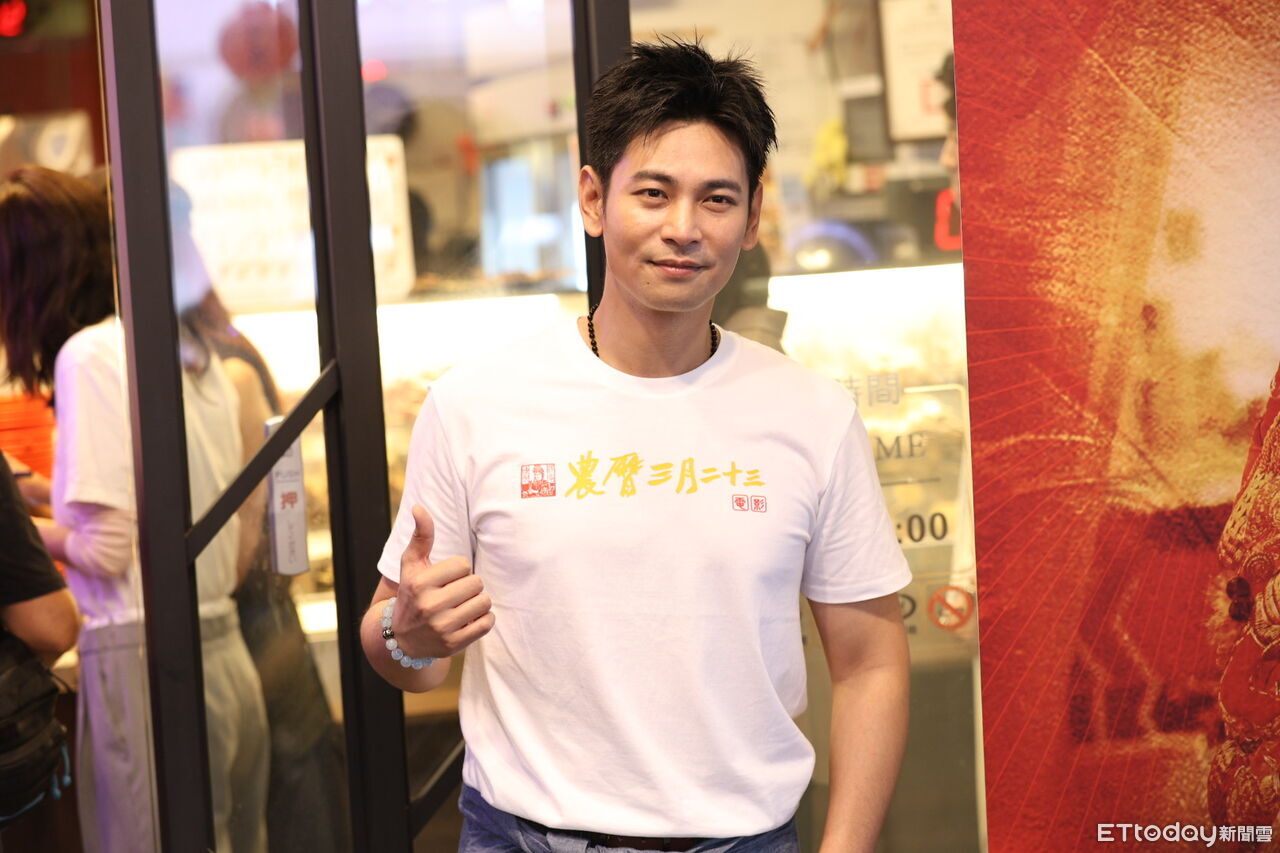
Taiwanese actor Yang Ziyi recently shared a remarkable experience from his participation in the annual Baishatun Mazu pilgrimage, where he witnessed what he described as a miraculous extension of a friend’s mother’s life through a traditional ritual known as “exchanging flowers” with the deity’s palanquin. Speaking during promotional events for the upcoming film The 23rd Day of the Third Lunar Month, Yang recounted how a close friend’s mother had been given only three months to live by doctors due to a serious illness. Determined to help, Yang joined his friend in the pilgrimage to Baishatun, where devotees seek Mazu’s blessings by attempting to touch or exchange flowers with her sacred palanquin during the procession.
According to Yang’s account, not only did they succeed in reaching the palanquin and performing the ritual, but the friend’s mother went on to live an additional three years beyond the initial prognosis, passing away peacefully only after that extended period. Yang expressed that this event left a deep and lasting impression on him, describing it as an unexplained divine intervention that strengthened his personal faith in Mazu’s compassion and protective power. He emphasized that such experiences are difficult to reconcile with scientific explanation but remain profoundly meaningful to those who witness them.
The film The 23rd Day of the Third Lunar Month, which centers on Mazu faith and folklore, is set for nationwide release in Taiwan on May 8. During recent promotional activities, Yang was joined by co-stars Wu Zhengxun and Chen Mingzhen, who also spoke about their spiritual experiences during filming. Chen, who portrays the “Human Mazu” in the movie, said she frequently felt overwhelmed with emotion even as in costume, often moved to tears simply by standing before the deity’s image, stating that she felt she was not acting but truly inhabiting the role.
Wu Zhengxun received particular praise from Yang for his emotional authenticity on set, with Yang commenting that whenever the director called for a take, Wu’s eyes would immediately well up and tears would fall precisely on cue, likening his performance to a “male version of Liu Xuehua,” a renowned Taiwanese actress known for her deeply expressive acting style.
In addition to sharing the story of the extended life, Yang revealed a peculiar incident involving his manager during the same pilgrimage. Attempting to discreetly photograph the famed “pink supercar” palanquin — a nickname given to Mazu’s ornately decorated vehicle due to its vibrant color and elaborate design — the manager snapped a picture without first seeking permission from the deity, a customary gesture of respect among pilgrims. Upon reviewing the photos later on the high-speed rail return trip, the manager found that while all other images were normal, the photo of the palanquin appeared completely blank — a pure white image with no discernible details.
When Yang inquired whether the manager had greeted Mazu before taking the photo, the manager admitted he had not, prompting Yang to advise that anyone wishing to photograph the palanquin should first offer a silent greeting as a sign of reverence. He framed the incident not as a supernatural punishment but as a cultural reminder of the importance of mindfulness and respect when engaging with religious traditions.
The Baishatun Mazu pilgrimage, held annually in Miaoli County, is one of Taiwan’s most significant religious events, drawing hundreds of thousands of devotees who follow the palanquin on its months-long journey between temples. The event is deeply rooted in local folk belief, where Mazu — originally a historical figure named Lin Moiniang from Fujian Province who was deified after her death — is believed to protect travelers, fishermen, and those in distress. Over time, her worship has spread across Taiwan and into overseas Chinese communities, becoming a cornerstone of popular religious practice.
While the film The 23rd Day of the Third Lunar Month dramatizes elements of Mazu lore, it also aims to highlight themes of compassion, community, and spiritual resilience. The production team has emphasized their commitment to portraying the faith with authenticity, consulting with religious practitioners and incorporating real pilgrimage experiences into the narrative.
As of now, no official statements have been released by religious authorities or government bodies regarding the specific claims made by Yang Ziyi about miraculous healings or photographic anomalies during the pilgrimage. Such personal testimonies, while not empirically verifiable, are considered meaningful within the cultural and spiritual context of Mazu devotion, where faith and personal experience often intertwine.
The movie’s release on May 8 will mark its debut in theaters across Taiwan, with promotional activities continuing in the lead-up to the premiere. Audiences interested in Taiwanese cinema, folk religion, or stories blending the supernatural with human emotion are anticipated to show strong interest in the film.
For updates on the film’s release, screening schedules, or related events, readers are encouraged to consult official distributors’ websites or local entertainment news outlets as the premiere date approaches.
What are your thoughts on stories where personal faith intersects with unexplained experiences? Have you encountered similar accounts in your own community or cultural background? Share your reflections in the comments below and help keep the conversation going.