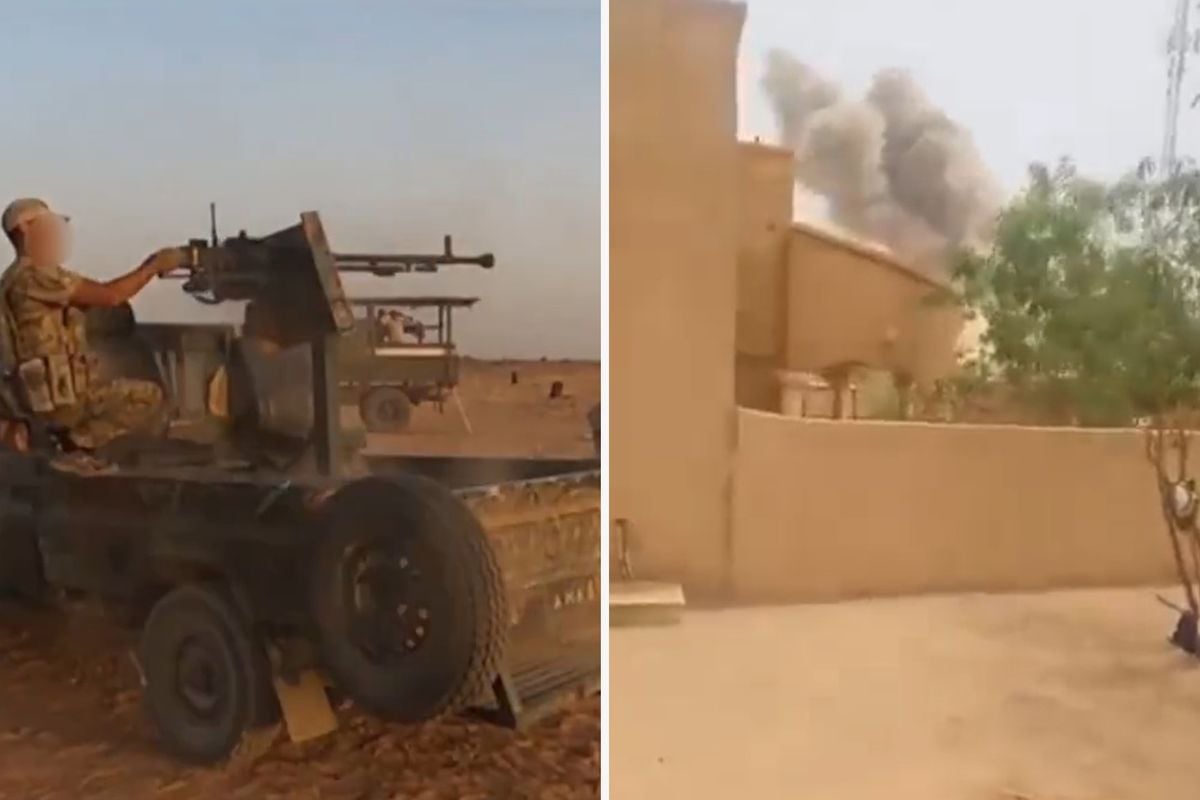
Escalating Conflict in Mali: Armed Groups Advance, Defense Minister Killed
Mali is facing a surge in violence as clashes between armed groups and government forces intensify, raising concerns about regional stability. The recent attacks, coordinated by a strategic alliance between Islamist militants and Tuareg separatists, have resulted in significant territorial gains for the insurgents and the death of Mali’s Defense Minister, according to reports from late April 2026. This escalation marks a dangerous turning point in the ongoing conflict, threatening to further destabilize the West African nation.
The coordinated attacks began on April 25th, targeting multiple locations across the country, including the capital, Bamako. The violence has prompted a reassessment of security strategies and raised questions about the effectiveness of the current military government’s approach to combating the insurgency. The situation is further complicated by the withdrawal of Russia’s Africa Corps from the northern city of Kidal, a move confirmed by the mercenary group itself.
A New Alliance: JNIM and FLA Coordinate Attacks
A key development in the recent escalation is the unprecedented collaboration between the Azawad Liberation Front (FLA), a Tuareg separatist group, and Jama’at Nasr al-Islam wal Muslimin (JNIM), an al-Qaeda-linked Islamist militant organization. JNIM has publicly stated that some of the attacks were coordinated with the FLA, signaling a strategic partnership aimed at regime change. This alliance represents a significant shift in the dynamics of the conflict, combining the FLA’s local knowledge and control with JNIM’s extensive network and ideological motivation.
The FLA announced on April 26th that it had taken control of Kidal, declaring the city “free.” This claim has not been independently verified, but it underscores the group’s growing influence in the region. The seizure of Kidal, a historically significant city for the Tuareg population, is a major symbolic and strategic victory for the separatists. The city had been a stronghold of the Tuareg rebellion for years, and its fall represents a significant blow to the Malian government’s authority in the north.
Defense Minister Killed in Suicide Attack
The violence reached a tragic climax with the death of Mali’s Defense Minister in a suicide attack targeting his residence. While details surrounding the attack remain limited, the loss of such a high-ranking official underscores the severity of the security situation and the insurgents’ willingness to target key government figures. The attack has sent shockwaves through the country and prompted a period of national mourning.

The assassination of the Defense Minister comes at a critical juncture, as the Malian government struggles to contain the escalating violence and maintain control over its territory. The attack is likely to further erode public trust in the government’s ability to provide security and could embolden the insurgents to launch further attacks.
Russia’s Africa Corps Withdraws from Kidal
Adding another layer of complexity to the situation is the confirmed withdrawal of Russia’s Africa Corps from Kidal. The mercenary group, which has been providing security assistance to the Malian government, reportedly reached an agreement with the FLA to facilitate its departure. The reasons behind the withdrawal remain unclear, but it is likely linked to the escalating violence and the changing dynamics on the ground.
The withdrawal of the Africa Corps raises concerns about the future of security assistance to the Malian government and could create a power vacuum in the north. The group’s presence had been controversial, with accusations of human rights abuses and a lack of transparency. However, its departure leaves the Malian army with a diminished capacity to counter the insurgency.
Historical Context: The Tuareg Rebellion and Islamist Insurgency
The current conflict is rooted in a long history of political and economic marginalization of the Tuareg population in northern Mali. The Tuareg have launched several rebellions in the past, demanding greater autonomy or independence. These rebellions have often been fueled by grievances over land rights, access to resources, and political representation. The FLA is the latest iteration of the Tuareg separatist movement.
In recent years, the Tuareg rebellion has been intertwined with the rise of Islamist militancy in the Sahel region. JNIM, which has links to both al-Qaeda and ISIS, has exploited the instability in Mali to expand its influence and launch attacks against government forces and international targets. The group seeks to establish an Islamic state in the region and has been responsible for numerous attacks that have resulted in civilian casualties.
International Implications and Regional Concerns
The escalating conflict in Mali has significant implications for regional stability and international security. The country’s strategic location in the Sahel region makes it a key battleground in the fight against terrorism. The spread of violence could destabilize neighboring countries and exacerbate existing humanitarian crises.
The international community has expressed concern over the recent developments and has called for a peaceful resolution to the conflict. However, efforts to mediate between the Malian government and the armed groups have so far been unsuccessful. The withdrawal of the Africa Corps and the strengthening of the alliance between JNIM and the FLA present new challenges to international efforts to stabilize the region.
What Happens Next?
The situation in Mali remains highly volatile and unpredictable. The coming weeks and months will be critical in determining the future trajectory of the conflict. The Malian government is likely to intensify its military operations in an attempt to regain control of lost territory. However, the insurgents are expected to continue their attacks, potentially targeting key infrastructure and government institutions. The possibility of further escalation and a protracted conflict remains high.
The next key development to watch will be the Malian government’s response to the FLA’s control of Kidal and the broader security situation. Any significant military offensive could trigger a further escalation of violence, while a negotiated settlement remains a distant prospect. The international community will continue to monitor the situation closely and provide humanitarian assistance to those affected by the conflict.
Do you have insights into the situation in Mali? Share your thoughts in the comments below, and please share this article with your networks to raise awareness about this critical issue.
Keep reading