
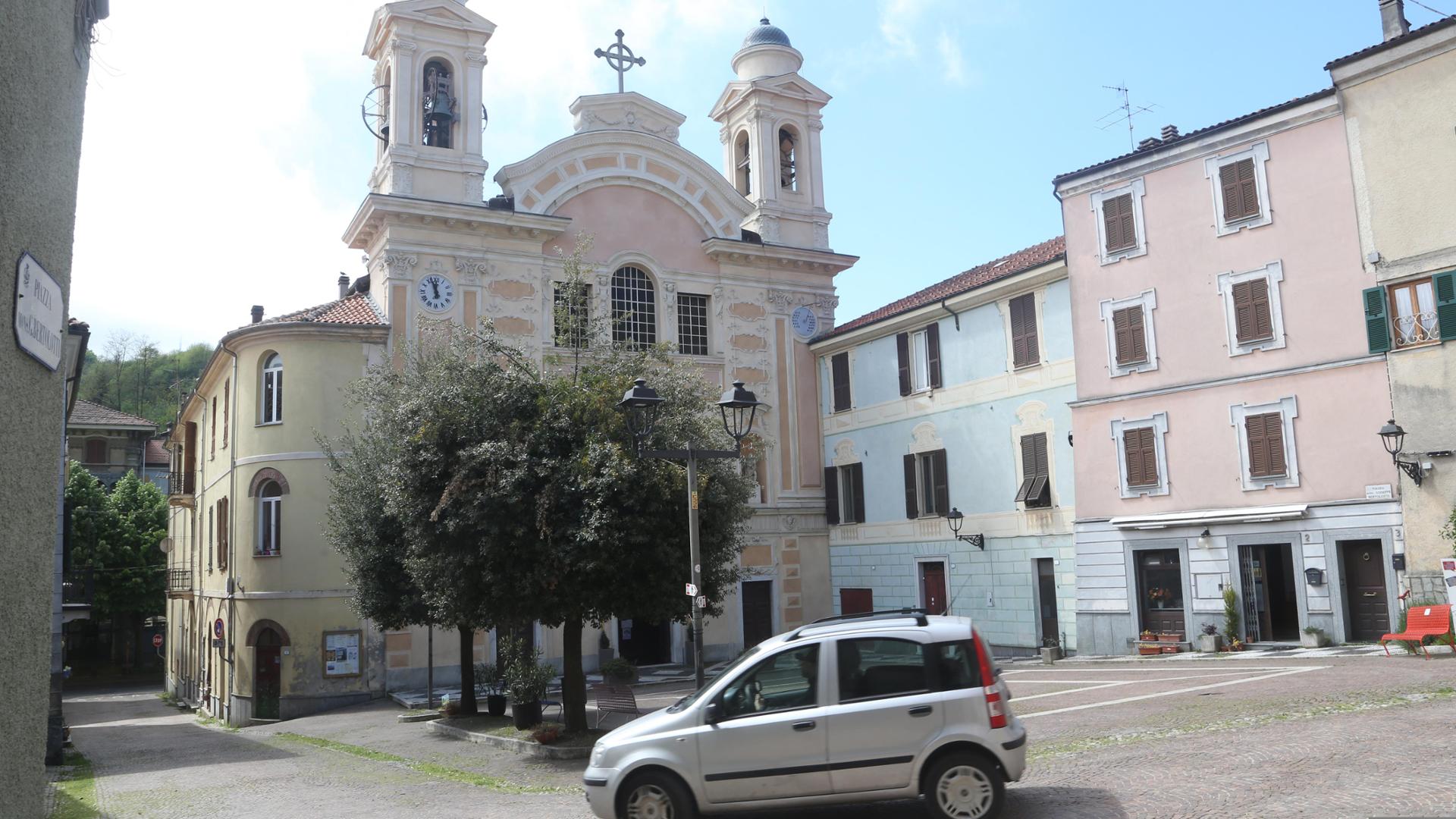
In a quiet town in northern Italy, a disturbing incident unfolded on Thursday when a local priest became the target of a brazen theft that has shaken the community. Two individuals broke into the parish premises, making off not only with cash but also with sacred religious objects, an act that has drawn concern from both ecclesiastical authorities and local residents. The event took place in Altare, a small municipality in the Liguria region near Savona, where the violation of a sacred space has prompted renewed attention to the security of religious sites.
The theft occurred during what should have been a solemn time in the Christian calendar—Holy Thursday, which commemorates the Last Supper of Jesus Christ with his disciples. This day holds deep significance in Christian tradition, marking the institution of the Eucharist and the act of foot-washing as a symbol of humility and service. The timing of the crime, occurring on a day so central to the faith, has added a layer of poignancy to the incident, underscoring the contrast between the sacred meaning of the day and the profane nature of the act.
According to reports from Il Secolo XIX, the thieves did not limit themselves to monetary gain. They also took items described as objects of religious value, estimated to be worth approximately 50,000 euros in total. Although the exact nature of these sacred objects was not specified in the initial report, such items in a Catholic parish context typically include chalices, monstrances, reliquaries, or vestments used in liturgical ceremonies—objects that are not only materially valuable but also hold deep spiritual significance for the faithful.
The incident has raised questions about the vulnerability of small-town parishes, many of which operate with limited security measures due to their open-door ethos and reliance on community trust. In Altare, as in many similar communities across Italy, churches often serve as both spiritual centers and social hubs, making them accessible throughout the day. This openness, while reflective of Christian hospitality, can also present challenges in safeguarding against criminal activity, particularly when valuable items are kept on-site for regular use in worship.
Local law enforcement has launched an investigation into the break-in, though no arrests have been reported as of the latest available information. Authorities are reviewing surveillance footage from nearby areas and conducting interviews with potential witnesses. The Carabinieri, Italy’s national military police who also handle civil policing duties in many regions, are likely involved in the case, given their role in patrolling rural and semi-urban areas like Altare.
The theft has resonated beyond the immediate parish, prompting discussions among diocesan officials about improving security protocols for churches, especially during holy weeks when religious artifacts may be more prominently displayed or accessed. While the Catholic Church encourages openness and accessibility, there is an ongoing balance to strike between welcoming the faithful and protecting sacred spaces from desecration or theft.
For the parishioners of Altare, the loss extends beyond the financial or material. Sacred objects are often seen as extensions of the community’s faith—items used in baptisms, marriages, funerals, and weekly masses that mark the rhythms of spiritual life. Their removal represents not just a criminal act but a symbolic rupture in the sense of safety and sanctity that a church is meant to provide.
As the investigation continues, the focus remains on recovering the stolen items and holding those responsible accountable. The incident serves as a reminder that even in places devoted to peace and prayer, vigilance is necessary to protect both the tangible and intangible aspects of religious heritage. For now, the community of Altare prays for healing, restoration, and the return of what was taken—not just in value, but in meaning.