
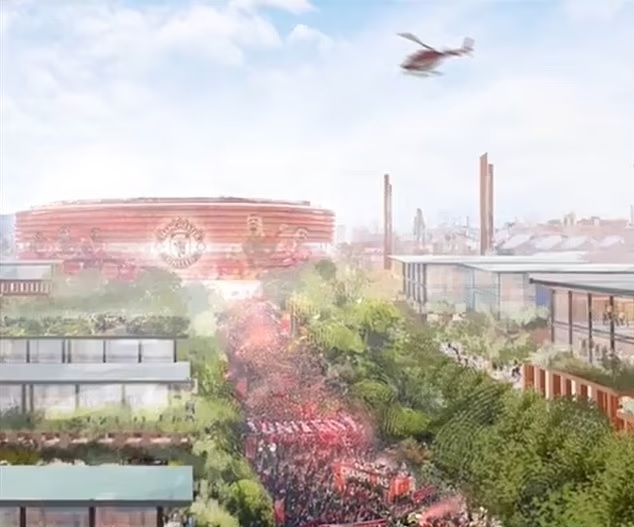
Manchester United has secured a 25-acre site adjacent to Old Trafford for a new 100,000-capacity stadium, according to the club’s official announcement on June 22, 2024. The landmark deal—facilitated by property developer Indurent—sets the stage for the largest sporting venue in the UK and a broader £7 billion regeneration scheme spanning 370 acres. With draft plans due July 9, 2024, the project aims to deliver 15,000 homes, 48,000 jobs, and preserve the club’s heritage while modernizing its infrastructure.
The acquisition follows Manchester United’s $550 million financial restructuring to settle outstanding bonds, ensuring the club’s long-term stability before embarking on the stadium’s construction. Collette Roche, CEO of Manchester United’s New Stadium Development, emphasized the project’s alignment with local and national growth ambitions, calling it a “generational opportunity” that prioritizes fan experience, affordability, and accessibility.
For football fans, investors, and Manchester residents, the development raises critical questions: How will the new stadium compare to existing megaprojects like Tottenham Hotspur’s Tottenham Hotspur Stadium? What role will Old Trafford play in the transition? And how might the regeneration scheme reshape Greater Manchester’s economy? Below, we break down the verified details, timelines, and what’s at stake.
We’re proud to announce a milestone moment in the plan to transform Old Trafford — @ManUtd #ManUtd #OldTrafford
Why This Stadium Matters: A Project Bigger Than Football
Manchester United’s new stadium isn’t just about seating capacity—it’s a cornerstone of a £7 billion regeneration plan that could redefine Greater Manchester’s economic landscape. According to the Old Trafford Regeneration Mayoral Development Corporation (OTRMDC), the project aims to:
- Deliver 15,000 new homes, including affordable housing units
- Create 48,000 jobs across construction, retail, and hospitality sectors
- Inject over £7 billion annually into the UK economy by 2040
- Preserve Old Trafford’s heritage while integrating modern amenities
The 25-acre site, acquired from Indurent, sits within walking distance of Old Trafford, ensuring continuity for fans accustomed to the club’s traditions. “Being able to build so close to Old Trafford allows us to preserve the heritage, traditions, and rituals that are so important to our fans,” Roche stated in the club’s announcement.
Key Context: The project echoes recent megastadium developments in Europe, such as Tottenham Hotspur’s 62,000-seat stadium (completed in 2019) and Paris Saint-Germain’s 48,000-seat Parc des Princes renovation. However, Manchester United’s scale—100,000 seats—would surpass both, making it the UK’s largest sporting venue by capacity.
What’s Next: Timeline and Public Consultation
The next critical phase begins July 9, 2024, when the OTRMDC will unveil:
- Draft masterplans for the stadium and wider regeneration area
- Site-specific details, including architectural renderings and fan access plans
- A formal consultation period for public feedback on design, transport links, and community impact
“This is a generational opportunity,” Roche noted, adding that the club is committed to “building with our supporters, not just for them.” The consultation will be pivotal in addressing concerns about fan affordability, local traffic, and the preservation of iconic landmarks like the Tunnel End and Stretford End.
Fan Impact: Manchester United has pledged to prioritize atmosphere, affordability, and accessibility. Early reports suggest plans for:
- Expanded standing areas (a nod to the club’s traditional fan culture)
- Reduced season-ticket prices compared to rival clubs like Arsenal and Chelsea
- Improved public transport links, including a potential new metro station
However, critics—including local residents—have raised questions about the project’s environmental footprint and whether the regeneration will benefit existing communities or primarily serve corporate interests. The consultation period will address these concerns.
How the Stadium Compares: Size, Cost, and Precedents
Manchester United’s proposed 100,000-seat stadium would dwarf existing UK venues, but it’s not without precedent. Here’s how it stacks up:
| Stadium | Capacity | Location | Cost (Est.) | Year Completed |
|---|---|---|---|---|
| Manchester United New Stadium (Proposed) | 100,000 | Old Trafford, Manchester | £1.5–2 billion (unconfirmed) | Target: 2030 |
| Tottenham Hotspur Stadium | 62,000 | London | $1.3 billion | 2019 |
| Wembley Stadium | 90,000 | London | £756 million | 2007 |
| Camp Nou (Barcelona) | 99,354 | Barcelona, Spain | €600 million (renovation) | 2020 |
Note: Manchester United has not disclosed the total cost of the stadium or regeneration project. The $550 million bond settlement in 2023 suggests the club is prioritizing financial stability before committing to construction budgets. For comparison, Tottenham’s stadium cost £1.3 billion, while Wembley’s expansion to 90,000 seats required £756 million.
Who Benefits? Stakeholders in the Regeneration Plan
The project’s success hinges on balancing the interests of multiple groups:
- Manchester United Fans: The club has emphasized preserving traditions like the singing sections and affordable ticketing. However, concerns remain about whether the new stadium will replicate Old Trafford’s electric atmosphere.
- Local Residents: The 370-acre regeneration area includes residential zones, but some neighborhoods near Old Trafford have expressed fears about increased traffic and noise. The OTRMDC has pledged to mitigate these impacts through green spaces and improved infrastructure.
- Investors and Developers: The project is a major draw for real estate investors, with plans for mixed-use developments, retail spaces, and office blocks. Indurent’s involvement suggests private-sector partnerships will play a key role in funding.
- Greater Manchester Economy: The £7 billion economic boost could position Manchester as a global sports and business hub, similar to how Barcelona’s Camp Nou regeneration has revitalized its surrounding area.
What Happens Next? Key Checkpoints
The road to completion is long, with several milestones ahead:
- July 9, 2024: OTRMDC releases draft masterplans and opens public consultation. Official updates will be posted here.
- Late 2024–2025: Finalization of architectural designs, environmental impact assessments, and funding agreements.
- 2026–2027: Groundbreaking expected, with construction phases staggered to minimize disruption.
- 2030 (Target): Stadium completion and first matches, alongside phased openings of residential and commercial areas.
Fan Action: Supporters are encouraged to participate in the July 9 consultation. Feedback will influence decisions on seating, pricing, and community engagement. The club’s official engagement portal will open in June 2024.
FAQ: Your Questions Answered
Q: Will Old Trafford be demolished?
A: No. Manchester United has stated that Old Trafford will remain operational during the transition. The new stadium will be built adjacent to the current site, allowing for a phased handover.
Q: How will ticket prices compare to other Premier League clubs?
A: The club has committed to “affordability” as a core principle, but exact pricing hasn’t been finalized. For context, Arsenal’s season tickets average £1,200–£1,500, while Chelsea’s start at £1,000. Manchester United’s historical pricing has often been more accessible.
Q: What’s the environmental impact?
A: The OTRMDC has pledged to incorporate sustainable design elements, including renewable energy sources and green transport links. However, critics argue that a 100,000-seat stadium’s carbon footprint will be substantial. The consultation will address these concerns.
Q: Can fans visit the new stadium before it opens?
A: Likely. Stadium tours are standard for major projects, and Manchester United has a history of offering behind-the-scenes access. Details will be announced during the consultation phase.
Why This Story Matters Beyond Football
Manchester United’s stadium project is more than a sports facility—it’s a blueprint for urban regeneration. Similar initiatives, like Liverpool’s £5.5 billion waterfront redevelopment, have transformed cities by combining sports, housing, and commerce. For Manchester, the stakes are high: success could cement its status as the UK’s premier football city, while missteps risk alienating fans and residents.
As Roche highlighted, the project is “fully aligned with both local and national growth ambitions.” With Brexit’s economic challenges still looming, initiatives like this are critical for regional revitalization. The coming months will determine whether Manchester United can deliver on its promises—or if the dream of a 100,000-seat stadium becomes another footballing white elephant.
What do you think? Will the new stadium preserve Manchester United’s magic, or will it lose the soul of Old Trafford? Share your views in the comments below, and don’t forget to follow World Today Journal for updates on the consultation and construction timeline.
Worth a look