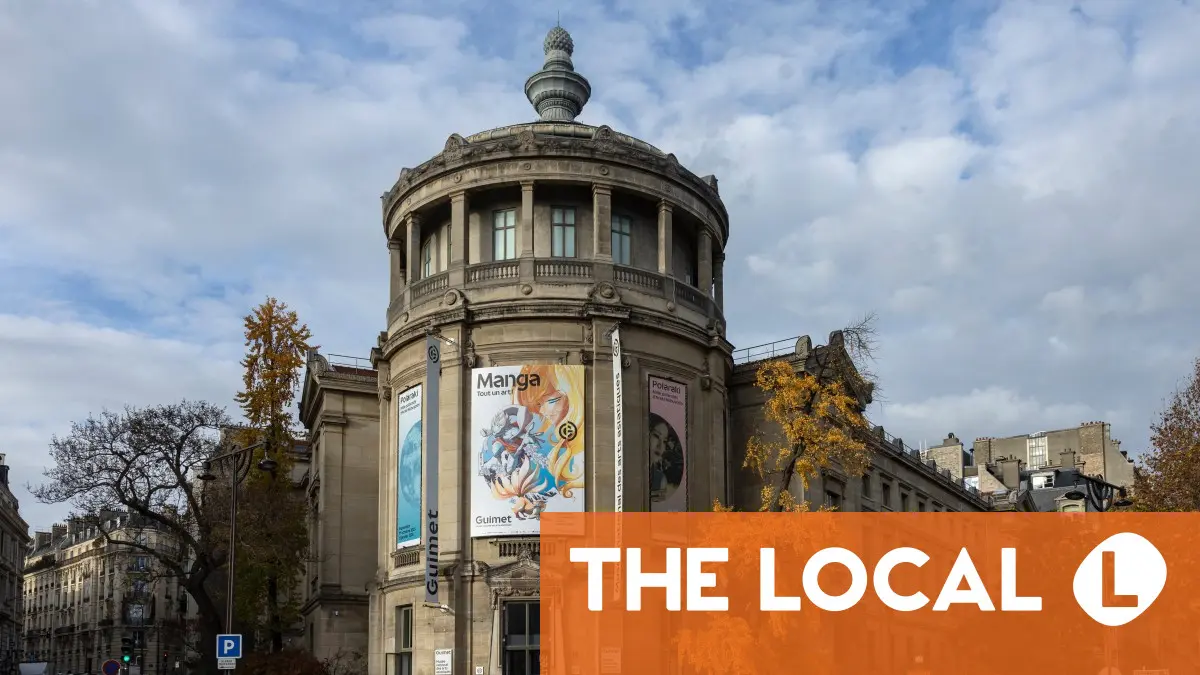
From Ancient Roots to Global phenomenon: Exploring the history of Manga at Paris’ Guimet Museum
A fascinating new exhibition, “Manga. An Art of its Own!”, recently opened at the Guimet Museum in Paris, offering a unique perspective on the beloved art form. Rather than simply showcasing popular series,the exhibit expertly traces mangaS evolution,revealing its deep connections to traditional Japanese art and culture.
The Guimet Museum, specializing in Asian art, has brilliantly juxtaposed ancient artifacts with iconic modern manga like “Dragon Ball,” “One Piece,” and “Naruto.” This deliberate pairing isn’t accidental; it’s a key element in understanding how today’s global phenomenon blossomed from centuries-old artistic traditions.
A Lineage of Creativity
You might be surprised to learn that manga’s origins aren’t solely post-war. The exhibition highlights several crucial influences:
* Noh Theater: Masks from this classical Japanese musical drama demonstrate the importance of expressive character design.
* Samurai Culture: Displays of kamishimo (samurai outfits) and katanas (swords) illustrate the ancient context and aesthetic influences found within many manga narratives.
* Kamishibai: This traditional form of street theatre,utilizing illustrated boards,served as a direct precursor to the panel-based storytelling we see in manga today.
“This is not a comic book exhibition like the others,” explains co-curator Didier Pasamonik. “It’s an exhibition that places comic books in parallel with the Guimet’s collection.”
Indeed, the exhibit even features a remarkable historical artifact: a “dragonball” statue gifted to Napoleon III by a Japanese shogun. This tangible link underscores that the imagery in “Dragon Ball” – one of the best-selling manga series of all time – didn’t emerge in a vacuum.
The Birth of a Modern Art Form
Delving deeper, the exhibition explores the very etymology of the word “manga.” It’s derived from the Japanese terms man (spontaneous) and ga (drawing), hinting at the art form’s inherent energy and immediacy.
Furthermore, the exhibit details how Japan’s opening to the West in the late 19th century played a pivotal role. Japanese artists skillfully adapted European newspaper caricatures, infusing them with Japan’s rich mythology and storytelling traditions.
You’ll discover the diverse range of manga styles, including:
* Shojo: Initially aimed at girls, these works gained widespread popularity and influenced character design and narrative themes.
* Gekiga: A darker, more realistic style geared towards adult audiences, pushing the boundaries of the medium.
Hokusai’s Enduring Influence
A dedicated room showcases Katsushika Hokusai’s iconic ”Great Wave off Kanagawa” (1831), a woodblock print masterpiece.Pasamonik points out that the artwork’s “clear and structured lines” remarkably “foreshadow the aesthetics of comic books.”
This connection isn’t merely stylistic. Hokusai’s emphasis on dynamic composition and expressive imagery laid a foundation for the visual language of manga.
Manga’s Global Impact
The exhibition doesn’t stop at artistic origins. It also examines manga’s profound impact on global popular culture. As Bounthavy Suvilay, a lecturer at the University of Lille, notes in the exhibition catalog, series like “Astro Boy,” “Naruto,” and “Akira” have been “fundamental” in the “Japanization of European popular culture.”
Consider this:
* Transnational Fandom: Manga has fostered a global community of fans, transcending linguistic and cultural barriers.
* Multimedia Expansion: The world of manga extends far beyond the page, influencing video games (“super Mario,” “The Legend of Zelda”), animation (“Grendizer,” “Captain Harlock”), and collectible cards (Pokemon).
* Fashion Forward: Even high fashion houses like Louis Vuitton,Gucci,and Julien David have drawn inspiration from manga’s aesthetics.
Ultimately, “Manga. An Art of its Own!” offers a compelling narrative. It demonstrates how a uniquely Japanese art form has not only captivated the world but continues to shape our cultural landscape. If you
Worth a look