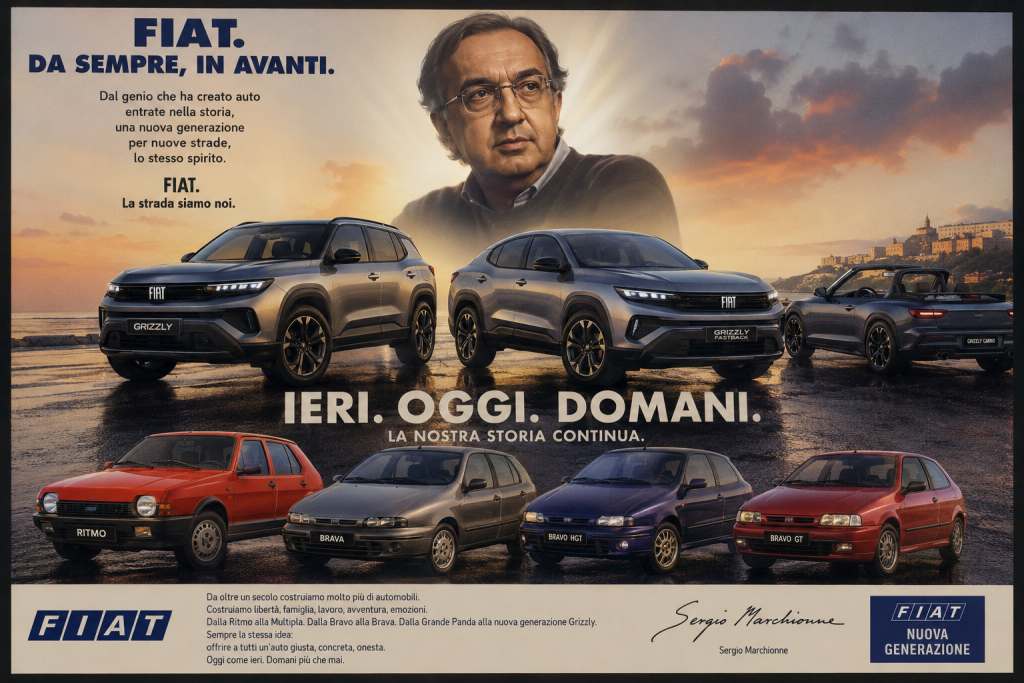
The history of Fiat is inextricably linked to the towering figures of Gianni Agnelli—affectionately known as “L’Avvocato”—and the late Sergio Marchionne, the visionary executive who navigated the automotive giant through one of its most turbulent eras. Their combined legacy is not merely found in balance sheets or corporate mergers, but in the enduring evolution of the Italian automotive landscape. As we look back at the strategic pivots that defined the brand, the transformation from a localized manufacturer to a global player like Stellantis was a process built on calculated risks and a refusal to settle for the status quo.
For decades, the evolution of the Fiat product lineup, from the utilitarian Panda to the compact versatility of the Bravo and Brava, served as a barometer for Italy’s industrial health. While the market often demanded immediate results, the leadership philosophy championed by both Agnelli and Marchionne favored a long-term, structural approach. They understood that the true “heirs” to these iconic models were not just new vehicles, but the modernized manufacturing processes and international alliances that would eventually secure the company’s survival in a hyper-competitive global market.
The Agnelli Legacy and the Marchionne Strategy
Gianni Agnelli, who led Fiat for decades, embodied the elegance and ambition of Italian industry. His tenure was defined by a delicate balance between maintaining the company’s national identity and recognizing the necessity of European integration. However, it was the arrival of Sergio Marchionne in 2004 that marked a definitive turning point. When Marchionne took the helm, Fiat was teetering on the edge of insolvency. His aggressive restructuring plan, which included the audacious acquisition of Chrysler, is widely studied in business schools as a masterclass in turnaround management.
The “boom” periods for models like the Panda—a vehicle that became a cultural icon—were not accidental. They were the result of a rigorous focus on operational efficiency and a deep understanding of consumer demand. Marchionne was known for his blunt, no-nonsense style, often telling analysts and investors that he would be judged by results rather than rhetoric. As reported by the BBC and Reuters following his passing in 2018, his legacy remains anchored in his ability to push the company toward a future that many thought was impossible, effectively bridging the gap between traditional Italian craftsmanship and the demands of global scale.
From Legacy Models to Global Platforms
The transition from the era of the Bravo and Brava to the contemporary modular platforms utilized by Stellantis today illustrates a radical shift in industrial strategy. In the past, model cycles were often localized, tailored specifically for the European consumer. Today, the focus has shifted toward cross-brand platform sharing. This strategy, which began under Marchionne, allows for significant economies of scale, ensuring that the DNA of classic Italian design can persist even as the underlying technology becomes increasingly standardized.
The automotive industry currently faces a transition that is arguably as significant as the one Marchionne faced in the early 2000s: the shift to electrification. As the company moves toward its Dare Forward 2030 strategic plan, the lessons of the past remain relevant. Balancing the heritage of the “Panda spirit” with the requirement for zero-emission vehicles is a challenge that requires the same level of strategic patience that Agnelli and Marchionne once applied to their respective eras.
Key Milestones in the Fiat Transformation
- The 2004 Turnaround: Sergio Marchionne assumes the role of CEO, initiating a comprehensive restructuring that moved the company away from non-core assets.
- The Chrysler Merger: The multi-year process of acquiring Chrysler, completed in 2014, fundamentally changed the company’s global footprint and revenue stream.
- The Birth of Stellantis: The 2021 merger between Fiat Chrysler Automobiles (FCA) and the PSA Group created one of the world’s largest automotive conglomerates, cementing the transition away from a standalone Italian manufacturer.
Assessing the “Heirs” of the Italian Automotive Boom
When analysts discuss the “heirs” to models like the Bravo, Brava, and the classic Panda, they are often referring to the design language and market positioning that these vehicles pioneered. The modern successor to the Panda is not just a car; This proves a testament to the brand’s ability to maintain a connection to its past while utilizing advanced, shared technology. This “judgement” that Marchionne famously welcomed remains an ongoing process for current leadership.
Investors and industry observers continue to monitor how these legacy brands integrate into the broader portfolio. The success of these models in the current market hinges on the ability to maintain the “Italianness” of the brand—a quality that Agnelli championed—while meeting the stringent emissions and safety standards mandated by the European Union’s regulatory framework for the automotive sector. The judgment of history, it seems, is a moving target that requires constant adaptation.
Looking Toward the Future
As the automotive industry undergoes a profound transformation, the principles established by the leaders of the past continue to influence corporate decision-making. The focus has moved beyond simple volume targets to a more nuanced strategy involving software-defined vehicles, sustainable supply chains, and the electrification of iconic nameplates. The “boom” of the past was defined by market penetration; the success of the future will likely be defined by technological integration and the ability to navigate complex global geopolitical realities.
For those tracking the progress of these legacy brands, the next major checkpoint will be the release of updated annual sustainability and financial performance reports, typically published by Stellantis in the first quarter of each year. These documents provide the most granular view of how the company is balancing its historical identity with the demands of the modern era. We invite our readers to join the discussion below: how do you believe the legacy of the “Avvocato” era continues to shape the vehicles we drive today? Share your thoughts in the comments section.
Related reading