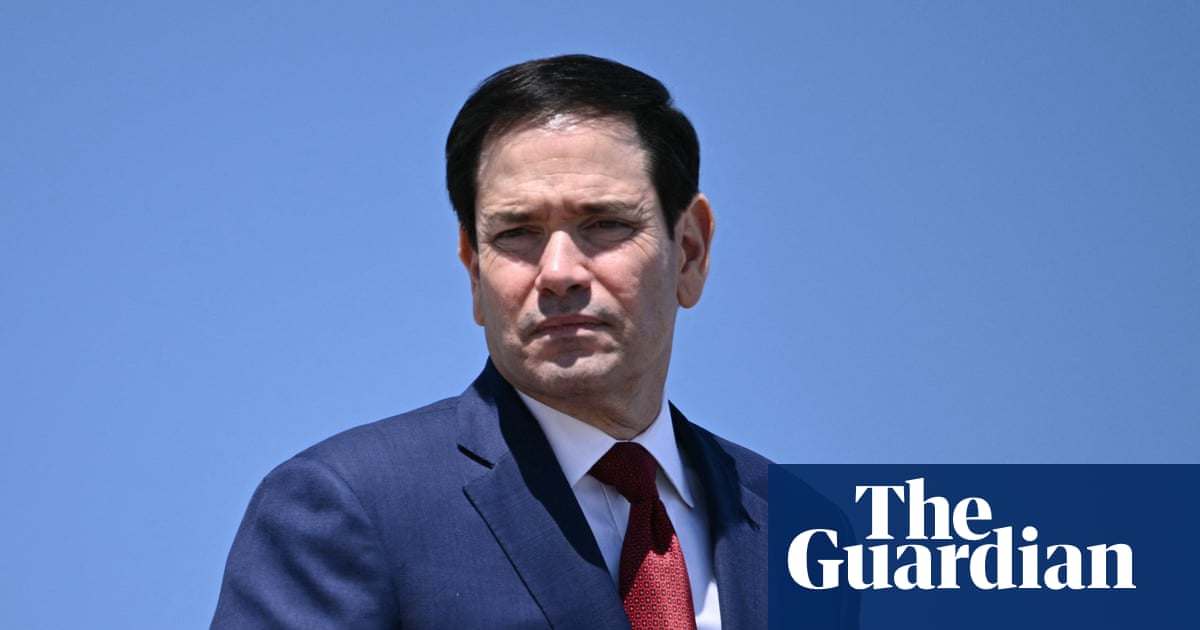
In a diplomatic maneuver that highlights both the rigidity and the surprising flexibility of Beijing’s bureaucratic machinery, U.S. Secretary of State Marco Rubio is set to visit China for the first time since being placed on a Chinese sanctions list. The visit, which coincides with a high-level diplomatic push by the Trump administration, is being facilitated by a peculiar “linguistic workaround” that allows Rubio to bypass the very restrictions the Chinese government imposed on him years ago.
The situation presents a stark paradox in international relations: a high-ranking official, previously declared persona non grata by a sovereign state, is now welcomed back into that state’s capital. The mechanism for this return is not a formal lifting of sanctions—which would signal a political retreat for Beijing—but rather a clerical adjustment. By utilizing a different Chinese transliteration of Rubio’s name, officials have effectively created a “new” identity in the visa system, one that does not trigger the red flags associated with the sanctioned American politician.
This administrative sleight-of-hand allows both Washington and Beijing to maintain a veneer of toughness while pursuing the pragmatic necessity of direct communication. For the United States, it ensures that its chief diplomat can engage directly with Chinese leadership on critical issues ranging from trade tariffs to regional security. For China, it avoids the embarrassment of officially rescinding sanctions against a man who has been one of the most vocal critics of the Chinese Communist Party (CCP) on the global stage.
The visit comes at a precarious moment for U.S.-China relations, as the administration seeks to balance aggressive economic competition with a desire to prevent accidental escalation in the South China Sea and Taiwan Strait. Rubio’s presence in Beijing is expected to be a focal point of the trip, particularly given his history of advocating for human rights and his role in shaping the U.S. Approach to Chinese influence in the Western Hemisphere.
The Sanctions Backdrop: A History of Friction
To understand the significance of this linguistic loophole, one must look back to 2020, when the Chinese government imposed sanctions on Marco Rubio and several other U.S. Officials. These measures were a direct retaliation for U.S. Sanctions on Chinese officials suspected of overseeing human rights abuses in the Xinjiang region. The Chinese sanctions typically included visa bans and the freezing of assets, effectively barring Rubio from entering Chinese territory.
Rubio has long been a primary architect of the U.S. Policy regarding the human rights situation in China, specifically regarding the treatment of the Uyghur population. His advocacy led to the passage of legislation and the imposition of sanctions that targeted Chinese officials involved in the mass detention of ethnic minorities. By labeling Rubio as a threat to Chinese sovereignty and stability, Beijing sought to delegitimize his influence and restrict his movement.
However, the elevation of Rubio to Secretary of State fundamentally altered the diplomatic calculus. While the sanctions remained on the books—preserving the CCP’s internal narrative of strength—the operational reality of managing a superpower relationship required the Secretary of State’s presence in Beijing. The “name change” strategy provides a face-saving exit for the Chinese Ministry of Foreign Affairs, allowing them to admit Rubio under a technicality rather than a policy reversal.
The “Linguistic Loophole” Explained
The workaround relies on the way Chinese immigration and security databases track foreign nationals. Because the Chinese language uses characters to represent foreign sounds, there is often more than one way to transliterate a Western name into Mandarin. The sanctions list is tied to a specific set of characters associated with “Marco Rubio.”

By issuing a visa under a different, yet phonetically similar, set of characters, the Chinese government has bypassed the automated triggers of their own sanctions database. The system recognizes the visitor as a different person from the one who was banned in 2020. This allows the visa to be processed and approved without requiring a formal decree to remove Rubio from the sanctions list.
Diplomatic observers note that this is not an uncommon tactic in authoritarian bureaucracies, where the desire to adhere to a strict rule often clashes with the need for political expediency. By shifting the problem from the political realm to the linguistic realm, Beijing manages to accommodate a U.S. Secretary of State without admitting that its previous sanctions were an obstacle to its own diplomatic goals.
Key Takeaways: The Rubio-Beijing Diplomacy
- The Loophole: Rubio is entering China via a different Chinese name transliteration to avoid triggering automatic sanctions alerts.
- Political Face-Saving: Beijing avoids officially lifting sanctions, while Washington gains direct access to Chinese leadership.
- Core Agenda: The visit focuses on trade, regional security, and a renewed push for human rights.
- Precedent: This marks the first time a sanctioned U.S. Secretary of State has visited China through such an administrative workaround.
Human Rights and the Uyghur Agenda
Despite the unusual nature of his entry, Rubio is expected to maintain a hard line on human rights. A central component of the visit is the administration’s demand for the release of detained Uyghur intellectuals and activists. The U.S. Has consistently pointed to the Universal Declaration of Human Rights as the benchmark for evaluating China’s actions in Xinjiang.
The push for the release of these intellectuals is seen as a strategic move by the U.S. To test China’s willingness to compromise on domestic security issues in exchange for stability in trade relations. Rubio has previously argued that economic engagement cannot be decoupled from the protection of fundamental human rights, and he is expected to press President Xi Jinping on the status of political prisoners during his meetings.
Beijing, however, maintains that its policies in Xinjiang are focused on counter-terrorism and vocational training. The clash between Rubio’s documented record as a human rights hawk and the Chinese government’s insistence on “non-interference” in internal affairs suggests that while the entry into the country was smoothed over by a name change, the conversations within the country will remain fraught with tension.
Geopolitical Implications for the Trump Administration
The visit is part of a broader strategy by the Trump administration to employ “maximum pressure” combined with “strategic engagement.” By sending a sanctioned official who is now the nation’s top diplomat, the U.S. Signals that it will not be deterred by Beijing’s attempts to use sanctions as a tool of intimidation.

the visit serves as a critical juncture for discussing tariffs and trade imbalances. The administration has signaled a willingness to negotiate, but only if China makes tangible concessions on intellectual property theft and forced technology transfers. Rubio’s role is to ensure that any trade deal does not come at the expense of national security or human rights commitments.
The ability of the two nations to communicate despite such deep-seated animosity suggests a mutual recognition that the risks of a total diplomatic breakdown are too high. The “linguistic workaround” is a symbol of this era of “managed competition”—where the formalities of diplomacy are stripped away or manipulated to allow for the raw exercise of power and negotiation.
What Happens Next?
The immediate focus now shifts to the specific outcomes of the meetings in Beijing. Observers will be looking for any signs of a formal agreement on the release of political prisoners or a concrete timeline for trade negotiations. More importantly, the international community will be watching to see if this “workaround” becomes a blueprint for other sanctioned officials to engage with China, or if it remains a one-time exception for the U.S. Secretary of State.
The next confirmed checkpoint will be the official joint statement issued by the U.S. State Department and the Chinese Ministry of Foreign Affairs following the conclusion of the visit, which will outline the agreed-upon points of cooperation and the remaining areas of contention.
We invite our readers to share their perspectives on this diplomatic maneuver in the comments below. Do you believe “linguistic workarounds” undermine the integrity of international sanctions, or are they a necessary tool for maintaining global stability?