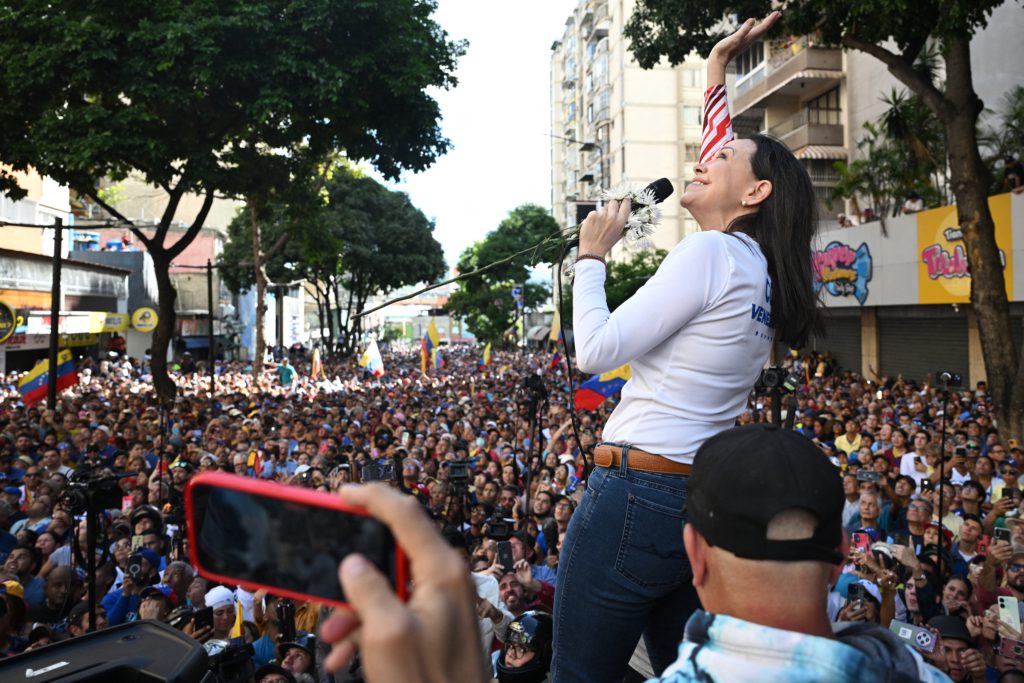
María Corina Machado Awarded Nobel Peace Prize: A Turning Point for VenezuelaS Human Rights Crisis?
The 2025 Nobel Peace Prize has been awarded to Venezuelan democracy activist and opposition leader, María Corina Machado, a decision hailed by Amnesty International and human rights advocates worldwide.But what does this recognition truly mean for Venezuela, a nation grappling wiht a profound and protracted human rights crisis? This article delves into the importance of the award, the context of repression Machado has faced, the ongoing struggles of the Venezuelan people, and what this moment could mean for the pursuit of justice and accountability.
A Symbol of Resistance: Understanding María Corina Machado’s Fight
María Corina Machado isn’t simply a politician; she’s become a potent symbol of resistance against authoritarianism in Venezuela. For years, she has been a vocal critic of the Nicolás Maduro regime, advocating for democratic reforms and accountability for widespread human rights violations. Her unwavering commitment to these principles has come at a significant personal cost.
Machado has faced relentless persecution, including a politically motivated ban from holding public office and, more recently, being forced into hiding to evade arrest.Despite these attempts to silence her, she has continued to mobilize opposition forces and speak out against the government’s abuses, demonstrating remarkable courage and resilience.This award acknowledges not just her individual efforts, but the collective struggle of all Venezuelans yearning for a free and just society.
The Depth of the Venezuelan human Rights Crisis
The Nobel Peace Prize shines a much-needed spotlight on the dire human rights situation in Venezuela. The scale of the crisis is staggering. According to Amnesty International and other leading human rights organizations, millions of venezuelans have been impacted by state-sponsored repression.
Here’s a breakdown of the key issues:
* Political Repression: Dissent is routinely suppressed through arbitrary arrests, politically motivated prosecutions, and restrictions on freedom of expression and assembly.
* Arbitrary Detention & Torture: Thousands remain in detention, often without due process, and reports of torture and other ill-treatment are widespread.Amnesty International has documented numerous cases of security forces using excessive force against protesters and political opponents. https://www.amnesty.org/en/location/americas/venezuela/
* Enforced Disappearances: The practice of enforced disappearances remains a serious concern, leaving families in agonizing uncertainty about the fate of their loved ones.
* Exodus & Humanitarian Crisis: Over 7 million Venezuelans have fled the country,creating one of the largest displacement crises in the world. This mass exodus is a direct consequence of the economic collapse, political instability, and pervasive violence.https://www.unhcr.org/venezuela-emergency.html
* Targeting of Vulnerable Groups: Children are notably vulnerable, facing malnutrition, lack of access to education, and recruitment by armed groups. Indigenous communities also face disproportionate levels of violence and discrimination.
What Does the Nobel Prize mean for Venezuela?
The awarding of the Nobel Peace Prize to María Corina Machado is a pivotal moment. It offers several potential benefits:
* Increased International Attention: The prize will undoubtedly amplify global awareness of the human rights crisis in Venezuela, putting pressure on the Maduro regime to address its abuses.
* Renewed Hope for venezuelans: For those suffering under repression, the award provides a powerful symbol of hope and solidarity. It validates their struggle and reinforces the belief that change is possible.
* Strengthened International Justice Efforts: The prize can bolster support for international justice mechanisms, such as the International Criminal Court (ICC), which is currently investigating allegations of crimes against humanity in Venezuela. https://www.icc-cpi.org/venezuela
* Empowerment of Civil Society: The recognition of Machado’s work will empower civil society organizations and human rights defenders working on the ground in Venezuela, providing them with increased visibility and legitimacy.
However,the award is not a panacea. The Maduro regime is likely to dismiss the prize as politically motivated and continue its repressive policies. Sustained international pressure, coupled with a unified and strategic opposition movement, will be crucial to achieving meaningful change.
Evergreen Section: The Importance of International Human Rights Advocacy
The case of Venezuela underscores the vital role of international human rights advocacy. Organizations like Amnesty International, Human Rights Watch, and the United Nations Human Rights Office play a critical role in documenting abuses, raising awareness,