
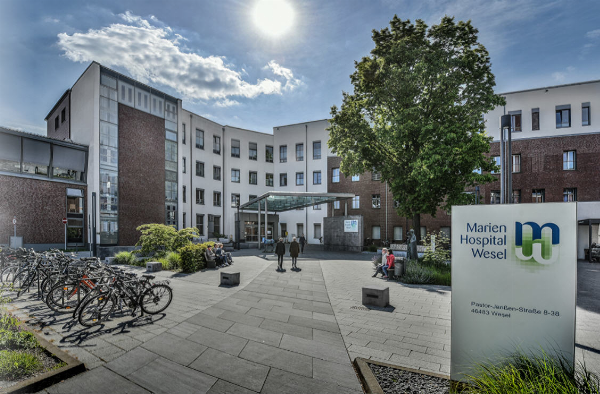
The Marien-Hospital Wesel (MHW) is integrating robotic-assisted surgery into its gynecological department, marking a technical shift in how the facility approaches the treatment of oncological conditions. This development, which focuses on enhancing surgical precision for patients with gynecological cancers, aligns with broader trends in medical technology where minimally invasive procedures are increasingly prioritized to improve patient recovery outcomes.
Robotic surgery in gynecology is designed to assist surgeons by providing enhanced visualization and greater dexterity compared to traditional laparoscopic methods. At the Marien-Hospital Wesel, the move toward these systems reflects an ongoing effort to modernize clinical care paths. For patients, the primary advantage of such systems—often associated with platforms like the da Vinci Surgical System—is the potential for smaller incisions, reduced blood loss, and shorter hospital stays, according to guidelines from the American College of Obstetricians and Gynecologists (ACOG).
How Robotic Systems Enhance Surgical Precision
In the context of gynecological oncology, the precision offered by robotic platforms allows for more meticulous dissection in confined spaces within the pelvis. The technology translates the surgeon’s hand movements into smaller, precise motions of instruments attached to the robot. According to the National Cancer Institute, these systems provide a high-definition, three-dimensional view of the surgical site, which is particularly beneficial when performing complex procedures such as hysterectomies or lymph node dissections in cancer patients.

The integration of this technology at MHW involves a structured approach to specialized training. Surgeons must undergo rigorous certification to operate robotic consoles, ensuring that the transition from manual or conventional laparoscopic surgery to robotic assistance meets established safety standards. This ensures that the clinical team can manage patient safety while utilizing advanced instrumentation during oncological interventions.
The Impact on Patient Care and Recovery
The primary driver for adopting robotic surgery is the objective to improve the quality of life for patients post-operation. Because robotic surgery is classified as a form of minimally invasive surgery, it is frequently associated with lower rates of post-operative complications, such as surgical site infections. Research highlighted by the National Institutes of Health (NIH) indicates that while robotic surgery does not necessarily change the oncological outcome compared to standard laparoscopy, the reduction in physical trauma to the patient remains a significant factor in hospital surgical strategy.
At the Marien-Hospital Wesel, the focus remains on the specific needs of those diagnosed with gynecological cancers, where timing and precision are critical. By utilizing specialized robotic tools, the medical staff aims to maintain high standards of oncological clearance—the complete removal of cancerous tissue—while minimizing the extent of the surgical impact on the surrounding healthy anatomy.
Looking Ahead for Gynecological Oncology
As the healthcare landscape continues to evolve, the adoption of robotic platforms at institutions like MHW suggests a long-term commitment to digital innovation in surgery. Future developments in this field are expected to include improvements in haptic feedback—giving surgeons a sense of “touch”—and the integration of real-time imaging data directly into the surgeon’s console, as discussed in reports by the U.S. Food and Drug Administration (FDA) regarding the safety and regulation of robotic surgical devices.
Patients seeking information regarding treatment options at the Marien-Hospital Wesel are encouraged to consult with their primary oncology team. Official updates regarding surgical protocols and hospital services are typically provided through the facility’s official patient portals and public health disclosures. As the technology matures, further data on patient outcomes and procedure efficacy will be essential for refining these surgical practices in the years to come.
We welcome your thoughts on how digital innovation is changing your local healthcare experience. Please share your insights or questions in the comments below.
Worth a look