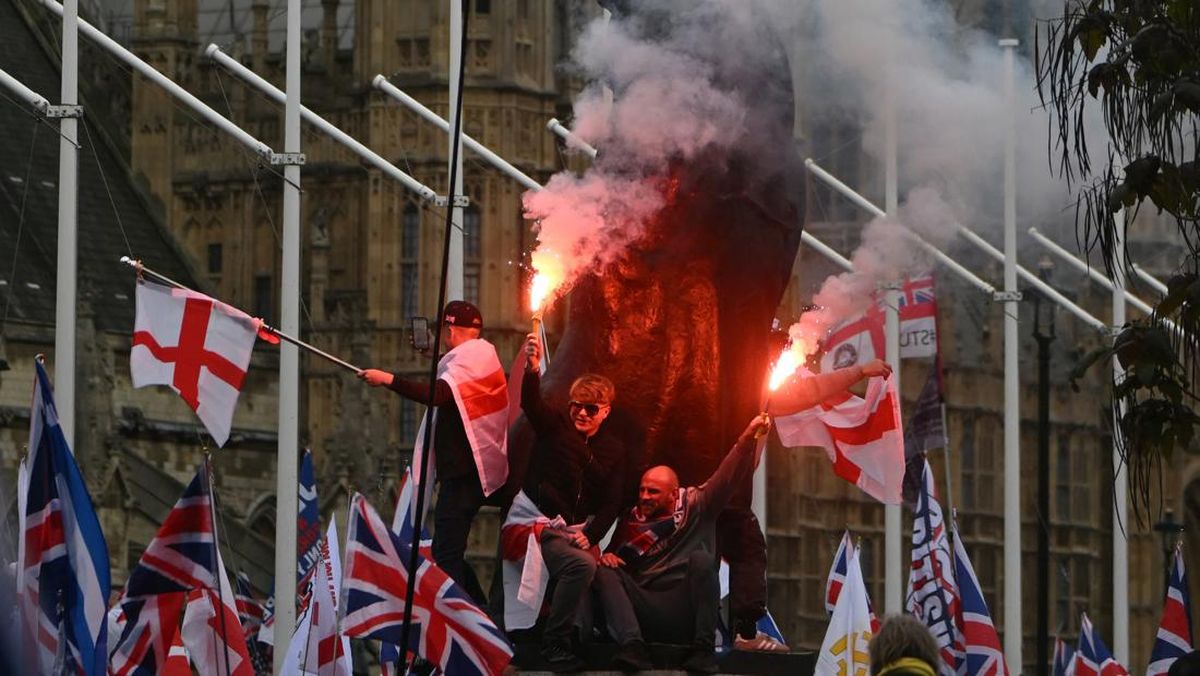
Central London became the site of a significant security operation this past Saturday as two rival protest groups converged on the capital, testing the resources of the Metropolitan Police. Tens of thousands of demonstrators participated in the events, which included the “Unite the Kingdom” rally and a concurrent pro-Palestinian demonstration. The scale of the gathering, coupled with the presence of thousands of football fans in the city for the FA Cup Final at Wembley Stadium, prompted one of the most extensive policing efforts in recent years.
Authorities deployed more than 4,000 police officers to maintain order, utilizing a “sterile zone” to separate the opposing factions. The Metropolitan Police confirmed that officers were equipped with tactical support, including drones, police horses, police dogs and armored vehicles held on standby to ensure the safety of the public and prevent direct confrontation between the groups. According to the BBC, the force reported 43 arrests at the two protests, with an additional 22 arrests made in connection to the FA Cup Final as of 19:30 BST.
Understanding the Rationale Behind the Rallies
The “Unite the Kingdom” march, organized by figures including Stephen Yaxley-Lennon—widely known as Tommy Robinson—began in Kingsway before moving toward Whitehall and culminating in a rally at Parliament Square. Supporters of the march were seen carrying Union flags and wearing red hats bearing the slogan “Make England Great Again (Mega).” Participants expressed a broad spectrum of grievances, ranging from dissatisfaction with the current government to concerns regarding the perceived marginalization of the white working class in the United Kingdom.
The rally featured several speakers, including former LBC presenter Katie Hopkins, actor-turned-politician Laurence Fox, and television personality Ant Middleton. During the event, Yaxley-Lennon encouraged attendees to engage more deeply with the political process, specifically calling for supporters to register to vote and join political parties in preparation for the 2029 general election. The demonstration stood in stark contrast to the pro-Palestinian march taking place in another part of the city, necessitating the rigid barriers and police cordons established to keep the movements distinct.
Policing a Complex Urban Environment
Managing such a high-density event requires intricate logistical planning. The Metropolitan Police utilized a strategy designed to balance the right to protest with the duty to maintain public safety and minimize disruption to the city. By enforcing a “sterile zone,” officers were able to prevent the two rival marches from coming into direct physical contact, a tactic that has become increasingly common in managing polarized demonstrations in the capital.
The high number of arrests reflects the challenges faced by law enforcement during these events. While the majority of attendees remained peaceful, the sheer volume of people, combined with the presence of unrelated large-scale events like the FA Cup Final, meant that officers were operating under extreme pressure. The force has noted that maintaining this level of presence is essential when managing protests that draw tens of thousands of individuals with conflicting ideologies.
Future Outlook and Public Participation
As the UK looks toward the next election cycle, the rhetoric heard at these demonstrations suggests that political mobilization will remain a key feature of the national landscape. Yaxley-Lennon’s explicit call to focus on the 2029 election highlights a shift toward long-term organizational strategies for those participating in these rallies. For the general public, these events underscore the importance of staying informed through verified channels regarding road closures, public safety advisories, and official statements from the Metropolitan Police.

The events of this past Saturday serve as a reminder of the ongoing debates surrounding national identity, immigration, and political representation within the UK. As these discussions continue to manifest in public spaces, the role of law enforcement in facilitating peaceful assembly while protecting the rights of all citizens remains a priority for the authorities.
The Metropolitan Police typically provide updates on significant operational outcomes and arrest figures through their official media channels. Readers are encouraged to monitor these official sources for any follow-up investigations or legal proceedings stemming from the weekend’s events. We welcome your thoughts on how these developments are shaping the national discourse; please join the conversation in the comments section below.
Related reading