Navigating the Tightrope: McLarenS Evolving Team Strategy and the Pursuit of Fair Competition in formula 1
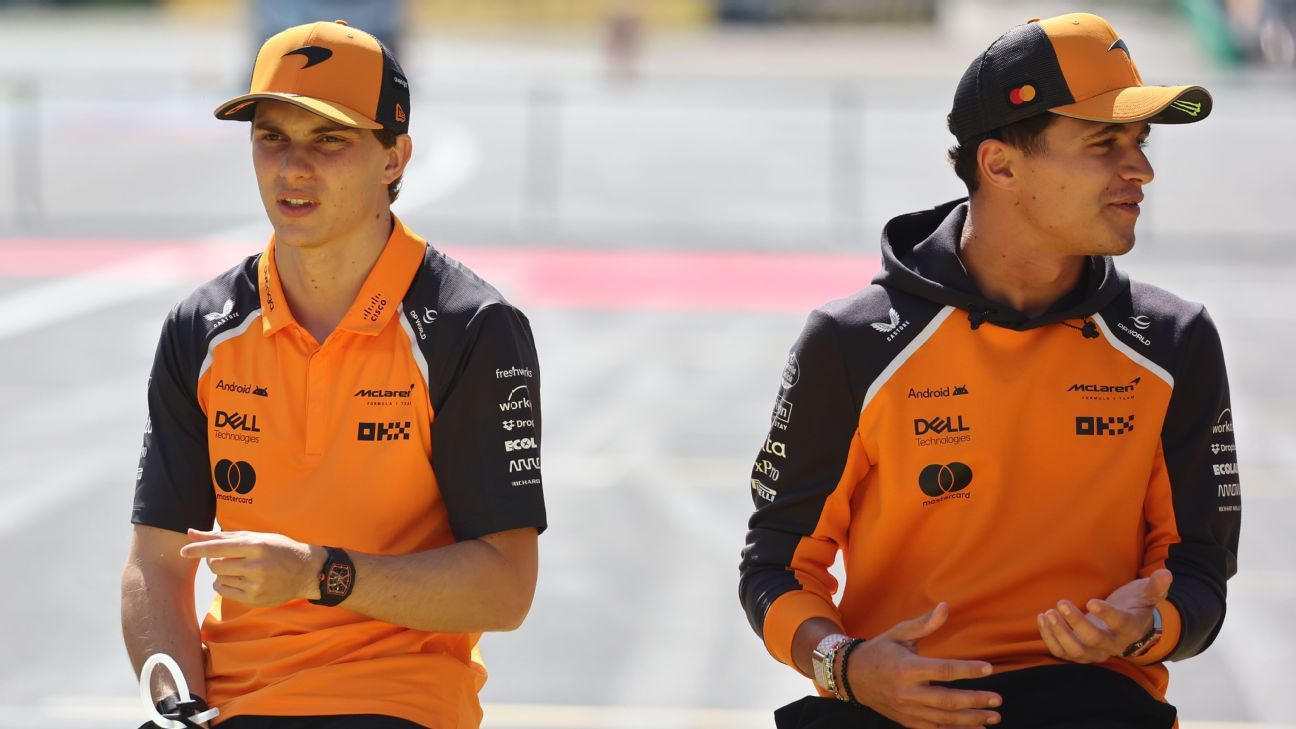
McLaren Racing has emerged as a force to be reckoned with in Formula 1, not just through on-track performance, but also through a fascinating and often debated approach to team strategy.Over the past two seasons,notably highlighted by incidents at the 2025 Hungarian and Italian Grand Prix,the team has been actively defining – and occasionally redefining – the boundaries of free racing,team interest,and fairness between its drivers,Lando Norris and Oscar Piastri. This article delves into the complexities of McLaren’s evolving strategy, analyzing the precedents set, the rationale behind the decisions, and the challenges the team faces in maintaining consistency and driver trust.
The Philosophy: Open Communication and Unleashing Talent
At the heart of McLaren’s approach lies a commitment to fostering an environment where drivers feel empowered to contribute. As team principal Andrea Stella explains, “We always tell our drivers, don’t keep things in the back of your mind while you drive. If you have a point, if you have a suggestion, if you want to let us know what you’re thinking, just say it.” This emphasis on open communication isn’t merely about gathering feedback; it’s about allowing Norris and Piastri to fully utilize their talent and pursue individual success within the framework of the team’s overall objectives.
This philosophy is a deliberate departure from the historically rigid team order structures prevalent in F1. McLaren aims to create a dynamic where drivers aren’t simply executing instructions, but actively participating in strategic decision-making. This approach, while potentially riskier, is predicated on the belief that maximizing individual performance ultimately benefits the team as a whole.
2025 Hungarian Grand Prix: A Calculated Risk and the Principle of Free Racing
The 2025 Hungarian Grand Prix served as a pivotal moment in solidifying McLaren’s commitment to allowing its drivers to compete freely. Norris secured a surprise victory, benefiting from a bold one-stop strategy while Piastri, hampered by being stuck behind Charles Leclerc’s Ferrari on a two-stop plan, finished second.
Crucially,this wasn’t a case of team orders dictating the outcome. Instead, McLaren deliberately allowed Norris to pursue an choice strategy, even if it meant potentially overtaking his teammate. Stella articulated the reasoning: “as McLaren Racing, we want to give great racing to Formula 1.We want to give our two drivers the possibility to utilise, express their talent, pursue their aspirations, their personal success, and this needs to happen within the boundaries of the team interest and the fairness, the sportsmanship, and the respect for one another.”
This race established a clear precedent: McLaren would allow its drivers to explore different strategic avenues,even if those avenues led to one driver overtaking the other. It wasn’t simply about letting them “fight wheel-to-wheel,” but about proactively creating opportunities for both to maximize their potential. This is a nuanced approach, requiring careful balancing and a willingness to accept that sometimes, one driver will benefit more than the other.
2025 Italian Grand Prix: Controversy, a Slow Pit Stop, and the Quest for Consistency
The 2025 Italian Grand Prix, however, threw McLaren’s principles into sharp relief.with Max Verstappen leading, the team opted for a long-stint strategy for both drivers, hoping to capitalize on a potential late safety car.This led to a critical juncture: Leclerc closing rapidly on piastri.
Norris, recognizing the threat, suggested bringing Piastri in first, with a caveat: “only if he doesn’t get the undercut, or else I’ll box first.” piastri’s subsequent pit stop was remarkably fast, allowing him to emerge comfortably ahead of Leclerc. However,a disastrous five-second delay during Norris’s pit stop – due to a front-left tire issue - saw him drop behind Piastri.
The ensuing decision to instruct Piastri to yield the position to Norris sparked significant controversy. The team justified the move by framing it as a correction for the circumstances created by the slow pit stop, arguing they were simply restoring the pre-pitstop order and than allowing the drivers to race. Stella emphasized, “We pursued the team interest to capitalize as much as possible, and in the team interests we had to go first with Oscar and then with Lando… But the clear intent was this is not going to deliver a swap of positions.”
This justification, though, is where the complexity truly lies. Critics argued that the swap established a precedent where any disadvantage incurred during a pit stop could be rectified by team
Related reading