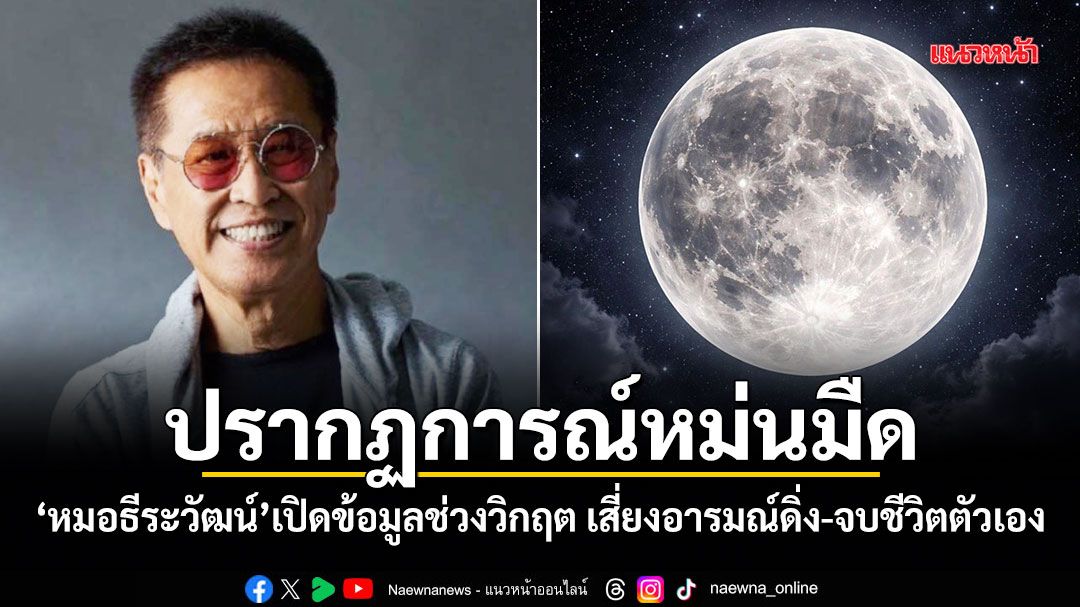
The relationship between celestial cycles and human psychology has long been a subject of curiosity and folklore, but recent warnings from the medical community in Thailand are bringing a renewed focus to these patterns. On April 15, 2026, Prof. Dr. Teerawat Hemachuda issued a cautionary alert regarding what is termed the “Darkening Phenomenon,” highlighting a potential surge in moon-related mental health risks during specific lunar phases.
According to the report, this phenomenon is particularly associated with the period of the full moon. Prof. Dr. Teerawat, a distinguished expert in internal medicine and brain science, suggests that there are historical records and reports indicating a link between these lunar events and severe emotional instability or the sudden eruption of psychological distress.
The warnings emphasize that these mental health fluctuations are not merely mild mood swings. In some cases, the instability can escalate into severe psychotic episodes that require immediate medical intervention, including emergency room admissions and, most critically, an increase in suicide attempts. These occurrences are reported to happen at varying frequencies, with some periods seeing more frequent crises than others.
The “Darkening Phenomenon” and Psychiatric Emergencies
The “Darkening Phenomenon” describes a state of emotional decline that coincides with the lunar cycle. While the full moon is the primary focus of the current warning, the data also points toward fluctuations occurring around the modern moon. The core of the concern lies in the volatility of the patient’s mental state, which can transition rapidly from stability to a critical crisis.

Medical observations cited by Prof. Dr. Teerawat indicate that the psychological disruptions can manifest as “psychotic episodes” (โรคจิตวิปลาส), leading to a state where individuals may lose touch with reality or experience intense emotional despair. The severity of these episodes often necessitates hospitalization to ensure the safety of the individual and those around them.
The most alarming aspect of this phenomenon is the correlation with self-harm. The report notes that the risk of suicide attempts increases during these periods of emotional “darkening,” making it a critical window for mental health surveillance and support.
Expert Insights from Prof. Dr. Teerawat Hemachuda
The insights provided arrive from a highly credentialed source. Prof. Dr. Teerawat Hemachuda serves as the Chairman of the Center of Excellence in Integrated Medicine and Public Health and is an advisor to the College of Eastern Medicine at Rangsit University. His background as a professor specializing in internal medicine and the brain allows him to bridge the gap between traditional observations and modern medical understanding.
By sharing this information via social media, Prof. Dr. Teerawat aims to raise awareness among the public and healthcare providers to be more vigilant during these lunar transitions. The integration of eastern medical perspectives with western neurological science is a hallmark of his approach at Rangsit University’s integrated medicine initiatives, seeking to identify environmental or celestial triggers that may exacerbate existing mental health conditions.
Key Takeaways on Lunar-Linked Mental Health Risks
- Critical Periods: The “Darkening Phenomenon” is most closely linked to the full moon and new moon phases.
- Severity of Symptoms: Risks range from severe emotional dips to acute psychotic episodes requiring emergency care.
- High-Risk Outcomes: There is a noted statistical connection to an increase in suicide attempts during these windows.
- Medical Guidance: Experts advise increased vigilance and proactive mental health support during these periods.
Understanding the Impact on Public Health
For the general public, understanding these risks is not about attributing mental illness to the moon, but about recognizing potential triggers that may require extra support. When individuals with pre-existing psychiatric conditions experience “flare-ups” during these times, early intervention can prevent the need for emergency hospitalization.
The mention of “ancient records” suggests that this observation is not new, but the current medical framing by Prof. Dr. Teerawat brings it into a clinical context. By identifying these high-risk windows, healthcare systems can potentially better allocate resources for psychiatric emergencies and suicide prevention efforts.
Those experiencing sudden, severe drops in mood or thoughts of self-harm should seek immediate professional help. The transition from emotional distress to a critical psychiatric emergency can happen quickly, and professional intervention is the only safe way to manage these episodes.
As of April 15, 2026, medical professionals are encouraged to monitor patients more closely during these lunar phases to mitigate the risks associated with the “Darkening Phenomenon.” Further clinical data may be required to fully map the biological mechanisms behind these correlations, but the immediate priority remains the prevention of self-harm and the stabilization of patients in crisis.
World Today Journal will continue to monitor updates regarding integrated medicine and public health advisories. We encourage readers to share this information with loved ones who may be sensitive to emotional fluctuations.
Worth a look
- GlioTrap: Innovative “Trojan Horse” Treatment for Brain Cancer
- Since the provided text is only a small snippet of a larger story (mentioning Doctor Bustillo and Doctor Pedro over a span of four decades), it lacks the specific subject matter needed for a high-ranking SEO title. However, based on the context of medical legacy, nostalgia, and long-term professional relationships, here are the best options depending on the actual goal of the article: Option 1: Story-driven/Emotional (Best for Blogs/Memoirs) The Lasting Impact of Mentorship: Remembering Doctor Bustillo and Doctor Pedro Option 2: Professional/Biographical (Best for Institutional sites) Four Decades of Excellence: The Legacy of Doctor Bustillo and Doctor Pedro Option 3: SEO-Optimized/Broad (Best for Search Traffic) Medical Legacies: Honoring the Influence of Dr. Bustillo and Dr. Pedro If you provide the full article or the main topic (e.g., is it a tribute, a history of a clinic, or a personal memoir?), I can give you a 100% precise “perfect” title.
- Liverpool vs Wrexham: Iraola Faces Defensive Crisis Ahead of New York Clash (time.news)
- Bologna City Council Commission on General Affairs, Health, and Equal Opportunities Meeting (newsdirectory3.com)