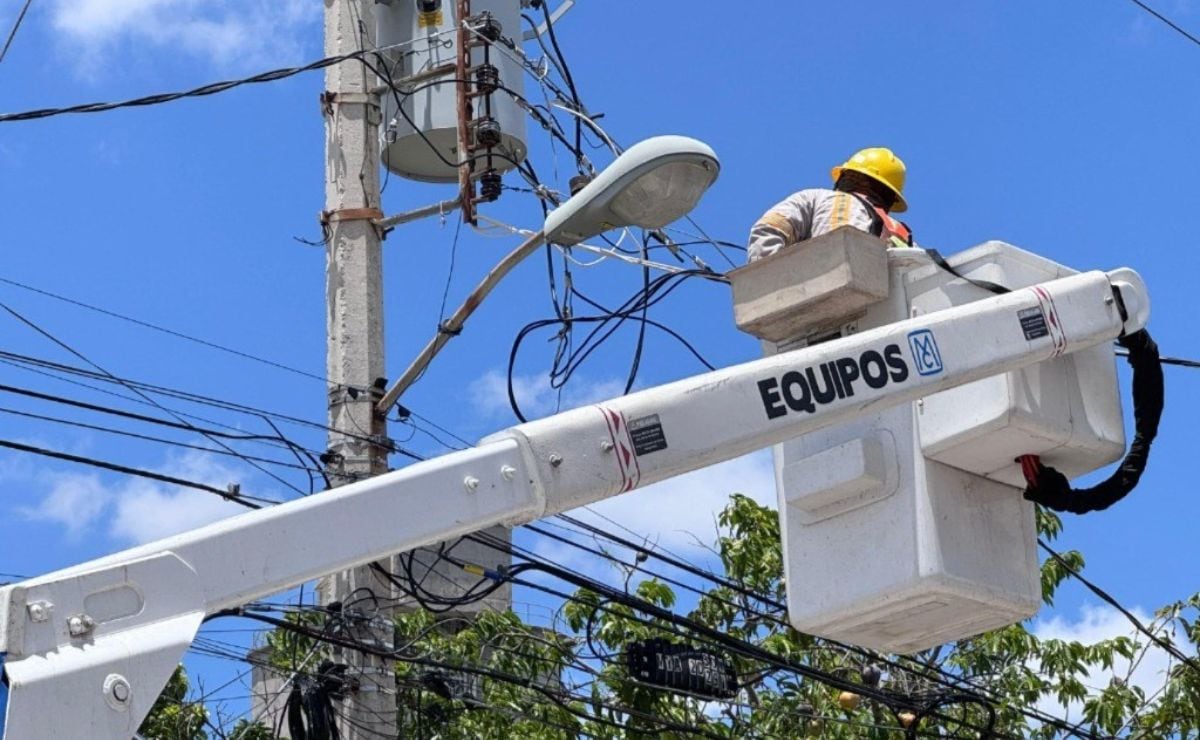
Residents of Mérida, Yucatán, are currently grappling with a precarious intersection of extreme climate conditions and infrastructure failure. As temperatures climb to a searing 42 degrees Celsius, a new wave of power outages has swept across the state capital, leaving thousands of households and businesses without electricity during the most critical hours of the heatwave.
The outages have not been uniform, striking various sectors of the city with varying intensity. While some neighborhoods have experienced intermittent failures, others have reported total blackouts lasting from eight hours to, in some extreme cases, more than 24 hours. This collapse of service during a period of extreme heat transforms a technical failure into a significant public health concern, as air conditioning—a necessity in the Yucatecan climate—becomes unavailable.
From the historic center to the expanding northern suburbs, the instability of the electrical grid has disrupted daily life and highlighted the vulnerability of the region’s energy distribution system when pushed to its thermal limits. The situation has sparked widespread frustration among citizens who find themselves trapped between record-breaking temperatures and a slow recovery of essential services.
Mapping the Grid Failure: Affected Zones and Durations
The current wave of blackouts has manifested in several distinct clusters across Mérida, suggesting a systemic strain rather than isolated incidents. In the second block of the city center and various southern zones, residents have reported power failures lasting up to eight hours. These areas, often characterized by older infrastructure, are particularly susceptible to voltage fluctuations when demand peaks.

Further north and northeast, the situation has been more severe. In the Sodzil area and Polígono 108, residents have reported outages extending up to 10 hours. The most acute cases, however, have emerged from specific residential colonies. In Colonia María Luisa, for instance, reports indicate that electricity was lost on a Sunday evening and was not fully restored until the early hours of Tuesday morning, representing a failure lasting nearly 48 hours for some inhabitants.
The geographical spread of these outages suggests that the grid is struggling to handle the simultaneous surge in energy consumption as residents across the city maximize cooling systems to combat the 42-degree heat.
Infrastructure Collapse: The Role of Equipment Failure
While high demand often triggers load shedding or grid instability, specific equipment failures have been identified as primary catalysts for some of the most disruptive outages. In the Barrio de La Ermita, the local community experienced hours of extreme heat following the explosion of a transformer operated by the Comisión Federal de Electricidad (CFE).
The incident occurred at a transformer located on Calle 64-A, between 79 and 81, which immediately severed power to numerous surrounding homes. Service in this specific sector remained offline from the afternoon of Monday until the early hours of Tuesday. This event underscores a recurring theme in urban energy crises: the failure of aging or overloaded hardware that cannot withstand the combined pressure of extreme ambient temperatures and maximum electrical load.
When transformers overheat, the insulating oil can expand or degrade, leading to internal shorts and, eventually, the type of catastrophic failure witnessed in La Ermita. For a city like Mérida, where the temperature frequently exceeds the thresholds for optimal equipment performance, these failures can trigger a domino effect across the local distribution network.
The Economic and Human Cost of Thermal Stress
The impact of these blackouts extends beyond mere inconvenience. In a region where 42-degree temperatures are common during the peak of the season, electricity is a primary tool for heat mitigation. The loss of power removes the ability to regulate indoor temperatures, increasing the risk of heat-related illnesses, particularly for vulnerable populations such as the elderly and young children.
From a business perspective, the outages create immediate financial losses. Small businesses in the center and north of the city, many of which rely on refrigeration for perishables or climate control to attract customers, face operational shutdowns. When power is lost for eight to 24 hours, the risk of inventory loss becomes a critical concern for local merchants.
the unpredictability of the restoration times prevents effective contingency planning. The disparity in recovery—where some zones regain power in hours while others wait days—creates an uneven economic impact across the city’s different socioeconomic sectors.
Key Takeaways of the Mérida Power Crisis
- Temperature Trigger: Outages are coinciding with extreme heat reaching 42 degrees Celsius.
- Variable Duration: Power failures range from 8 hours in the city center to over 24 hours in specific colonies like María Luisa.
- Infrastructure Failure: A CFE transformer explosion in Barrio de La Ermita served as a localized catalyst for prolonged outages.
- Widespread Impact: Affected areas include the city center, southern zones, Sodzil, and Polígono 108.
Understanding the “Heat-Load” Cycle
To understand why Mérida is experiencing this wave of blackouts, it is necessary to examine the relationship between ambient temperature and electrical demand. As outdoor temperatures rise, the “cooling load”—the amount of energy required to keep indoor spaces at a habitable temperature—increases exponentially. Air conditioning units must work harder and run longer to combat the heat infiltration from the outside.

This surge in demand puts immense pressure on the distribution transformers. When a transformer is pushed beyond its rated capacity for extended periods, it generates internal heat. If the ambient temperature is already 42 degrees, the equipment cannot dissipate this heat efficiently into the surrounding air. This leads to a thermal runaway scenario where the equipment becomes increasingly unstable, eventually leading to the type of explosions reported in the Barrio de La Ermita.
This cycle is often exacerbated by the “urban heat island” effect, where concrete and asphalt in densely populated areas like the center of Mérida retain heat, keeping local temperatures higher than in rural surroundings and further stressing the electrical infrastructure.
Looking Ahead: Grid Resilience and Recovery
The current situation in Mérida highlights an urgent require for infrastructure modernization to match the evolving climate reality of the Yucatán Peninsula. The reliance on transformers that are prone to failure during peak heat suggests a gap between the current capacity of the grid and the actual demand of a growing, warming city.
For residents, the immediate priority remains the stabilization of the service. While the CFE works to replace failed components and stabilize the load, the city remains vulnerable to further outages as long as the heatwave persists. Those in affected areas are encouraged to monitor official CFE channels for restoration timelines and to implement heat-safety measures during periods of power loss.
The next critical checkpoint for the region will be the official report on grid stability and the implementation of any emergency maintenance schedules aimed at preventing further transformer failures as the season progresses.
Do you have experience with the current power outages in Mérida? Share your updates and concerns in the comments below to aid other residents stay informed.