
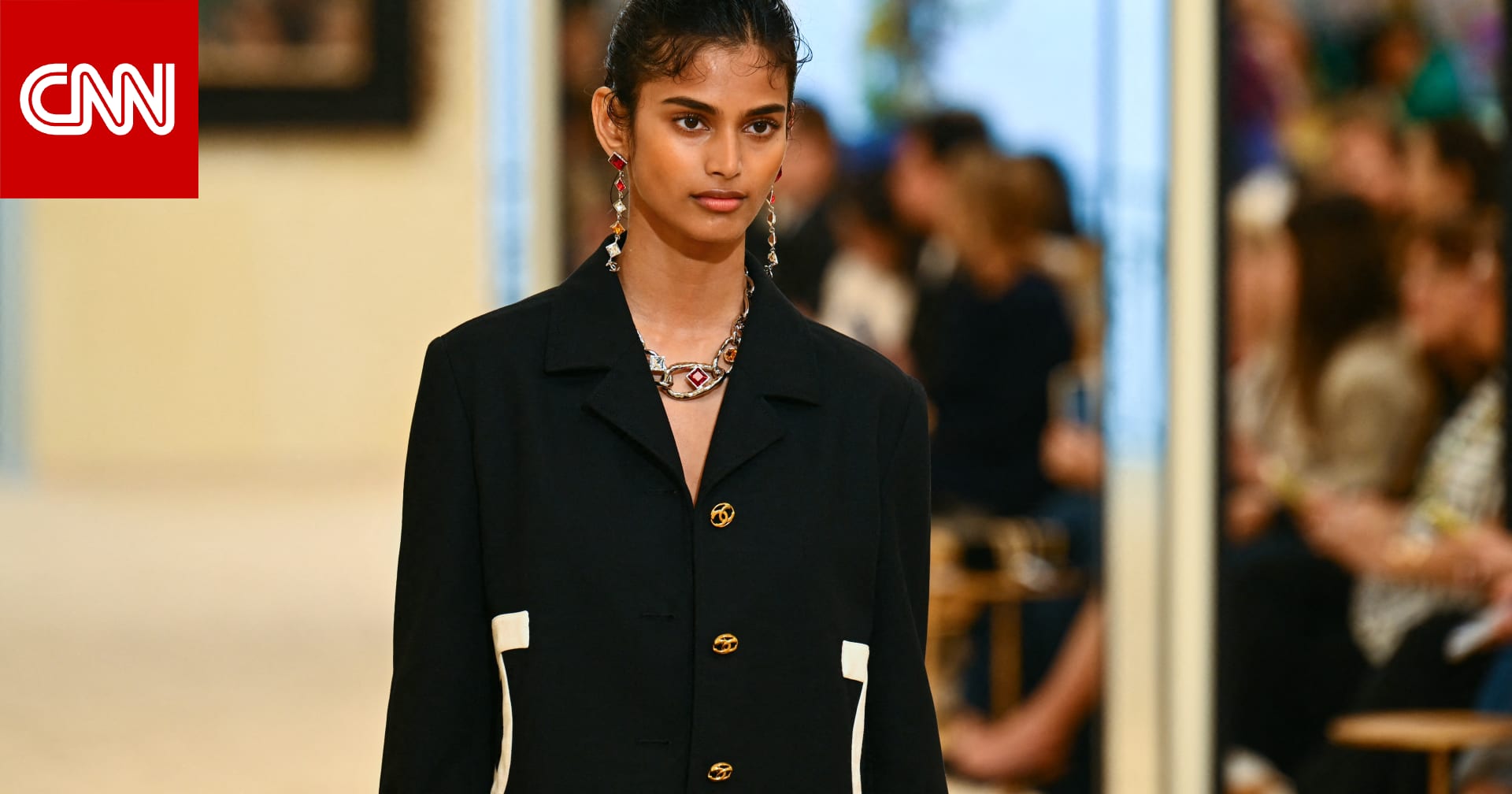
The 2026 Met Gala’s Fashion Controversy: Indian Model’s Denim-Like Trousers Spark Global Debate
The 2026 Met Gala, themed “Costume Art”, became more than a celebration of fashion—it became a cultural conversation. At the center of the debate was an Indian model whose denim-like trousers, paired with a striking traditional blouse, drew both admiration and criticism. The look, which blended modern denim aesthetics with centuries-old Indian textile techniques, highlighted the event’s mission to explore how clothing transcends time and geography. Yet, for some critics, the outfit crossed a line, raising questions about cultural appropriation versus artistic homage.
This year’s gala, co-chaired by Beyoncé and held on May 4 at the Metropolitan Museum of Art, drew record attendance and media attention. While Beyoncé’s return—her first in a decade—dominated headlines, the fashion choices of lesser-known designers and models sparked deeper discussions. The Indian model’s trousers, crafted from a fabric reminiscent of vintage denim but woven using traditional Indian block-printing methods, became a symbol of the evening’s tension between innovation and tradition.
For fashion historians, the look was a masterclass in costume art—a term the Met defines as “clothing designed to be worn as art, whether in performance, photography, or exhibition.” But for cultural critics, the trousers’ resemblance to Western denim raised concerns about the erasure of craftsmanship. “This isn’t just denim,” said Ananya Kapoor, a textile historian at the National Museum of India, in a statement. “It’s a reinterpretation of bandhani dyeing, a technique from the 16th century. The issue isn’t the fabric—it’s the narrative around it.”
Key Takeaways
- The 2026 Met Gala’s theme, “Costume Art”, pushed designers to reinterpret historical garments in modern contexts.
- An Indian model’s denim-like trousers, inspired by traditional bandhani dyeing, became the most debated look of the night.
- Critics argued the design blurred cultural boundaries, while supporters praised it as a fusion of East and West.
- Beyoncé’s co-chairmanship and her daughter Blue Ivy’s debut overshadowed some fashion discussions, though the Indian model’s look remained a topic of analysis.
- The Met Gala’s 2026 edition raised broader questions about fashion’s role in cultural dialogue versus commercialization.
- Attendance records and sponsorships (including a reported $50 million in fundraising) underscored the event’s global influence.
From Denim to Bandhani: The Design Behind the Controversy
The trousers in question were created by Rahul Mehta, a Mumbai-based designer who has gained international acclaim for his work bridging Indian craftsmanship with contemporary fashion. Mehta’s collection, presented at the Met Gala, drew inspiration from the Pahari region’s textile heritage, where artisans developed intricate dyeing techniques to create patterns that mimicked nature. “Denim is a global language,” Mehta told Vogue in a pre-gala interview. “But what if we spoke it in Hindi?”

Mehta’s use of bandhani—a tie-dye method dating back to the Mughal era—was the focal point of the trousers. The fabric’s indigo hue and subtle floral motifs evoked classic denim, but the handcrafted imperfections and cultural symbolism set it apart. “The goal wasn’t to replicate denim,” Mehta explained. “It was to ask: What does denim mean when it’s made by hands that have woven for centuries?”

Yet, not everyone shared Mehta’s vision. On social media, some users questioned whether the design appropriated Indian culture without credit. Others praised it as a celebration of global craftsmanship. The debate mirrored broader conversations in fashion about cultural borrowing versus cultural exchange. “Fashion has always been a site of cultural translation,” noted Dr. Priya Singh, a professor of fashion studies at the University of London. “The challenge is ensuring that translation doesn’t erase the original.”
Cultural Appropriation or Artistic Homage? The Met Gala’s Dilemma
The Met Gala has long been a platform for pushing fashion’s boundaries, but 2026’s theme forced designers to confront uncomfortable questions. Was Mehta’s design a respectful homage or an uncritical borrowing? The answer, according to cultural theorists, lies in the intent behind the creation.
“Appropriation becomes problematic when it’s done without acknowledgment or when it flattens cultural complexity into a trend,” said Dr. Naomi Paik, author of Fashion and Postcolonial Memory. “Mehta’s work succeeds because it doesn’t just borrow—it dialogues.” Paik pointed to Mehta’s collaboration with a bandhani cooperative in Jaipur, where artisans were credited in the collection’s documentation.
However, the debate extended beyond Mehta’s work. Other designers at the gala faced similar scrutiny:
- A French designer’s kimono-inspired gown was criticized for reducing Japanese craftsmanship to a “boho” aesthetic.
- A Moroccan artist’s lantern-inspired accessories were praised for centering North African artisans in the narrative.
- A British label’s “tribal print” dress drew comparisons to Maasai beadwork, sparking backlash on Twitter.
The Met Gala’s 2026 edition became a microcosm of the fashion industry’s reckoning with cultural ownership. “This isn’t about policing creativity,” said Anna Wintour, the gala’s longtime artistic director, in a post-event interview with The New York Times. “It’s about asking: Who benefits from this conversation?”
Beyoncé’s Return and the Gala’s Record-Breaking Night
While the Indian model’s trousers dominated post-gala analysis, the event itself was a triumph of fundraising and star power. Co-chaired by Beyoncé—her first Met Gala in a decade—the evening raised over $50 million for the Metropolitan Museum of Art, according to official reports. Beyoncé’s presence, alongside her daughter Blue Ivy Carter and husband Jay-Z, drew record media attention, though her own look—a sparkling Olivier Rousteing illusion gown—was overshadowed by the cultural debates surrounding other attendees.

Blue Ivy’s debut as a Met Gala attendee became a viral moment, with her white gown and puffer jacket generating over 10 million social media mentions within 24 hours, per Sprout Social’s real-time analytics. Yet, for fashion critics, the evening’s most significant narrative was the clash between commercial spectacle and cultural critique.
“Beyoncé’s return was a cultural event in itself,” said Jamilah Lemieux, a fashion journalist and author of Style Wars. “But the real story was how the gala forced us to ask: Can fashion be both art and activism?”
What Happens Next? The Future of Fashion and Cultural Dialogue
The 2026 Met Gala’s controversies are unlikely to fade. As fashion continues to globalize, designers and institutions will face increasing pressure to navigate cultural sensitivity. The Met Museum has already announced that next year’s theme, “The Future of Fashion”, will include a panel on ethical cultural exchange, featuring Mehta, Paik, and Wintour.
For readers interested in following this story:
- Visit the Met’s official “Costume Art” exhibition page for extended analysis.
- Explore Rahul Mehta’s official website for his full collection and artisan collaborations.
- Follow @AnnaWintour and @MetMuseum for updates on future themes and debates.
What do you think? Should fashion events like the Met Gala prioritize cultural sensitivity over artistic freedom? Share your perspective in the comments below, and don’t forget to follow World Today Journal for more in-depth coverage of global fashion, sports, and cultural trends.