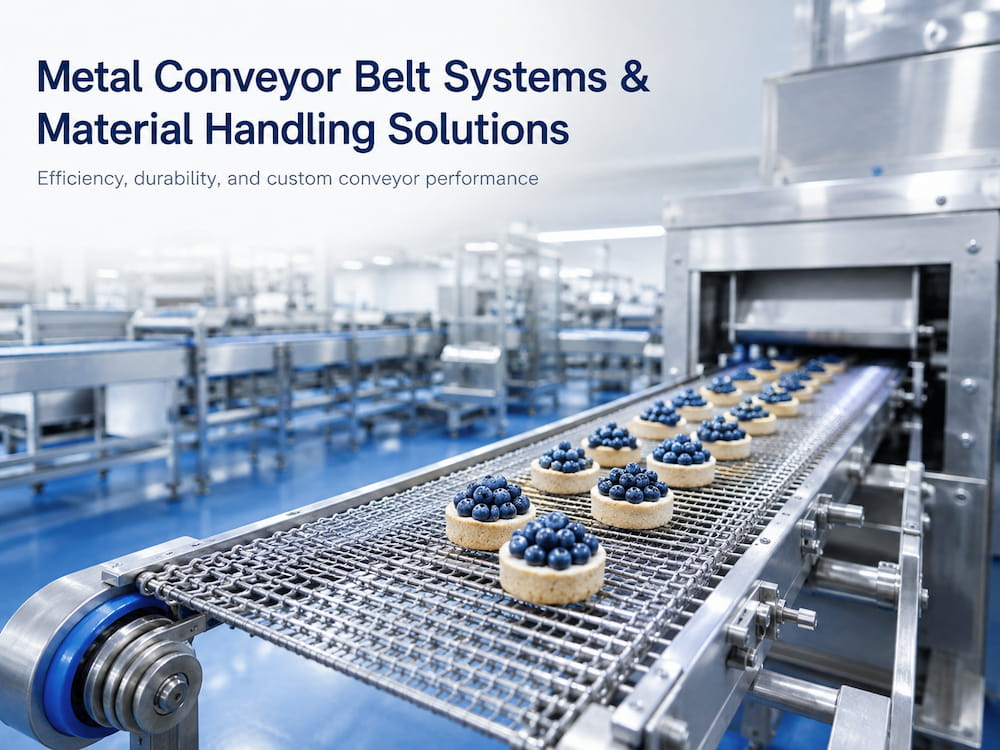
Modern manufacturing and industrial processing rely heavily on continuous material movement, yet plant operators frequently overlook the engineering behind metal conveyor belt systems until an unexpected shutdown halts production. Across facilities ranging from food processing plants to heavy industrial sites, selecting the correct conveyor configuration directly influences line throughput, product orientation, and overall operational efficiency.
When a conveyor fails, upstream production lines often have nowhere to send products while downstream equipment sits idle, turning what seems like a minor mechanical component into a critical operational bottleneck.
Selecting the right metal conveyor belt system requires looking far beyond basic belt width and speed. Engineers, production managers, and maintenance teams must evaluate the specific application, environmental conditions, sanitation needs, and surrounding machinery to ensure seamless material flow across every stage of production.
Engineering Durable Material Handling Systems for Demanding Environments
Metal conveyor belts consistently outperform traditional rubber or plastic alternatives in harsh operational settings involving extreme temperatures, heavy loads, moisture, and aggressive chemical exposure. Stainless steel remains the material of choice across these applications due to its unique combination of mechanical strength and high resistance to corrosion and repeated thermal cycling.
In food manufacturing, open construction allows air, water, oil, and steam to pass freely through the belt rather than trapping moisture on the conveying surface. This design supports rigorous sanitation schedules and aligns with regulatory hygiene principles outlined by agencies such as the U.S. Food and Drug Administration, which emphasizes cleanable equipment design and accessible maintenance points.
Beyond the belt itself, overall system performance depends heavily on drive sprockets, rollers, support rails, tensioning arrangements, and automated controls. Even a premium stainless steel belt can fail prematurely if installed on a poorly configured frame or misaligned drive system.
Overcoming Operational Challenges Through Custom Design and Preventive Maintenance
Many production interruptions occur not in the middle of a long conveyor run, but at transfer points where products move from one machine to another. Small, soft, round, or fragile items frequently become unstable, rotate unexpectedly, or drop into gaps if transfer plates, belt geometry, and speed relationships are not precisely engineered. To counteract these vulnerabilities, manufacturers utilize custom belt modifications such as raised flights, side guards, lane separators, and specialized edges to maintain product alignment and prevent sliding on steep inclines.
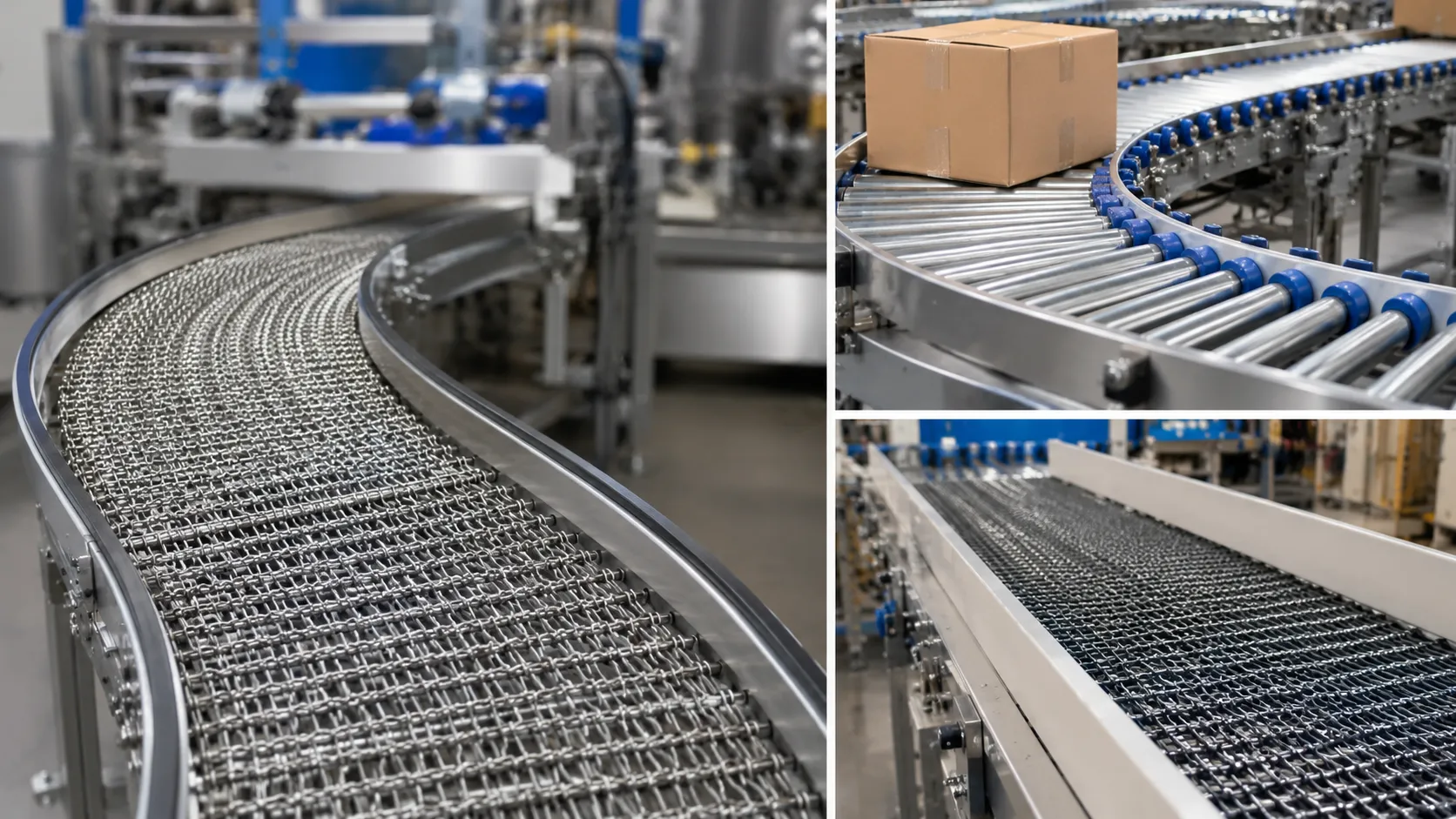
To maximize equipment availability and prevent emergency breakdowns, facility maintenance teams increasingly adopt proactive management strategies rather than relying on reactive repairs. Comprehensive maintenance routines focus on tracking, tension, sprocket wear, roller alignment, and joint integrity while the equipment remains operational.
Integrating advanced material handling solutions with automated sorting, robotic systems, and predictive monitoring allows modern plants to detect wear before failures occur. By viewing conveyor performance as an integral element of total process reliability rather than a secondary maintenance expense, industrial facilities can protect product quality, reduce labor overhead, and maintain consistent output across multiple shifts.
Keep reading