
For decades, the promise of proton therapy—a precise form of radiation that minimizes damage to healthy tissue—has been tempered by a daunting physical reality: the sheer size of the equipment. Traditionally, implementing a proton program required the construction of massive, purpose-built facilities, often costing tens of millions of dollars and requiring footprints that dwarfed standard oncology suites. This infrastructure barrier has historically limited this advanced cancer treatment to a handful of elite academic medical centers.
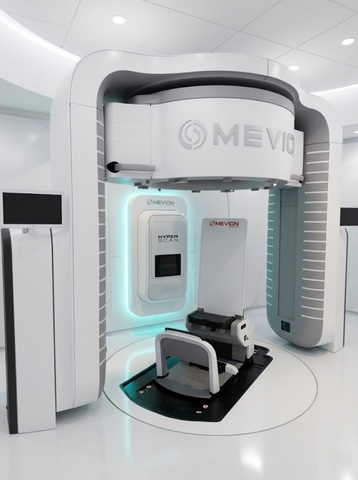
That paradigm is shifting. Mevion Medical Systems is preparing to introduce the MEVION S250-FIT Proton Therapy System to the European radiation oncology community at ESTRO 2026. Unlike its predecessors, the S250-FIT is the first proton therapy system specifically engineered for installation within a standard linear accelerator (LINAC) vault, potentially democratizing access to proton treatment by utilizing existing hospital infrastructure.
The arrival of the S250-FIT represents a significant pivot in cancer center capital planning. By aligning advanced proton capabilities with the workflows and spatial constraints of modern radiation oncology, Mevion is attempting to move proton therapy from a “destination” treatment—where patients travel to a specialized center—to an integrated component of local radiotherapy programs.
Now both U.S. FDA-cleared and CE-marked under Regulation (EU) 2017/745, the system provides a streamlined pathway for healthcare providers to upgrade their capabilities without the need for groundbreaking or new building permits. This regulatory milestone allows Mevion to target both the North American and European markets simultaneously, addressing a long-standing demand for compact, single-room solutions.
Breaking the Infrastructure Barrier: The LINAC Vault Integration
To understand the significance of the S250-FIT, one must first understand the “LINAC vault.” Most modern cancer centers utilize linear accelerators (LINACs) for photon-based radiation therapy. These machines sit in reinforced concrete rooms—vaults—designed to shield the rest of the hospital from radiation. Until now, proton therapy systems were far too large to fit into these existing spaces, requiring the construction of entirely new wings or separate buildings.
The S250-FIT changes this calculus. By reducing the accelerator’s footprint, Mevion has created a system that can slide into the clinical and operational framework already used for conventional radiotherapy. This integration reduces the financial risk for hospitals and accelerates the timeline for deployment, as the “shell” of the facility already exists.
Tina Yu, Ph.D., CEO and President of Mevion Medical Systems, noted that this development removes the infrastructure limitations that have historically hindered adoption. According to Yu, for European health systems that have recognized the clinical benefits of proton therapy but were deterred by financial and spatial barriers, the conversation now shifts from whether to build a new facility to how to integrate the technology into existing programs.
Case Study: The Stanford Medicine Installation
The practical viability of this approach was demonstrated on April 7, 2026, when Stanford Medicine unveiled the world’s first S250-FIT installation. Developed in collaboration with Leo Cancer Care, the project served as a proof-of-concept for the “FIT” philosophy. The system was fully installed within a standard 110 m² (approximately 1,200 sq ft) LINAC vault located inside the existing Stanford Medicine Cancer Center in Palo Alto. Stanford Medicine confirmed that the installation was completed without the need to construct a new building.
This installation is a critical milestone for the industry. It proves that a high-performance proton system can operate effectively within the spatial constraints of a standard radiology department. For hospital administrators, the Stanford model provides a blueprint for expanding treatment modalities without the bureaucratic and financial burden of major construction projects.
Advanced Technical Capabilities in a Compact Footprint
Despite its smaller size, the S250-FIT does not sacrifice clinical power. The system is engineered to deliver Intensity Modulated Proton Therapy (IMPT), a sophisticated technique that allows clinicians to modulate the intensity of the proton beam to conform more tightly to the shape of the tumor.

Key technical components of the S250-FIT include:
- HYPERSCAN® Pencil Beam Scanning: This technology allows for the precise delivery of proton beams, scanning the tumor volume point-by-point to maximize dose distribution while sparing surrounding healthy organs.
- Adaptive Aperture®: A proton multi-leaf collimator that further refines the beam’s edge, reducing the “penumbra” or blurriness of the radiation dose.
- DirectARC™ Support: The system is designed to support proton arc therapy, which can potentially reduce treatment times and improve dose conformity.
- FLASH Research Readiness: The system is equipped to support FLASH radiotherapy research—an emerging field that delivers ultra-high dose rates in milliseconds—though Mevion notes that the FLASH Research Kit is not currently available for commercial sale or human clinical use.
Further enhancing the system’s utility is the integration of Leo Cancer Care’s Marie® Upright Patient Positioning and CT Imaging System. This represents the first commercial upright treatment platform featuring an integrated diagnostic CT. By allowing patients to be positioned upright during certain phases of treatment, the Marie® system can offer improvements in patient comfort and, more importantly, better organ motion management. This is particularly vital for treating tumors in the lungs or abdomen, where gravity affects the position of organs differently when a patient is lying flat versus standing.
Clinical Lineage and Global Market Traction
The S250-FIT is not a standalone experiment; it is built upon a decade of clinical data. The system shares its core technology lineage with the MEVION S250i®, which has been in operational use at prestigious institutions including the Siteman Cancer Center at Washington University School of Medicine in the U.S. And the ZON-PTC at Maastro Clinic in the Netherlands. This heritage gives the S250-FIT an immediate foundation of proven reliability and clinical efficacy.
Market response to the FIT model has been rapid. Mevion has already signed contracts with nine leading global institutions. Among the early adopters are:
- Stanford Health Care
- Loma Linda University Health
- UNC Health
- BayCare Health System
- Atlantic Health System
- University of Nebraska Medical Center
The adoption of the S250-FIT by these diverse healthcare systems—ranging from academic powerhouses to regional health networks—suggests that the demand for “accessible” proton therapy is widespread. By lowering the entry barrier, Mevion is positioning itself as the primary provider for the “mid-market” of oncology centers that have the patient volume for proton therapy but not the real estate for a traditional center.
The Economic Impact on Oncology Infrastructure
From a business perspective, the S250-FIT addresses the “capital expenditure (CapEx) hurdle” that has long plagued the proton therapy market. Traditional proton centers often require investments exceeding $100 million, involving complex civil engineering and specialized shielding. By utilizing a standard LINAC vault, the S250-FIT significantly reduces the initial investment and the time-to-revenue for the provider.
the ability to integrate proton therapy into existing workflows means that staffing and operational overhead are more manageable. Rather than managing a separate facility with its own dedicated logistics, hospitals can treat proton therapy as another tool in their existing radiation oncology toolkit, utilizing the same nursing and administrative frameworks already in place for photon therapy.
Looking Ahead: ESTRO 2026 and Beyond
Mevion will be showcasing the S250-FIT at ESTRO 2026, where the company will engage with the European radiation oncology community to discuss site planning and integration pathways. For European health systems, which often operate under tighter budgetary constraints and within older, more compact urban hospital footprints, the S250-FIT offers a viable path toward modernization.
As the medical community moves toward more personalized, adaptive therapy, the combination of the S250-FIT’s compact design and the Marie® system’s upright positioning may set a new standard for patient-centric care. The ability to perform image-guided and adaptive workflows in a modest footprint allows for “real-time” adjustments to treatment plans based on the patient’s daily anatomy.
The next confirmed milestone for the technology will be the continued rollout of the nine signed contracts, as these institutions move from the planning phase to active clinical operation. The industry will be watching closely to see if the S250-FIT can truly shift proton therapy from a niche luxury to a standard of care across a broader spectrum of cancer centers.
We invite our readers to share their thoughts on the integration of compact proton therapy in the comments below. Do you believe the removal of infrastructure barriers will significantly increase patient access to advanced radiation treatments?