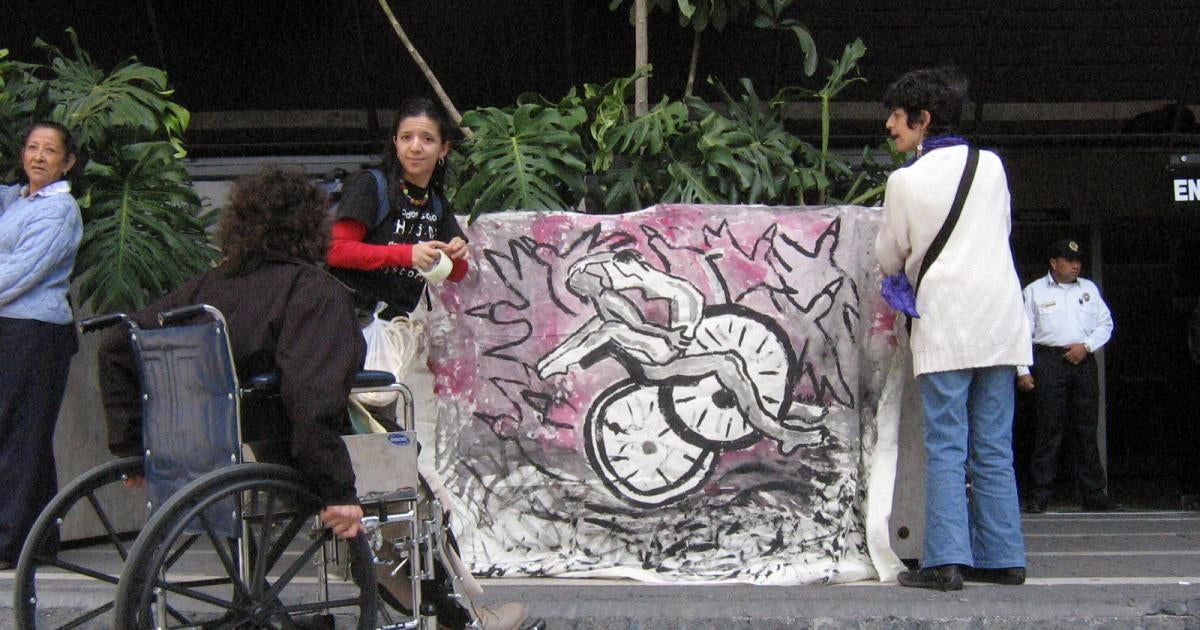
Mexico’s Supreme court Shifts on Disability Rights Consultation: A Step Backwards for Inclusive Legislation?
Mexico’s commitment to disability rights, enshrined in international law and increasingly reflected in national jurisprudence, faces a critical juncture. Recent decisions by the Supreme Court of Justice of the Nation (SCJN) regarding the consultation of people with disabilities in legislative processes signal a possibly concerning shift, moving away from proactive protection towards a reactive model that risks undermining the very principles of inclusive governance. This analysis examines the evolving legal landscape, the implications of the SCJN’s new doctrine, and recommendations for safeguarding the rights of people with disabilities in Mexico.
From Procedural Requirement to Potential Oversight: A Recent History
For some time, Mexico’s Supreme Court has demonstrated a willingness to uphold the right to consultation for people with disabilities, recognizing it as a fundamental component of inclusive lawmaking. Landmark rulings, such as the 2021 decision striking down Mexico City’s Law of Education (109/2021) and similar cases, highlighted the absence of meaningful consultation as a constitutional flaw. These decisions underscored a crucial point: legislation impacting the lives of people with disabilities must be developed with their direct involvement. The court also acknowledged a missed possibility in the Mexico City case to establish concrete standards for inclusive education, a critical area demanding clear legal guidance.
Though,a notable shift occurred in September 2025 with the court’s decision in a case brought by the National Commission of Human Rights concerning Law No. 817 for Persons with Disabilities of the State of Guerrero. the SCJN announced a new doctrine, stating that the onus of raising consultation issues now rests with the complainants, rather than the court proactively addressing them ex officio. As the court’s press release articulated, norms potentially benefiting people with disabilities will no longer be automatically invalidated for lacking prior consultation. Instead, the court expects people with disabilities to “play a leading role in the challenge.”
The Risks of a Reactive Approach
While the stated intention – to move beyond “procedural formality” – is understandable, this new approach carries substantial risks. It introduces the potential for consultation to be overlooked entirely, relying on individuals to navigate complex legal processes and advocate for their rights. This is notably problematic given the systemic barriers already faced by people with disabilities in accessing justice and participating in public life.
The danger lies in perpetuating a cycle of well-intentioned, yet ultimately misguided, legislation. Legislators, acting without direct input from the communities they aim to serve, risk reinforcing paternalistic approaches that fail to address the actual needs and priorities of people with disabilities. Consultation isn’t merely a bureaucratic hurdle; it’s a vital safeguard against laws that inadvertently patronize, exclude, or undermine the autonomy of individuals. The experience in Chihuahua, where well-meaning initiatives ultimately diminished rights, serves as a stark reminder of this potential pitfall.
International Law and the Imperative of Participation
This shift in doctrine stands in contrast to Mexico’s international obligations under the United Nations Convention on the rights of Persons with Disabilities (CRPD). The CRPD explicitly recognizes the right of people with disabilities to be directly involved in decisions affecting their lives. This isn’t simply a matter of democratic principle; it’s a fundamental human right. General Comment no. 7 on Article 4(3) of the CRPD further emphasizes the importance of meaningful participation, outlining standards for effective consultation processes.
Mexico’s ratification of the CRPD creates a legal imperative to ensure full participation in legislative and policy development. National jurisprudence has already established consultation as a necessary legislative formality. Weakening this safeguard not only contradicts Mexico’s international commitments but also betrays the core disability rights principle: “nothing about people with disabilities without people with disabilities.”
Strengthening Participation: A Path Forward
To rectify this concerning trend, a two-pronged approach is necessary:
* Legislative Action: Mexican legislatures must adopt clear, achievable, and enforceable consultation standards. These standards should outline specific procedures for engaging with people with disabilities, ensuring accessibility, and documenting the impact of their input. Resources should be allocated to facilitate meaningful participation, including providing accessible formats, translation services, and reasonable accommodations.
* Judicial Refinement: The Supreme Court should reconsider its new doctrine. While avoiding rigid formalism is prudent,abandoning ex officio review of the right to consultation is a step too far.The court could adopt a balancing approach, weighing the impact of the absence of consultation against the extent to which the legislation advances human rights. This would allow for a nuanced assessment of each case while preserving a critical layer of protection.
Protecting Rights, Upholding Commitments
The
Keep reading