
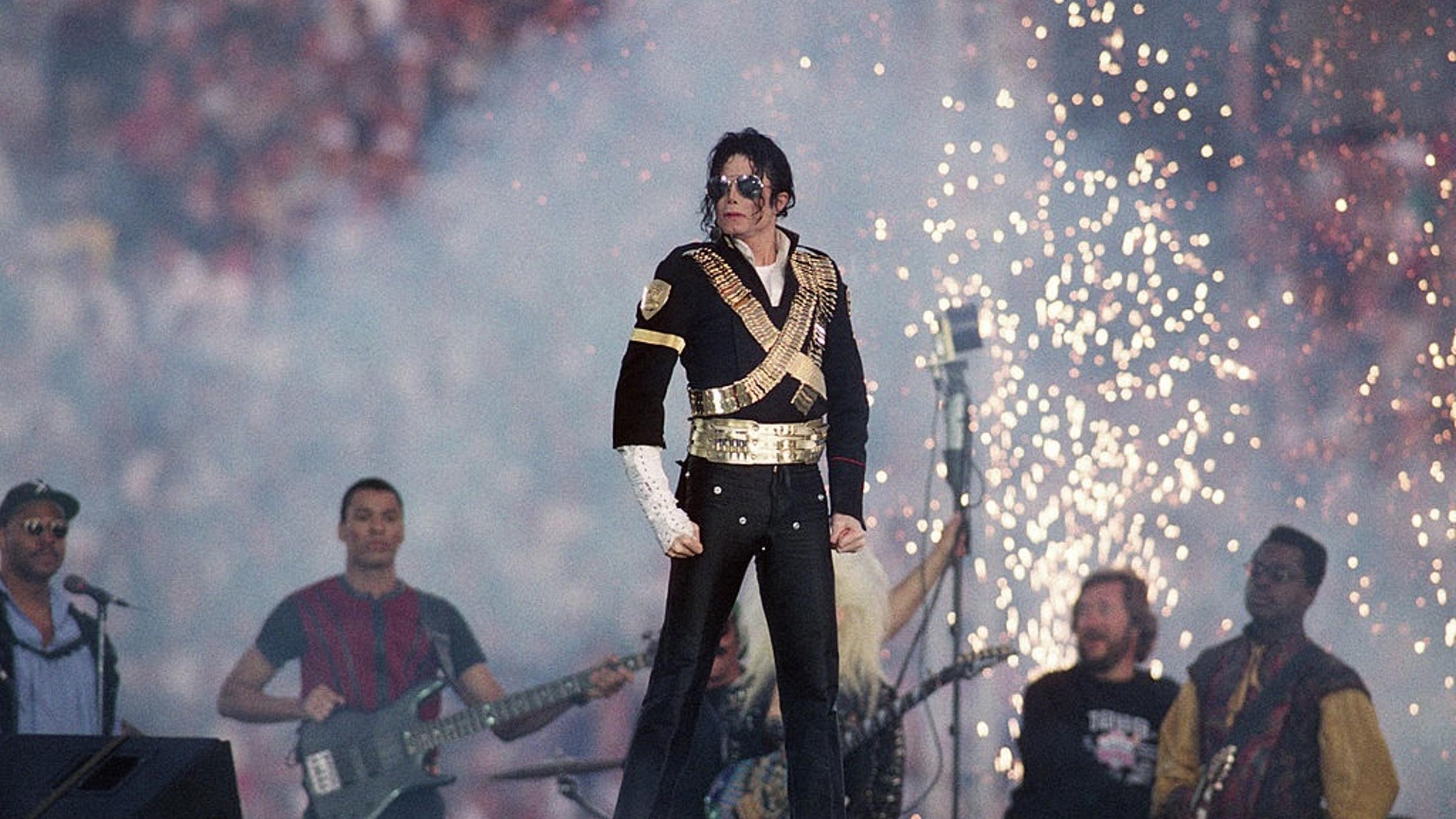
Michael Jackson’s cultural footprint remains vast more than 15 years after his death, as evidenced by the intense global response to Lionsgate’s biopic Michael. The film’s trailer, released in November 2025, garnered over 116 million views in its first 24 hours—surpassing the debut traction of Taylor Swift: The Eras Tour (96.1 million), Bohemian Rhapsody (57.6 million), and A Complete Unknown (47.2 million). This level of engagement underscores how Jackson’s artistry continues to resonate across generations and geographies, from Chicago to Tokyo to Johannesburg.
The enduring fascination with Jackson speaks to a deeper cultural phenomenon: his role as the original architect of the modern celebrity artist. Long before the algorithm-driven fame of today’s digital era, Jackson fused music, dance, fashion, and branding into a cohesive, industrialized package that set the template for global superstars. His influence is visible in the careers of artists like Beyoncé and Taylor Swift, who have cited his approach to performance and visual storytelling as foundational. Beyond artistry, Jackson pioneered the artist-as-enterprise model, leveraging his fame into business ventures that included the acquisition of ATV Music Publishing—a catalog later merged into Sony/ATV and containing rights to works by the Beatles, Elvis Presley, and Little Richard.
Financially, Jackson’s legacy persists with remarkable strength. His estate has earned an estimated $3.5 billion since his passing in 2009, according to verified reports, allowing him to consistently outearn hundreds of thousands of living artists annually. On streaming platforms, he maintains over 60 million monthly listeners on Spotify, a testament to his ongoing relevance in the digital music landscape. Stage productions continue to keep his work alive: MJ: The Musical runs in New York, London, and Hamburg, with touring productions across the U.S. And Australia, and an Asian tour planned for late 2026. In Las Vegas, Cirque du Soleil’s Michael Jackson ONE, which premiered in 2013, has been extended through 2030—a rare longevity in a residencies market where shows typically rotate every few seasons.
Jackson’s origins trace back to the Great Migration, a pivotal movement in American history when Black families sought economic opportunity and dignity in northern cities. His father, Joseph Jackson, was born in Arkansas, met Katherine in East Chicago in 1949, and relocated the family to Gary, Indiana in 1950. There, Joseph set aside his own musical ambitions to manage his sons’ careers, imposing a rigorous, near-militaristic discipline rooted in the reality that Black performers had to excel twice as much as their white counterparts to succeed. This environment shaped the Jackson 5 into a polished, tight, and soulful act that embodied Motown’s “Sound of Young America” strategy—a deliberate effort to use pop-soul as a tool for racial integration. Black families across the country felt pride in seeing young Black men command stages nationwide, a sentiment echoed in personal accounts like that of a New Orleans resident who recalled trailing her sister to a Jackson 5 concert, moved by the sight of young men who “gloriously looked like them” commanding a stage in a country that often denied them belonging.
By the early 1970s, Michael had emerged as the undeniable star of the Jackson 5, his rare blend of innocence and technical command of pitch, dynamics, and tone catching the attention of Motown founder Berry Gordy. Gordy launched Michael’s solo career with “Got to Be There,” but it was the 1979 album Off the Wall, produced by Quincy Jones, that revealed his full artistic potential. The record fused funk, R&B, rock, gospel, and dance into a sound unmistakably American and Black—yet so distinctive it began to eclipse the man behind it. Jackson’s genius lay in his ability to synthesize diverse influences into something both deeply rooted and universally appealing, a duality that would define his career.
Jackson’s life was also marked by profound controversy, particularly allegations of child sexual abuse that surfaced in the early 1990s. In August 1993, the Los Angeles Times reported “International furor stirred by allegations on Jackson” after a therapist told police that 13-year-old Jordan Chandler had been molested by Jackson. Police raided Jackson’s properties, including Neverland Ranch, during his Asian tour leg. Amid intense media scrutiny, Jackson canceled the remainder of the Dangerous World Tour in November 1993, citing exhaustion and painkiller addiction. In January 1994, he settled with the Chandlers for a reported $23 million without admitting wrongdoing. The following May, he married Lisa Marie Presley in the Dominican Republic—a union widely interpreted as a publicity move to counter perceptions of his sexuality. Their September 1994 appearance at the MTV Video Music Awards, including a staged kiss, was described by Priscilla Presley in her memoir as less romantic and more tableau—a calculated image designed to rehabilitate his public standing. The couple divorced by the end of 1996.
Jackson’s later years included fatherhood, which many perceived as a humanizing factor. He had three children: Prince Michael Jackson (born 1997), Paris-Michael Katherine Jackson (born 1998), and Prince Michael Jackson II (nicknamed “Bigi,” formerly known as Blanket, born 2002). Public portrayals of him as a doting, protective father were generally well-received, even as some of his parenting choices—such as requiring young children to wear face masks in public—drew scrutiny. Despite this softening in public perception, new allegations emerged, including a 2000 criminal case that led to a trial where Jackson was ultimately acquitted.
Jackson died suddenly on June 25, 2009, at the age of 50. The news broke via TMZ around 2:45 p.m., less than 20 minutes after he was pronounced dead at a rented Los Angeles mansion, preceding confirmation by major news outlets. The announcement triggered a global online reaction, with Wikipedia edits surging to the point of overwhelming the site. Jackson had been in rehearsals for What we have is It, a planned 50-show residency at London’s O2 Arena intended to mark his comeback. Rehearsal footage showed his artistic brilliance intact, even as his physical appearance revealed signs of extreme strain—weight loss, insomnia, and fragility linked to perfectionism and medication use.
His personal physician, Conrad Murray, administered propofol—a powerful hospital anesthetic—to facilitate Jackson sleep during the grueling rehearsals. On the morning of June 25, Murray gave Jackson multiple sedatives, culminating in propofol, then left him alone. Upon returning, he found Jackson unresponsive. Emergency responders arrived to find an oxygen tank, prescription bottles, syringes, orange juice, and latex gloves. Jackson was transported to UCLA Medical Center, where he was pronounced dead. Autopsy results showed he weighed 136 pounds, stood 5 feet 9 inches tall, wore a wig, and had his lips tattooed pink.
Murray was later convicted of involuntary manslaughter in 2011 for his role in Jackson’s death. The trial highlighted systemic issues in how fame and pressure can compromise medical judgment, particularly around the use of controlled substances. Jackson’s death prompted global mourning: an estimated 31 million Americans watched his memorial service on television, while approximately one billion people tuned in worldwide via broadcast and online streams. The scale of grief reflected not just loss of a performer, but a collective reckoning with the contradictions of his life—extraordinary talent shadowed by deep personal turmoil and allegations that remain unresolved in public consciousness.
What Jackson’s enduring prominence reveals about society is a tension between admiration and discomfort. We are drawn to complexity in art and identity, yet often retreat when that complexity demands moral or emotional engagement. His story refuses tidy categorization: he was both a transcendent innovator and a figure entangled in serious accusations; a global unifier whose music brought people together across divides, and a man whose private life fueled intense debate. In many cultures, such contradictions can coexist without requiring resolution. In contrast, American media and public discourse often favor clear narratives—heroes and villains, redemption arcs, definitive verdicts. Jackson resistssuch simplification, which is precisely why he remains a cultural lightning rod.
This refusal to be boxed in is tied to something Jackson created that algorithms cannot replicate: a shared, visceral human pulse. It’s the rhythm felt in a wedding reception when “Billie Jean” starts playing, the instinct to move when “Beat It” comes on at a bar, the spontaneous singalong to “We Are the World” at a community gathering. These moments bypass feeds and feeds, tapping into a collective memory that predates digital fragmentation. That lived, bodily connection to his art is why, despite the controversies, audiences continue to engage with his work—not in spite of its complexity, but because of it.
As Lionsgate’s Michael prepares for theatrical release on April 24, 2026, it does not merely tap into nostalgia. It meets an audience that never fully let go—a global community still negotiating what Jackson means, who he was, and why his art continues to move us. The film’s success will not be measured solely in box office numbers, but in how it contributes to an ongoing conversation about legacy, accountability, and the enduring power of art to reflect the fullness of the human experience.
For updates on the film’s release and related cultural coverage, visit Lionsgate’s official movie site.