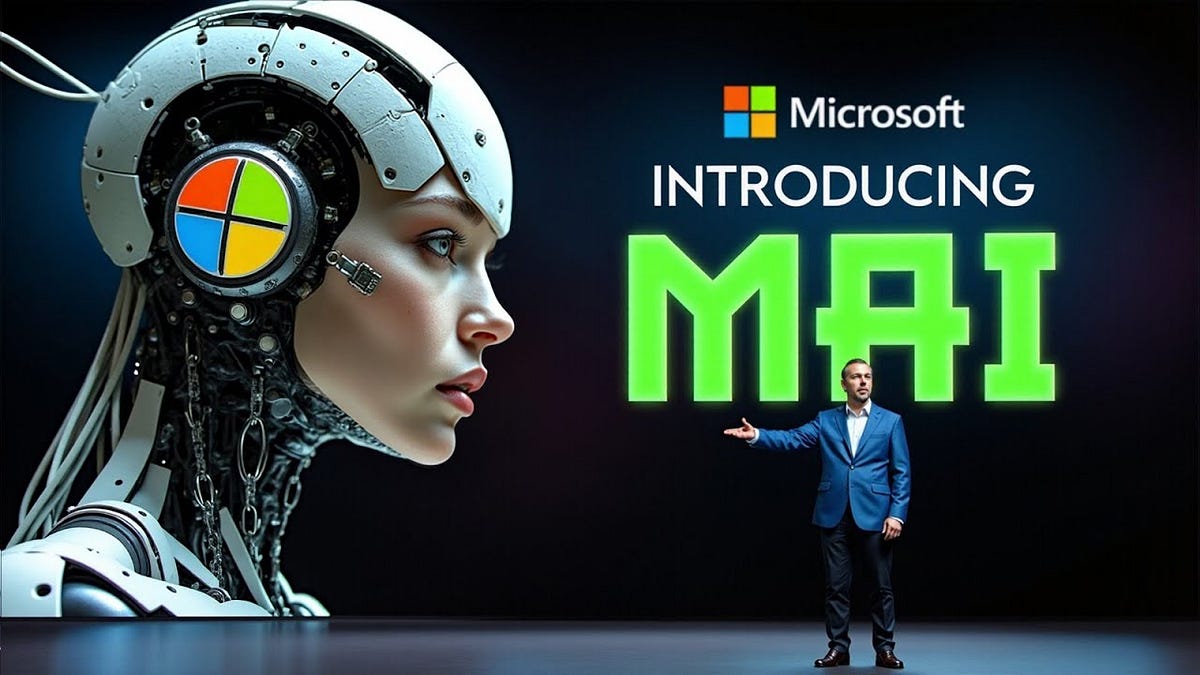
Microsoft’s strategic pivot toward developing its own proprietary artificial intelligence models represents a significant shift in the company’s long-standing reliance on third-party technology. While the software giant has spent years integrating OpenAI’s systems into its core product suite, the recent introduction of its internal AI initiatives signals a move toward vertical integration. This transition seeks to balance the benefits of external partnerships with the control and efficiency of in-house technological sovereignty.
The tech industry is closely monitoring this development as it potentially reshapes the competitive landscape of generative AI. By transitioning from a primary distributor of partner technology to a creator of its own foundational models, Microsoft aims to optimize its infrastructure costs and tailor performance metrics to its specific enterprise and consumer software ecosystems. This operational change reflects a broader trend among major cloud providers seeking to reduce dependency on external supply chains for critical AI components.
The Evolution of Microsoft’s AI Infrastructure
For nearly a decade, Microsoft has relied on a symbiotic relationship with OpenAI, providing the massive computing power required for large language model (LLM) training in exchange for exclusive access to the resulting technology. According to Microsoft’s fiscal year 2024 earnings reports, the company continues to invest billions into its Azure AI infrastructure to support these workloads. However, the introduction of internal development pipelines suggests that Microsoft is moving to mitigate the risks associated with single-source dependency.
Industry analysts have noted that the shift is not necessarily an abandonment of external partnerships, but rather a move toward a “hybrid” model. By developing proprietary models, Microsoft can iterate faster on specific features within its Office 365, GitHub, and Windows platforms. This strategy allows the company to optimize latency and cost, which are critical factors for enterprise-grade applications where OpenAI’s general-purpose models may be either too expensive or not sufficiently specialized for proprietary data environments.
Strategic Implications for the Generative AI Market
The decision by a major distributor to transition into a manufacturer of its own foundational AI technology creates a ripple effect across the software industry. When a firm like Microsoft builds its own factory—in this case, its own model-training clusters and proprietary model architectures—it redefines the value proposition for developers. As noted in recent industry reporting by Reuters, the expansion of Microsoft’s internal AI lineup forces competitors to re-evaluate their reliance on third-party APIs versus the high capital expenditure of building in-house.
This vertical integration provides several competitive advantages:
- Cost Efficiency: Reducing the per-token cost associated with external API usage.
- Customization: Creating models optimized for specific enterprise workflows rather than general-purpose tasks.
- Security and Compliance: Maintaining total control over data sovereignty for government and high-security clients who may be wary of third-party processing.
The market impact is already visible in the cloud services sector. Microsoft’s Azure platform is increasingly positioning itself as a “one-stop shop” where developers can access both OpenAI’s frontier models and Microsoft’s own smaller, more efficient models. This dual approach ensures that Microsoft maintains its position as the primary platform for AI development while securing its own supply of intellectual property.
Challenges and Future Outlook
Developing foundational AI models is a resource-intensive endeavor that requires significant hardware investment and specialized talent. According to data from Gartner research on enterprise AI adoption, the challenge for companies shifting to internal development is not just the initial engineering, but the ongoing maintenance of model performance and safety alignment. Microsoft must navigate the complexities of training, fine-tuning, and deploying these models at a global scale without compromising the reliability that enterprise clients expect.

The next major checkpoint for this strategy will be the upcoming quarterly investor briefing, where Microsoft is expected to provide further details on its capital expenditure related to custom silicon and model development. The company’s ability to successfully scale these internal models will determine whether this pivot serves as a long-term cost-saving measure or a new revenue stream through proprietary AI-as-a-service offerings.
As the landscape continues to evolve, stakeholders are looking toward upcoming product roadmap disclosures to see how these internally developed models will be integrated into the next generation of Microsoft Copilot services. Readers interested in following these developments can monitor the official Microsoft News Center for scheduled technical announcements and corporate filings. Please share your thoughts in the comments section below regarding the shift toward internally developed AI.