Global Markets Shaken as Middle East Conflict Fuels Inflation Fears
Financial markets are bracing for renewed inflationary pressures as escalating tensions in the Middle East send oil prices soaring. Stock markets across Europe and the United States experienced significant declines on Wednesday, reflecting investor anxieties over the potential for a wider conflict disrupting global energy supplies. The situation is reminiscent of the economic uncertainties triggered by the war in Ukraine in 2022, raising concerns about a potential return to stagflation – a combination of slow economic growth and persistent inflation. The price of Brent crude oil jumped over 8% on Wednesday, reaching its highest level since July 2024, while natural gas prices in Europe saw a dramatic surge, increasing by over 30%.
The immediate catalyst for the market turmoil is the recent escalation of hostilities involving Iran and its proxies. Reports indicate attacks by Tehran on sites linked to the United States in the Gulf, coupled with continued Israeli strikes in Iran and Lebanon. This volatile situation is creating significant uncertainty around oil production and transportation routes, particularly through the Strait of Hormuz, a critical waterway for global energy shipments. Approximately 20% of the world’s oil and liquefied natural gas (LNG) transits this strategic chokepoint, making it exceptionally vulnerable to disruption. A threat issued by a general of Iran’s Revolutionary Guard to “burn every ship” attempting to pass through the strait has further heightened anxieties.
Market Reaction: A Global Sell-Off
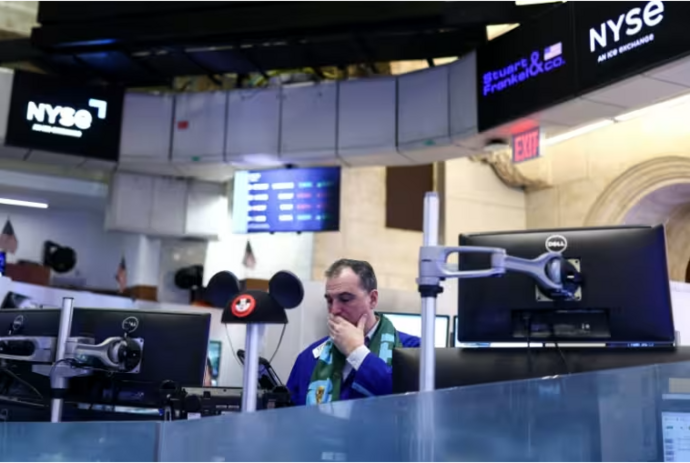
The impact of the escalating tensions was immediately visible in global financial markets. In New York, major stock indices opened sharply lower. Initial trading saw the Dow Jones Industrial Average fall by 2.16%, the Nasdaq Composite decline by 2.08% and the broader S&P 500 lose 2.02%. European bourses also experienced substantial losses, with the Paris Bourse down 3.50%, Frankfurt falling 3.96%, London shedding 3.17%, and Milan plummeting 4.61%.
The anxieties are rooted in the fear of a “supply shock” to the global economy, according to Kevin Thozet, a member of the investment committee at Carmignac. Reuters reported that investors are particularly concerned about the potential for sustained higher energy prices to erode economic growth and reignite inflationary pressures. This concern is especially acute in Europe, which remains heavily reliant on energy imports from the Middle East.
Energy Prices Surge, Dollar Strengthens
As of Wednesday afternoon GMT, the price of Brent crude oil had risen 8.34% to $84.22 per barrel, peaking at $85.12 – a level not seen since July 2024. West Texas Intermediate (WTI), the American benchmark, gained 8.82% to $77.51 per barrel. The European gas market also experienced a significant spike, with the TTF (Title Transfer Facility) benchmark, a key reference point for natural gas prices in Europe, jumping 30.90% to €58.26.
This surge in energy prices is fueling fears of a repeat of the 2022 energy crisis triggered by Russia’s invasion of Ukraine. Neil Wilson, an analyst at Saxo Markets, noted that even if the current conflict remains localized, it could significantly impact European growth and revive inflation. The Financial Times reported that European economies are particularly vulnerable due to their high dependence on imported hydrocarbons.
The heightened risk aversion also drove a strengthening of the US dollar. The dollar rose 0.96% against the euro, reaching a rate of $1.1578 per euro. Conversely, gold, often considered a safe-haven asset, experienced a decline, with the price of an ounce falling 3.96% to $2,112.61.
Rising Interest Rates and Stagflation Concerns
The prospect of sustained higher energy prices is putting upward pressure on inflation expectations, prompting concerns about a potential shift in monetary policy. Philip Lane, chief economist of the European Central Bank (ECB), recently stated in an interview with the Financial Times that a rise in energy prices would exert upward pressure on inflation, particularly in the short term. This has led to speculation that central banks may delay or even reverse planned interest rate cuts.
Analysts at Saxo Markets suggest that the current situation presents a potential “stagflationary shock” – a period of sustained inflation combined with sluggish economic growth. While not yet on the scale of the 2022 crisis triggered by the war in Ukraine, the potential for such a scenario is growing. Yields on government bonds, typically seen as safe-haven assets, are rising. Higher inflation erodes the real value of fixed-income payments, prompting investors to demand higher interest rates to compensate for this loss.
By Wednesday afternoon GMT, the yield on the benchmark German 10-year Bund had risen by 0.08 percentage points to 2.79%. French 10-year bonds saw an increase of 0.13 percentage points, reaching a yield of 3.42%, while Italian 10-year bonds jumped 0.14 percentage points to 3.49%. Outside the Eurozone, the British 10-year interest rate reached 4.53%, up from 4.37% the previous evening.
Looking Ahead: Monitoring the Situation
The situation remains highly fluid and dependent on the evolving geopolitical landscape in the Middle East. Investors are closely monitoring developments for any signs of de-escalation or further escalation. The potential for a wider regional conflict remains a significant risk, and any further disruptions to oil supplies could exacerbate inflationary pressures and further destabilize global markets. The International Energy Agency (IEA) is closely monitoring the situation and is prepared to release strategic oil reserves if necessary to mitigate supply disruptions. The IEA website provides regular updates on the global energy market.
The key question now is whether the current crisis will evolve into a sustained period of higher energy prices and renewed inflationary pressures, similar to the conditions experienced in 2022. Kathleen Brooks, a market analyst, posed this particularly question, highlighting the uncertainty surrounding the future trajectory of the global economy. The coming weeks will be crucial in determining whether the current market anxieties are justified or whether the situation will stabilize.
The next key event to watch will be the upcoming meeting of the Organization of the Petroleum Exporting Countries (OPEC) and its allies (OPEC+) on April 1st, where discussions regarding production levels are expected to take place. Any decisions made at this meeting could have a significant impact on global oil prices and, on inflation expectations.
We encourage readers to share their perspectives and insights on this evolving situation in the comments section below. Your contributions are valuable as we navigate these uncertain times.
Worth a look