
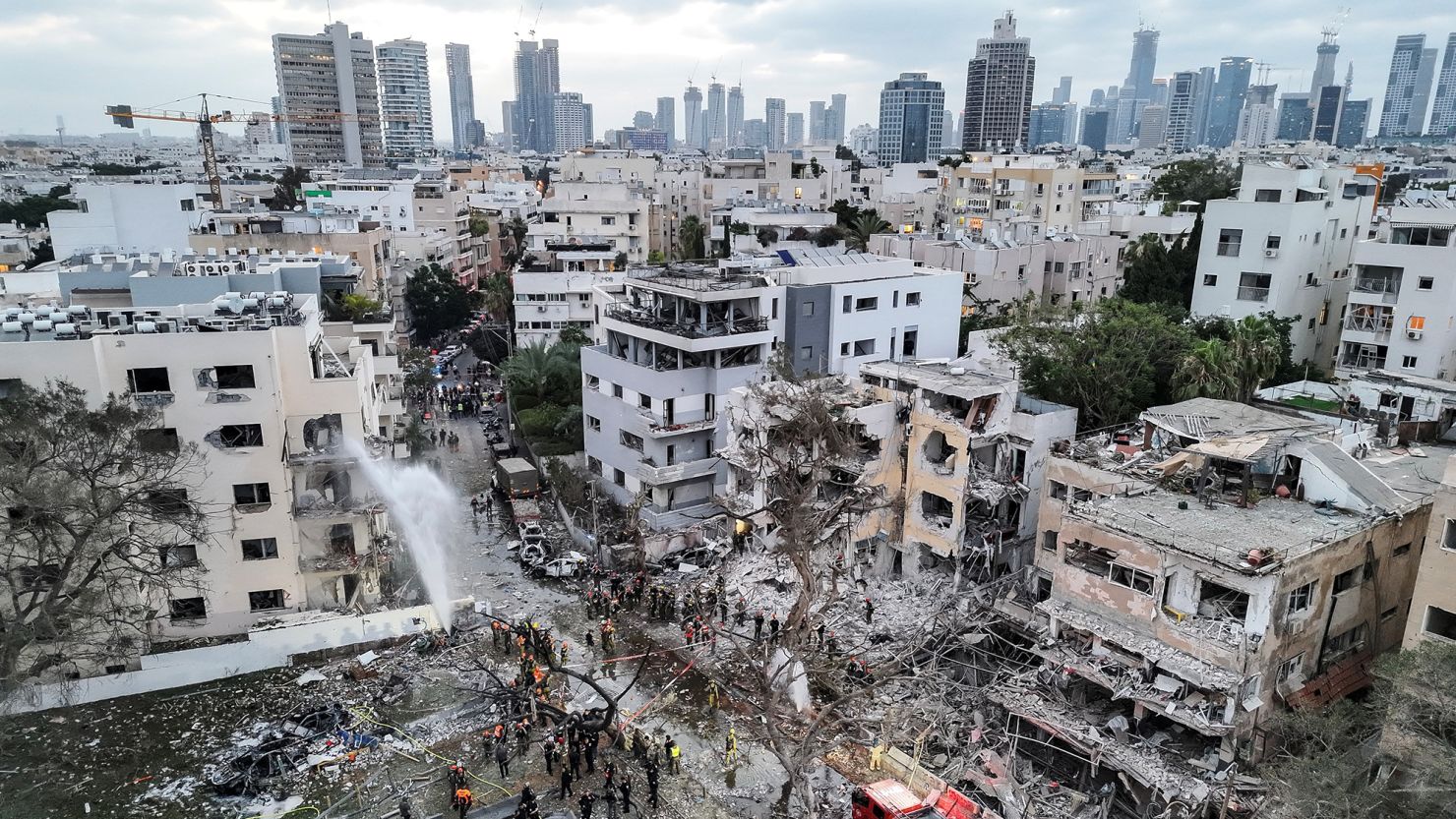
Tensions in the Middle East remain elevated following a period of heightened conflict between Iran and Israel. While reports indicate a return to a semblance of normalcy in Tehran after the activation of Iran’s air defense systems, the underlying geopolitical dynamics continue to fuel concerns about further escalation. The recent exchange of attacks underscores a decades-long rivalry between the two nations, rooted in ideological differences and regional power struggles. This article provides an overview of the current situation, the historical context of the conflict and potential implications for the wider region.
The immediate trigger for the recent escalation was Israel’s reported strike on the Iranian consulate in Damascus, Syria, on April 1st, 2024, which resulted in the deaths of several Iranian officials, including senior commanders of the Islamic Revolutionary Guard Corps (IRGC). Reuters reported that Iran vowed retaliation for the attack, which it characterized as a violation of international law and Iranian sovereignty. In response, Iran launched a barrage of drones and missiles towards Israel on April 13th, 2024, an attack that Israel and its allies, including the United States, the United Kingdom, and Jordan, largely intercepted. The scale of the Iranian attack marked a significant escalation in the direct confrontation between the two countries.
A History of Conflict: Nearly Half a Century of Hostility
The animosity between Iran and Israel dates back to the 1979 Islamic Revolution in Iran. As Franceinfo details, the new Iranian regime, led by Ayatollah Ruhollah Khomeini, fundamentally rejected the legitimacy of Israel and adopted a staunchly anti-Israel stance. Khomeini viewed Israel as a key proxy of the United States, which Iran also considered a major adversary – labeling the US the “Great Satan” and Israel the “Little Satan.” This ideological opposition quickly translated into active support for Palestinian militant groups and a commitment to opposing Israel’s existence.
Despite this open hostility, the relationship wasn’t always purely adversarial. During the Iran-Iraq War (1980-1988), Israel secretly provided arms to Iran, a policy driven by a strategic calculation to weaken Iraq, then led by Saddam Hussein, who was seen as a greater threat to Israeli security. This period illustrates a complex interplay of regional interests and shifting alliances. Although, with the conclude of the Iran-Iraq War, the focus returned to the core conflict with Israel. The RTBF reports that this period saw the beginning of a “war of shadows” characterized by covert operations, assassinations, and support for proxy groups.
Israel’s Concerns: Preventing a Nuclear Iran
A central concern for Israel has been preventing Iran from developing nuclear weapons. Israeli officials have repeatedly stated that a nuclear-armed Iran would pose an existential threat to the country. This concern has led to a series of covert actions aimed at disrupting Iran’s nuclear program, including alleged cyberattacks and the assassination of Iranian nuclear scientists. The Stuxnet virus, widely believed to be a joint Israeli-American creation, targeted Iran’s uranium enrichment facilities in the early 2010s, causing significant damage. Israel views Iran’s nuclear ambitions as a direct challenge to its security and regional dominance.

The Joint Comprehensive Plan of Action (JCPOA), also known as the Iran nuclear deal, signed in 2015, offered a temporary respite from escalating tensions. The agreement limited Iran’s nuclear program in exchange for sanctions relief. However, the United States unilaterally withdrew from the JCPOA in 2018 under the Trump administration, reimposing sanctions on Iran. This decision led Iran to gradually roll back its commitments under the agreement, raising concerns about its nuclear program once again. Negotiations to revive the JCPOA have stalled, further exacerbating tensions.
The Current Situation and Regional Implications
Following the Iranian attack on April 13th, Israel responded with a limited strike on Iranian soil on April 19th, 2024. Reports indicate that the Israeli strike targeted a facility near Isfahan, Iran, believed to be involved in the country’s nuclear program. While the attack was limited in scope, it represented a significant escalation, as it was the first time Israel had directly struck Iranian territory in response to an Iranian attack. According to reports from Le Monde, Israel has stated it “could have to act again” against Iran.

As of April 30th, 2026, Iranian state media reports that the situation in Tehran has returned to “normal” following the activation of the country’s air defense systems during the Israeli strike. However, the situation remains highly volatile. The potential for miscalculation and further escalation remains significant. The conflict has already spilled over into neighboring countries, with increased clashes between Israel and Hezbollah in Lebanon. Libération reports that at least 15 people have been killed in southern Lebanon following recent Israeli strikes, despite a ceasefire agreement. The involvement of other regional actors, such as the United States and Saudi Arabia, is crucial in preventing a wider conflict.
The broader implications of the conflict extend beyond the immediate region. Increased instability in the Middle East could disrupt global energy markets, impacting oil prices and supply chains. The conflict also has the potential to exacerbate existing humanitarian crises and create new refugee flows. The international community faces a critical challenge in de-escalating tensions and finding a diplomatic solution to the long-standing conflict between Iran and Israel.
Key Takeaways
- The conflict between Iran and Israel is deeply rooted in historical and ideological differences, dating back to the 1979 Islamic Revolution.
- Israel’s primary concern is preventing Iran from developing nuclear weapons, leading to covert operations and a focus on disrupting Iran’s nuclear program.
- The recent escalation was triggered by Israel’s strike on the Iranian consulate in Damascus and Iran’s subsequent retaliatory attack.
- The conflict has the potential to destabilize the wider Middle East region and disrupt global energy markets.
- Diplomatic efforts to de-escalate tensions and revive the JCPOA are crucial to preventing further escalation.
Looking ahead, the situation remains fluid and unpredictable. The next key development will be the response of the Iranian government to any further Israeli actions. International diplomatic efforts, particularly those led by the United States and regional powers, will be critical in preventing a wider conflict. The world will be watching closely as the situation unfolds, hoping for a peaceful resolution to this dangerous and complex crisis. We encourage readers to share their thoughts and perspectives on this critical issue in the comments below.