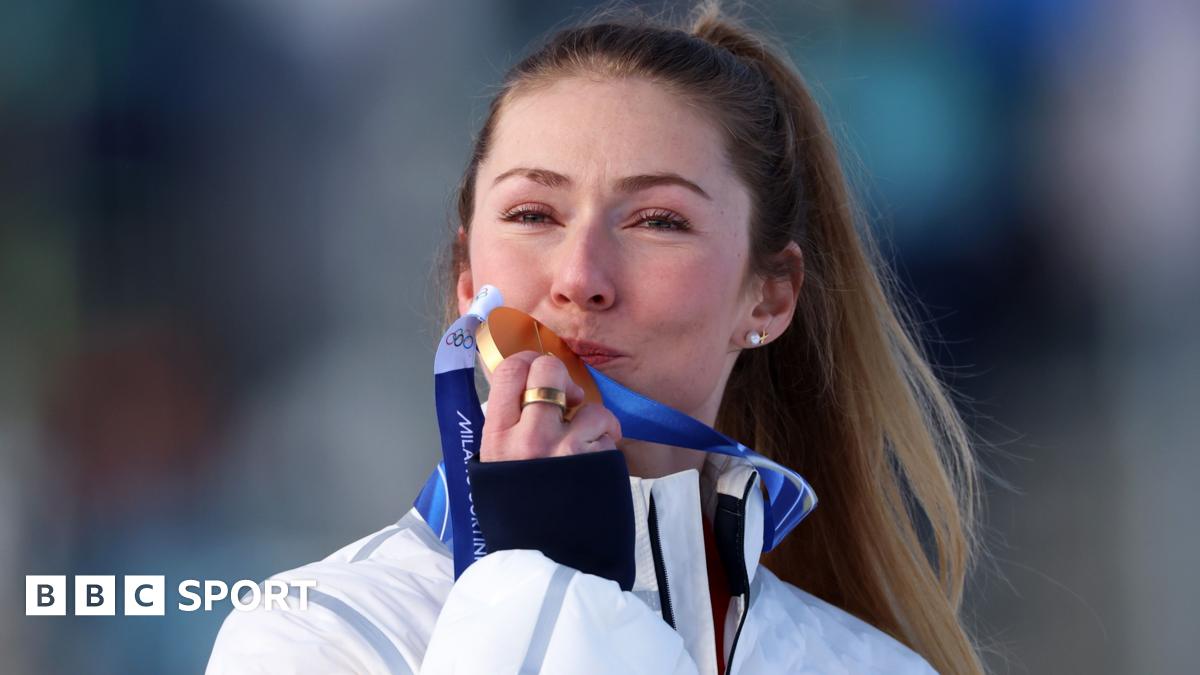
MILAN, Italy – Mikaela Shiffrin cemented her status as an alpine skiing icon on Wednesday, claiming gold in the women’s slalom at the 2026 Winter Olympics in Milan. The American racer, already a decorated champion, delivered a dominant performance, finishing with a commanding lead and adding to her impressive Olympic medal count. This victory is particularly poignant, coming after a period of personal and professional challenges, and is a testament to Shiffrin’s resilience and unwavering dedication to her sport. The win marks her third Olympic gold medal, following triumphs in Sochi in 2014 and Pyeongchang in 2018.
The 30-year-old Shiffrin navigated the challenging Italian course with precision and speed, finishing the two runs in a total time of 1:39:10. This victory wasn’t just about speed; it was about overcoming adversity and finding peace after a deeply personal loss. Shiffrin’s journey to this gold medal has been well-documented, including a period of grief and reflection following the death of her father, Jeff Shiffrin, in 2020. Her ability to perform at the highest level even as navigating such profound loss speaks volumes about her character and mental fortitude. The slalom is a demanding discipline, requiring not only technical skill but also unwavering focus and mental strength, qualities Shiffrin demonstrated in abundance.
A Triumph Forged in Resilience
Shiffrin’s path to Olympic glory hasn’t been without its obstacles. Following her father’s passing, she took a step back from the sport, describing the period as an “invisible injury” and openly discussing her struggles with mental health. The time away allowed her to process her grief and rediscover her passion for skiing. Returning to competition, she faced the pressure of expectations and the weight of past disappointments, including a challenging performance at the 2022 Beijing Olympics. However, she persevered, continuing to refine her technique and strengthen her mental game. This gold medal represents not only a sporting achievement but also a personal victory over adversity.
The American racer’s victory margin of 1.50 seconds was extraordinary, underscoring her dominance in the event. This wasn’t a close race; it was a statement. Shiffrin’s performance showcased her exceptional skill and experience, solidifying her position as one of the greatest slalom skiers of all time. The win also highlights the importance of mental well-being in elite sports, as Shiffrin has been a vocal advocate for prioritizing mental health alongside physical training. Her openness about her own struggles has resonated with athletes and fans alike, breaking down stigmas and encouraging others to seek help when needed.
Remembering Jeff Shiffrin
As Shiffrin celebrated her victory, her thoughts turned to her father, Jeff, who was not present to witness the moment. “For my dad, who didn’t obtain to see this,” she said, her voice filled with emotion. “This was a moment I had dreamed about. I have also been very scared of this moment.” She described the experience of achieving her dream without him as a new kind of experience, “like being born again.” Shiffrin spoke of learning to accept the reality of life without her father and finding a way to share the moment with him in silence. Jeff Shiffrin played a pivotal role in Mikaela’s development as an athlete, providing unwavering support and guidance throughout her career. Mikaela Shiffrin’s biography on Wikipedia details her early life and the influence of her parents.
The emotional weight of the victory was palpable, as Shiffrin embraced her mother and coaches. The moment served as a powerful reminder of the importance of family and the enduring bond between a daughter and her father. Shiffrin’s ability to channel her grief into motivation and achieve success on the world stage is an inspiration to athletes and individuals facing their own challenges. Her story is a testament to the power of resilience, determination, and the unwavering support of loved ones.
A Legacy of Excellence
With this latest gold medal, Mikaela Shiffrin continues to build a remarkable legacy in alpine skiing. She now boasts a total of four Olympic medals (three gold and one silver), alongside an impressive collection of World Championship medals – 15 in total, including eight gold. According to her Wikipedia page, Shiffrin also holds five overall World Cup titles (2017, 2018, 2019, 2022, 2023) and twelve discipline titles. Her dominance in the slalom is particularly noteworthy, with a record number of World Cup wins in the event.
Shiffrin’s success extends beyond the Olympic Games and World Championships. She has consistently performed at a high level on the World Cup circuit, earning a total of 108 World Cup wins as of February 2026 – the most of any alpine skier in history. This includes 71 slalom victories, 22 giant slalom victories, 5 super-G victories, 4 downhill victories, 1 combined victory, 3 city event victories, and 2 parallel slalom victories. Her consistent performance and unwavering dedication have earned her the respect of her peers and the admiration of fans around the world. She is widely regarded as one of the greatest alpine skiers of all time, and her legacy will continue to inspire generations of athletes to come.
Looking Ahead
While Shiffrin’s Olympic journey is far from over – she is expected to compete in the 2026 Games – this gold medal represents a significant milestone in her career. She has overcome numerous challenges and emerged as a champion, both on and off the slopes. Her commitment to mental health awareness and her willingness to share her personal struggles have made her a role model for athletes and individuals alike. As she continues to compete, Shiffrin will undoubtedly face new challenges and obstacles, but her resilience and determination will undoubtedly guide her to continued success. The next major event on her schedule is the World Cup finals in Soldeu, Andorra, in March 2026.
Shiffrin emphasized the importance of simply “showing up” for the race, acknowledging the mental and emotional toll of competition. “It’s so much work just to indicate up for two runs and do something that is within me and I know how to do,” she said. “It is not always uncomplicated. Sometimes it feels impossible. Today, it was to capture away the noise and be simple with it.” This approach reflects her growing maturity and her ability to focus on the task at hand, despite the pressures of expectation and the weight of her own ambitions.
The victory in Milan is a testament to Shiffrin’s unwavering commitment to her sport, her resilience in the face of adversity, and her ability to honor the memory of her father while continuing to pursue her dreams. It’s a story of triumph, loss, and the enduring power of the human spirit.
What happens next for Shiffrin? She will undoubtedly continue to compete at the highest level, aiming to add to her already impressive collection of medals and accolades. Her focus will likely be on maintaining her dominance in the slalom and expanding her success in other disciplines, such as giant slalom and super-G. She will also continue to advocate for mental health awareness and inspire others to overcome their own challenges. The 2026/2027 World Cup season promises to be another exciting chapter in the career of this remarkable athlete.
Do you have thoughts on Mikaela Shiffrin’s incredible journey? Share your comments below, and be sure to share this article with your friends and family!
Related reading