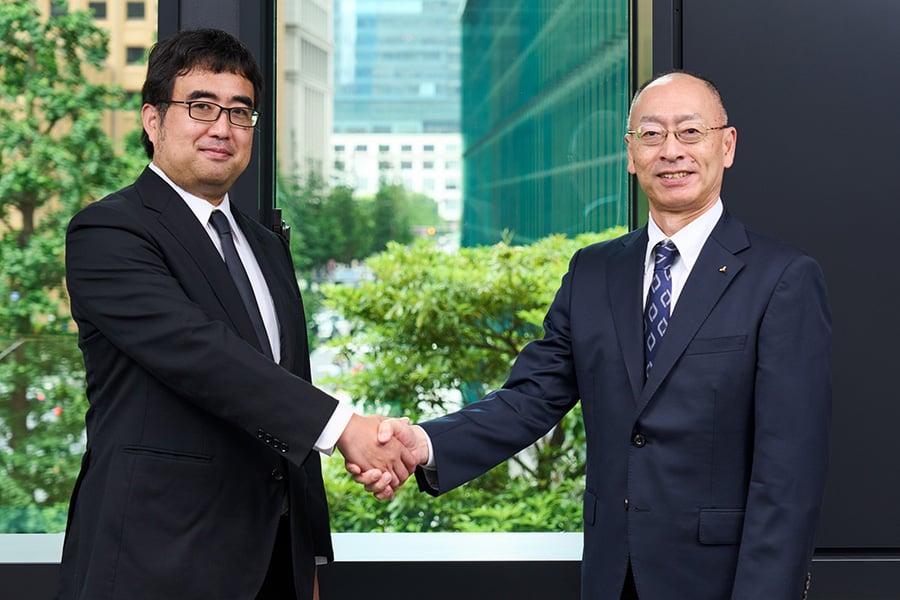
In a decisive move to fortify Japan’s technological sovereignty, Mitsubishi Heavy Industries, Ltd. (MHI) and Preferred Networks, Inc. (PFN) have announced a strategic business alliance aimed at the joint development of domestic artificial intelligence (AI) technologies. The partnership is specifically designed to target “mission-critical” domains, including social infrastructure and defense, where the reliability and security of AI systems are paramount to national stability and safety.
The collaboration represents a significant convergence between one of the world’s largest industrial conglomerates and Japan’s leading deep-tech AI specialist. By combining MHI’s extensive expertise in heavy industry, aerospace, and defense with PFN’s advanced capabilities in machine learning and neural networks, the two entities aim to accelerate the intelligence and autonomy of essential societal systems. This move comes at a time when global competition for AI leadership is intensifying, and the need for secure, localized technology in critical sectors has become a cornerstone of national economic security policies.
The core objective of the Mitsubishi Heavy Industries Preferred Networks AI partnership is to mitigate the risks associated with over-reliance on foreign-sourced AI technologies. For sectors such as energy management, transportation, and national defense, the integration of AI must be accompanied by unparalleled levels of predictability and security. By developing these capabilities domestically, MHI and PFN intend to build a resilient technological foundation that can withstand both cyber threats and geopolitical shifts.
Securing the Future of Mission-Critical Infrastructure
The term “mission-critical” serves as the guiding principle for this alliance. In the context of industrial operations, mission-critical refers to systems and processes where failure could result in catastrophic consequences for public safety, economic continuity, or national security. This includes power grids, maritime navigation, large-scale manufacturing, and advanced defense systems.
Traditional AI models, often developed by global technology giants, are frequently optimized for general-purpose tasks such as natural language processing or consumer-facing applications. However, the requirements for industrial and defense-grade AI are vastly different. These systems require high levels of “explainability”—the ability for human operators to understand why an AI made a specific decision—and must operate reliably in edge environments where connectivity might be limited or compromised.
Through this partnership, MHI and PFN will focus on developing AI that can facilitate the “intelligence and autonomy” of social infrastructure. This includes:
- Autonomous Maintenance: Utilizing AI to predict equipment failure in power plants or transport networks before it occurs, thereby preventing service disruptions.
- Optimized Resource Management: Implementing intelligent algorithms to manage energy distribution and reduce carbon footprints in large-scale industrial settings.
- Enhanced Defense Capabilities: Developing secure, domestic AI tools that support high-stakes decision-making in complex, rapidly changing environments.
By embedding AI directly into the hardware and systems that MHI provides to the world, the alliance seeks to transform static infrastructure into dynamic, self-optimizing networks.
A Strategic Synergy: Heavy Industry Meets Deep Tech
The partnership is a textbook example of a “hardware-meets-software” strategic alignment. Mitsubishi Heavy Industries brings a massive, physical footprint to the table. As a global leader in aerospace, energy, and defense, MHI possesses the real-world data, the complex machinery, and the operational environments necessary to test and deploy advanced AI at scale.
Preferred Networks, is widely recognized as a pioneer in the Japanese AI ecosystem. Known for its work in deep learning and its development of specialized hardware to accelerate AI training, PFN provides the sophisticated mathematical and computational frameworks required to power the next generation of autonomous systems. Their expertise allows for the creation of “domain-specific” AI—models that are not just broadly intelligent, but deeply knowledgeable about the physics and mechanics of the industrial world.
This synergy addresses a critical gap in the current AI landscape: the “reality gap.” Many AI models perform exceptionally well in digital simulations but struggle when faced with the unpredictable physical variables of the real world. By training AI models on the specific, high-fidelity data generated by MHI’s industrial assets, the partnership aims to bridge this gap, creating software that is as robust as the steel and turbines it controls.
The Economic Security Imperative and Potential Capital Integration
Beyond the technical benefits, the MHI-PFN alliance is deeply rooted in the concept of economic security. As nations increasingly view AI as a dual-use technology—capable of driving both economic growth and military prowess—the ability to control the entire stack, from hardware to the underlying algorithms, has become a strategic necessity. For Japan, fostering a domestic AI ecosystem is essential to maintaining its industrial edge and ensuring that its critical infrastructure remains under sovereign control.

Market analysts have noted that the depth of this cooperation may extend beyond a mere business alliance. Reports indicate that the two companies are exploring a potential capital and business alliance, which could involve more formal equity ties or integrated investment structures. Such a move would signal a long-term commitment to co-developing a unified technological standard for Japanese industry.
If a capital alliance is realized, it could serve as a blueprint for how traditional industrial giants and agile tech startups can integrate to compete in the age of intelligence. It would move the relationship from one of “client and vendor” to one of “strategic co-developers,” sharing both the risks and the significant rewards of pioneering new technological frontiers.
Key Takeaways: The MHI-PFN Alliance
- Strategic Focus: Co-development of domestic AI for mission-critical sectors, primarily social infrastructure and defense.
- Primary Goal: Enhancing the intelligence and autonomy of essential systems while ensuring technological sovereignty.
- Synergistic Model: Combines MHI’s industrial scale and physical assets with PFN’s advanced deep-learning expertise.
- Economic Context: Driven by the need to reduce reliance on foreign AI and bolster national economic security.
- Potential Evolution: The partnership may evolve into a formal capital alliance within the near term.
Looking Ahead: The Path to Implementation
The immediate focus for MHI and PFN will be the identification of specific pilot projects within MHI’s existing service portfolios. These projects will likely serve as the testing grounds for the first generation of “mission-critical” AI, providing the empirical data needed to refine models for broader deployment across the social infrastructure landscape.

As the global community watches the progress of domestic AI initiatives, the success of this partnership will be a key indicator of Japan’s ability to maintain its status as a global industrial powerhouse in an increasingly software-defined world. The integration of AI into the very fabric of heavy industry marks the beginning of a new era in how societies build, defend, and maintain their most essential systems.
The next major milestone for the partnership will be the formalization of the business alliance’s operational framework and any potential updates regarding the proposed capital tie-up. Stakeholders in the defense and energy sectors will be closely monitoring these developments for implications on procurement and technological standards.
For more updates on global industrial trends and technological shifts, please subscribe to our newsletter and share this analysis with your professional network. We welcome your comments and insights on the implications of this alliance in the comments section below.
Worth a look