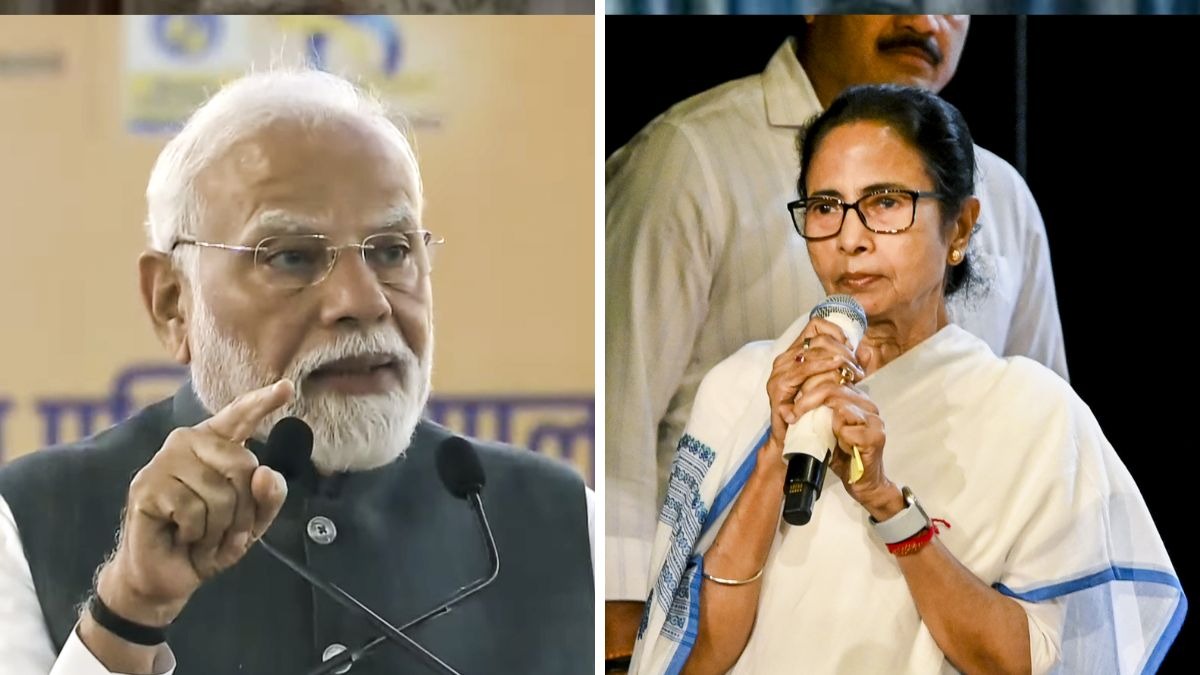
Political Clash Amidst Disaster: Modi & Banerjee Trade Barbs Over North Bengal Relief Efforts
As North Bengal reels from devastating landslides and floods that have claimed at least 30 lives, a political firestorm has erupted between the central government and the West Bengal governance. The immediate trigger? An alleged attack on two BJP leaders visiting flood-affected areas, sparking a heated exchange between Prime Minister Narendra Modi and Chief Minister Mamata Banerjee.But beneath the surface lies a complex interplay of disaster response, political maneuvering, and longstanding tensions. What does this escalating conflict mean for the victims of the disaster, and what does it reveal about the current state of Centre-State relations in India?
The recent torrential rains, exceeding seasonal averages, triggered catastrophic landslides and widespread flooding across North bengal, particularly impacting the Jalpaiguri, Alipurduar, and Cooch Behar districts. Rescue operations are ongoing, with authorities struggling to reach isolated communities and account for the missing. The scale of the devastation is immense, leaving thousands displaced and infrastructure severely damaged. Indian Meteorological Department – Rainfall Data provides detailed rainfall statistics for the region.
Amidst this crisis, the alleged assault on BJP MP Khagen Murmu and Siliguri MLA Sankar Ghosh in JalpaiguriS Nagrakata while they were visiting relief sites has ignited a political controversy. Reports indicate the leaders were attacked by a mob, though the circumstances surrounding the incident remain contested.
Prime Minister Modi swiftly condemned the attack, taking to social media platform X (formerly Twitter) to express his outrage. He accused the ruling Trinamool Congress (TMC) of insensitivity and highlighted the “pathetic law and order situation” in West Bengal. He urged the state government to prioritize relief efforts over political conflict and called on BJP workers to continue assisting with rescue operations. His statement can be found here.
Chief Minister Banerjee responded late on October 7th, vehemently criticizing the Prime minister for what she termed a “politicisation of a natural disaster.” She accused Modi of breaching “constitutional ethos” by making unverified allegations without waiting for a proper investigation. Banerjee emphasized the importance of due process and legal inquiry, asserting that accusations should not be based on “a tweet from a political pulpit.” her response is available here.
This exchange underscores a pattern of strained relations between the central government and the West Bengal administration. historically, Banerjee has been a vocal critic of Modi’s policies, and the state has often been a battleground for political clashes between the BJP and the TMC. Experts suggest this latest incident is less about the specific attack and more about leveraging the disaster for political gain.
“We’ve seen this playbook before,” explains dr. Subrata Mukherjee, a political science professor at the University of calcutta. “In times of crisis,both national and regional parties often attempt to demonstrate leadership and project an image of responsiveness. Unfortunately, this can sometimes come at the expense of a unified and effective disaster response.” University of Calcutta – Political Science Department
The immediate consequences of this political friction are concerning. Critics argue that the focus on blame-game distracts from the urgent need for coordinated relief efforts. Delays in aid distribution, hampered access to affected areas, and a lack of clear dialog are all potential outcomes of this escalating conflict. Furthermore, the politicization of the disaster risks exacerbating existing social tensions and hindering long-term recovery efforts.
Looking Ahead:
The situation in North Bengal remains critical. The focus must now shift towards providing immediate relief to those affected, restoring essential infrastructure, and preventing further loss of life.A collaborative approach between the central and state governments is paramount. Independent investigations into the alleged attack on the BJP leaders are crucial to ensure accountability and prevent further escalation.Ultimately, the victims of this disaster deserve a response based on compassion, cooperation, and a commitment to rebuilding their lives, not political point-scoring.
Evergreen Insights: Centre-State Relations in India & Disaster Management
The dynamic between the central government and state governments in India is often complex, shaped by political ideologies, regional aspirations, and constitutional frameworks. Disaster management further complicates this relationship, requiring seamless coordination and resource sharing. The Indian Constitution outlines a clear division of powers,but disaster response often necessitates a collaborative approach,leveraging the strengths of both levels of government.
Effective disaster management relies on several key pillars:
* Early Warning Systems: accurate and timely warnings are crucial for minimizing casualties.
* Preparedness:
Keep reading
- Supermarket Launches Zero-Sugar and Kids Zones for Targeted Shopping
- Trump Social Launching Paid Data Feed for Early Access to Posts
- Truck Fire Sparks Cáceres Wildforest Blaze and Evacuations on A-66 Highway (world-today-news.com)
- Why Christopher Nolan’s The Odyssey Sparks Endless Debate (news-usa.today)