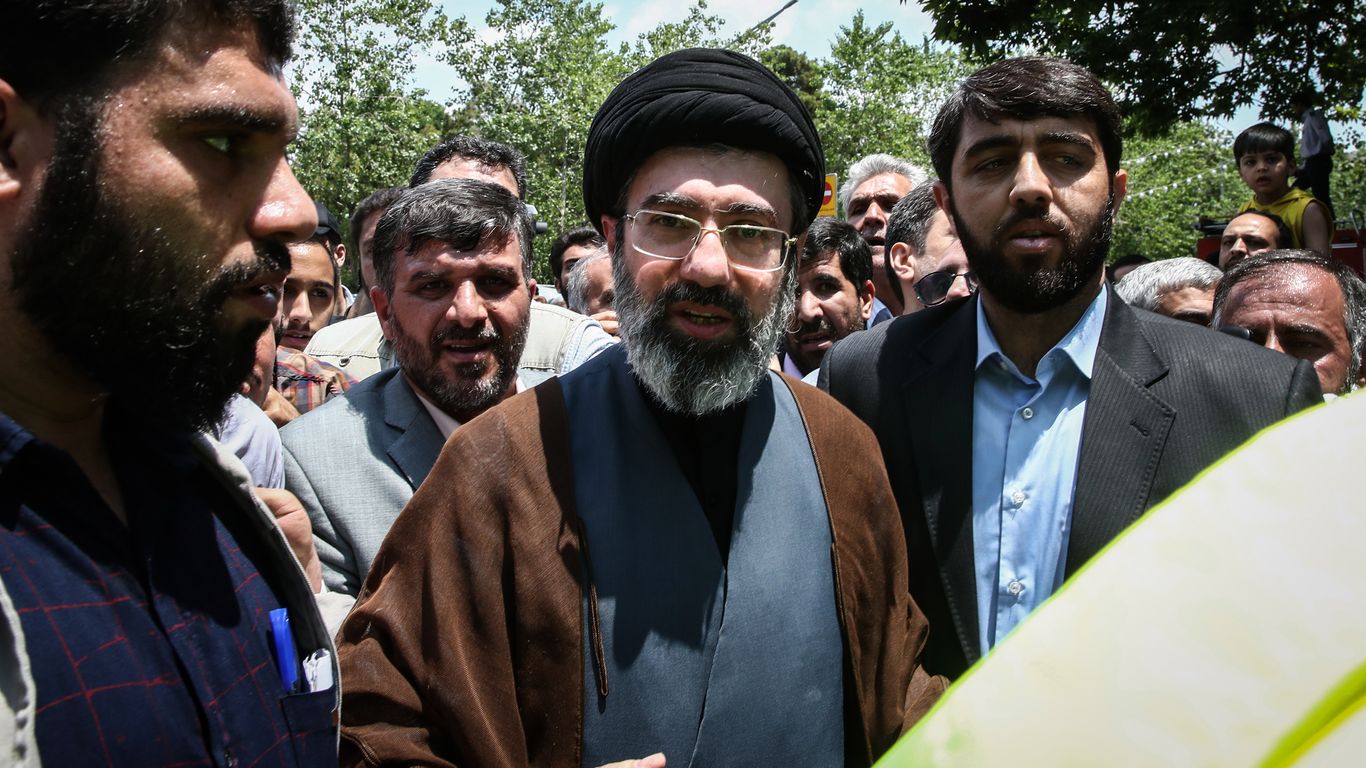
Tehran, Iran – In a dramatic shift of power following the assassination of Ayatollah Ali Khamenei, his son, Mojtaba Khamenei, has been selected as Iran’s latest supreme leader. The announcement, made by the Assembly of Experts on Sunday, March 8, 2026, comes amidst heightened tensions and ongoing military operations launched by the United States and Israel against Iran. This succession marks a significant moment for the Islamic Republic, consolidating hardline control at a time of unprecedented vulnerability and raising questions about the future direction of the nation.
The death of Ayatollah Ali Khamenei, who served as Iran’s supreme leader for 36 years, has created a power vacuum at a critical juncture. The attacks that claimed his life, along with those of several other high-ranking officials including top security advisor Ali Shamkhani, IRGC commander Mohammad Pakpour, and Defense Minister Aziz Nasirzadeh, represent a major escalation in regional conflict. The selection of Mojtaba Khamenei, a figure long considered a potential successor, signals a continuation of the existing political and ideological course, but also introduces a new dynamic shaped by his own background and affiliations.
The Assembly of Experts, the 88-member clerical body responsible for choosing the supreme leader, urged Iranians to unite behind Mojtaba Khamenei in a statement circulated through state media. Simultaneously, the Islamic Revolutionary Guard Corps (IRGC) pledged its full obedience to the new leader, according to reports from Tehran’s Farns news agency. This swift consolidation of support from key institutions underscores the urgency of maintaining stability in the wake of the attacks and the perceived demand for a strong, decisive leader.
A Dynasty Forged in Revolution and War
Mojtaba Khamenei, born in 1969, has been deeply embedded in Iran’s political and religious landscape since his youth. His upbringing was profoundly shaped by the 1979 Iranian Revolution and his father’s subsequent rise to power, first as president in 1981 and then as supreme leader in 1989. Unlike his father, who rose through the ranks of the clergy through traditional channels, Mojtaba’s path to power has been largely through his familial connection and his influence within the security apparatus.
He received his religious education under Ayatollah Mohammad Taghi Mesbah Yazdi, a hardline cleric known for his extremist views. Mesbah Yazdi reportedly advocated for the killing of Iranian youths who promoted “Western immorality,” a testament to the ideological fervor that shaped Mojtaba’s early years. This association has fueled concerns among critics about the potential for increased repression and a further tightening of social controls under his leadership.
At the age of 17, Mojtaba Khamenei joined the Revolutionary Guard, serving during the Iran-Iraq War in the Habib Battalion. This unit, described as a “notoriously ideological unit” by the Atlantic Council, was founded by one of the key figures behind Hezbollah. Many of its alumni went on to hold prominent positions within Iran’s security and intelligence agencies, highlighting the battalion’s role in cultivating a network of loyalists within the regime.
Consolidating Power and Allegations of Influence
Throughout his career, Mojtaba Khamenei has operated largely behind the scenes, cultivating deep ties within the IRGC and the broader security establishment. He has never held elected office, but his influence has been widely acknowledged, particularly in recent years as he was increasingly touted as a potential successor to his father. Critics have long raised concerns about his lack of formal experience and theological credentials, as well as the implications of establishing a dynastic succession in a system ostensibly based on merit and religious authority.
Allegations have surfaced suggesting Mojtaba Khamenei played a key role in the 2005 presidential election that brought Mahmoud Ahmadinejad to power. He is also accused of overseeing the IRGC’s brutal crackdown on protesters following the disputed 2009 presidential election, where widespread demonstrations challenged Ahmadinejad’s victory. These accusations, if substantiated, paint a picture of a figure willing to employ forceful tactics to maintain the regime’s grip on power.
Beyond his political maneuvering, Mojtaba Khamenei has reportedly amassed a significant personal fortune, overseeing a vast business empire of luxury properties and investments worldwide. A Bloomberg investigation in January 2026 detailed these holdings, revealing a complex network of assets that have allowed him to accumulate wealth despite U.S. Sanctions imposed in 2019 for his role in advancing his father’s policies. The U.S. Treasury Department stated at the time that Mojtaba worked to “advance his father’s destabilizing regional ambitions and oppressive domestic objectives.”
International Reactions and Future Implications
The appointment of Mojtaba Khamenei has drawn a range of reactions from the international community. Former U.S. President Donald Trump, in an interview with Axios on March 5, 2026, expressed his disapproval, labeling the younger Khamenei a “lightweight” and suggesting the need for U.S. Involvement in the succession process, drawing a parallel to the situation in Venezuela. This statement underscores the deep distrust between Washington and Tehran and the potential for further escalation in their already strained relationship.
The implications of Mojtaba Khamenei’s leadership extend beyond Iran’s domestic politics. His hardline stance and close ties to the IRGC are likely to exacerbate regional tensions and complicate efforts to revive the stalled nuclear negotiations. His ascent could also embolden proxy groups aligned with Iran, potentially leading to increased instability in countries like Lebanon, Syria, and Yemen.
The current situation represents a critical juncture for Iran. The country is grappling with the aftermath of the attacks that killed its supreme leader, facing economic hardship exacerbated by international sanctions, and navigating a complex geopolitical landscape. The choice of Mojtaba Khamenei as the new supreme leader signals a commitment to maintaining the existing ideological framework, but also raises concerns about the potential for increased repression and a more confrontational foreign policy.
Key Takeaways
- Succession Amidst Crisis: Mojtaba Khamenei assumes leadership following the assassination of his father and several other top Iranian officials.
- Hardline Continuity: His appointment is expected to reinforce the existing hardline policies of the Islamic Republic.
- Controversial Background: Mojtaba Khamenei’s lack of traditional religious credentials and alleged involvement in past crackdowns have drawn criticism.
- Economic Interests: Reports suggest he controls a substantial business empire, raising questions about transparency and accountability.
- Regional Implications: His leadership is likely to exacerbate regional tensions and complicate diplomatic efforts.
As Iran navigates this period of transition, the international community will be closely watching for signs of how Mojtaba Khamenei intends to govern. The next steps will be crucial in determining the future trajectory of the Islamic Republic and its role in the region. Further developments are expected as the Assembly of Experts formally ratifies his appointment and the IRGC reaffirms its commitment to the new leadership. The situation remains fluid, and continued monitoring is essential.
Do you have thoughts on this developing story? Share your perspectives in the comments below.
Keep reading