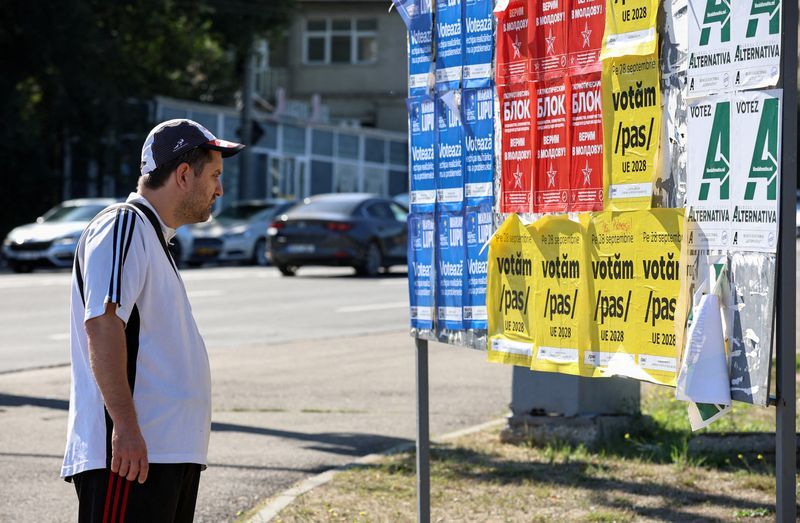
Moldova at a Crossroads: Election Tests pro-European Path Amidst Russian interference and Domestic Discontent
Moldova stands at a pivotal moment. As the nation prepares for a crucial parliamentary election on July 21st, the future direction of this small Eastern European country – and its relationship with both Russia and the European Union – hangs in the balance. The election isn’t simply a domestic affair; it’s a key battleground in the wider geopolitical struggle for influence in a region deeply impacted by the war in Ukraine. This analysis delves into the complexities of the Moldovan political landscape, the challenges facing the pro-European government, and the escalating concerns surrounding Russian interference.
A Fragile Pro-European Momentum
As gaining independence in 1991, Moldova has oscillated between pro-Russian and pro-European orientations.The current government, led by President maia Sandu and her party of Action and Solidarity (PAS), has firmly charted a course towards European integration, applying for EU membership in 2022 alongside Ukraine. This ambition, however, is facing significant headwinds.
Sandu’s vision of EU accession by 2030 is aspiring, requiring substantial legislative reforms and a demonstrable commitment to democratic principles. While a recent referendum on EU membership narrowly passed with just over 50% support, the result underscores the deep divisions within Moldovan society. The election outcome will be critical in determining weather this momentum can be sustained. A potential coalition government, as many analysts predict, could considerably slow down the integration process, possibly derailing Sandu’s timeline.
The Rise of Pro-Russian Opposition & Kremlin Interference
Challenging the pro-European agenda are opposition forces, notably the pro-Russian Patriotic Bloc and the nominally pro-European Alternative alliance. These groups are capitalizing on widespread public dissatisfaction with the slow pace of economic reforms, persistent corruption, and the rising cost of living. They are effectively tapping into a sense of disillusionment amongst voters who haven’t yet felt the tangible benefits of closer ties with Europe.
However, the situation is far more complex than simple domestic political maneuvering. Moldovan authorities, and Western governments, are increasingly vocal about direct interference from Moscow. President Sandu has publicly accused Russia of spending hundreds of millions of euros to influence the election, employing tactics ranging from disinformation campaigns to the recruitment of individuals to incite unrest.
Recent police raids, resulting in the arrest of 74 individuals, point to alleged Russian-backed efforts to destabilize the country. Intelligence reports suggest Russian operatives are even training moldovan citizens in Serbia on protest tactics. These allegations, while vehemently denied by Moscow, are supported by a pattern of similar activities observed in other countries bordering Russia. The US and EU have sanctioned individuals like Ilan Shor, a fugitive tycoon accused of being a Russian agent, who openly offered financial incentives to participate in anti-government protests.
Economic Hardship fuels Discontent
The economic context is crucial. Moldova is one of Europe’s poorest nations, and the war in Ukraine has exacerbated existing economic vulnerabilities. The disruption of energy supplies from Russia, coupled with global inflation, has led to soaring energy prices and a cost-of-living crisis. While Moldova has diversified its energy sources, primarily importing from Romania, the increased costs are felt acutely by the population. Inflation, though down from double digits in 2022, remains stubbornly around 7%.
This economic hardship is providing fertile ground for pro-Russian narratives that blame the current government’s pro-Western policies for the country’s woes. As Anastasia Pociumban of the German Council on Foreign Relations notes, “People don’t see, in their daily lives, the benefits of EU accession.”
Corruption & the Slow Pace of Reform
Despite coming to power in 2021 on a platform of good governance and anti-corruption, the PAS government has faced challenges in delivering on its promises. Reforms in key areas, especially the justice system, have been slow and incremental. This perceived lack of progress has fueled public cynicism and provided ammunition for opposition parties.
Eugen Muravschi, a researcher at WatchDog.MD, highlights the strategic objectives of pro-Russian forces: “The main goal is to mobilise pro-Russian voters, to demotivate and demobilise pro-European voters, and to create confusion among the undecided voters.”
The Diaspora Factor & Regional Implications
The Moldovan diaspora, a significant portion of the population seeking economic opportunities abroad, will play a crucial role in the election outcome. Historically, voters residing outside Moldova have consistently favored pro-european parties. However, accurately gauging the diaspora vote remains
Worth a look
- Python Hunters: Tracking Invaders in the Florida Everglades
- Who Was Kavinsky? The Story Behind the Artist of “Nightcall
- Nepo Babies in Power: The Rise of Political Dynasties in Latin America (newsdirectory3.com)
- Regular School Attendance Is Key to Unlocking Mississippi’s Future Success (news-usa.today)