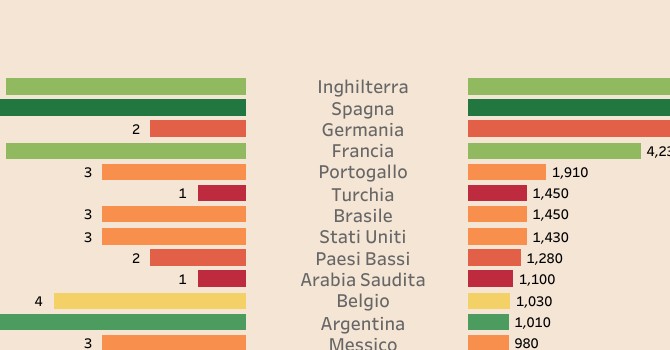
The financial dominance of elite clubs and national governing bodies continues to shape modern athletics, raising fundamental questions about the true cost of competitive success on the global stage. Following major international tournaments, sports economists and financial analysts frequently examine the direct correlation between substantial capital investment and tournament progression. According to financial data compiled during recent global showcases, including the 2026 FIFA World Cup cycle, the concentration of wealth among top-tier organizations heavily influences talent acquisition, infrastructural development, and long-term athletic performance.
As the business side of professional sports expands, understanding the mechanics behind these financial structures provides crucial context for fans, policymakers, and club executives alike. Industry reports published by organizations such as Deloitte highlight how broadcast revenues, sponsorship deals, and commercial partnerships dictate operational budgets across major leagues. These revenue streams determine not only which teams secure elite coaching and training facilities, but also how smaller federations manage to compete against heavily funded opponents.
Examining the economics of elite sports requires a close look at how broadcasting rights and commercial sponsorships have transformed the industry over the past three decades. According to financial disclosures from sports marketing agencies, global media rights values for premier football competitions have grown exponentially, driving up player valuations and club revenues simultaneously. This financial stratification often creates a significant performance gap between wealthier organizations and those operating on constrained budgets.
Clubs and national associations operating within major European and international leagues must balance aggressive commercial growth with regulatory frameworks designed to maintain competitive balance. Financial sustainability regulations, such as those implemented by governing bodies like UEFA, attempt to limit excessive spending relative to generated revenues. However, critics and economic analysts frequently debate whether these measures effectively bridge the gap or merely entrench the status quo among dominant market leaders.
The Role of Commercial Revenue and Broadcasting Rights
Broadcasting agreements remain the single largest source of income for elite football organizations, dwarfing traditional matchday ticket sales and merchandise revenue. According to financial reports released by sports media consultants, multi-billion-dollar television deals secure predictable, long-term cash flows for top-tier leagues. This steady influx of capital allows wealthy clubs to withstand economic downturns while continuing to invest heavily in squad depth and youth academies.
Smaller federations and lower-division clubs often struggle to capture comparable media attention, creating a disparity that affects overall market competitiveness. While international governing bodies distribute solidarity payments to support grassroots development, industry observers note that these allocations rarely offset the widening revenue chasm at the professional level. Consequently, talent scouting and player development models increasingly rely on identifying undervalued assets before larger market players intervene.
Sponsorship portfolios further compound these financial advantages, as globally recognized brands align primarily with winning teams and high-profile tournaments. Major multinational corporations commit hundreds of millions of dollars to secure tournament partnerships, ensuring that financial benefits concentrate heavily at the apex of the sport. This dynamic reinforces the commercial value of participating in marquee fixtures, turning athletic success into an essential driver of corporate revenue.
Regulatory Frameworks and Financial Sustainability
To counteract runaway inflation in transfer fees and player wages, regulatory bodies have introduced various governance models aimed at ensuring long-term fiscal responsibility. UEFA’s club licensing and financial sustainability regulations require participating teams to meet specific criteria regarding overdue payables, squad cost ratios, and overall profitability. Financial monitors track these metrics closely to penalize non-compliant entities through fines, transfer restrictions, or sporting sanctions.
Despite these oversight mechanisms, compliance challenges persist as wealthy owners find innovative ways to inject capital through related-party sponsorships and multi-club ownership models. Economic researchers emphasize that while transparency has improved, regulatory enforcement must continuously adapt to modern financial engineering within professional sports. Stakeholders awaiting upcoming rulings from sports arbitration courts continue to monitor how these legal and regulatory boundaries will evolve.
The next major checkpoint for international financial oversight will arrive with upcoming regulatory reviews scheduled by continental governing bodies later this year. Sports administrators and legal experts anticipate further adjustments to squad cost thresholds and ownership transparency rules. Readers seeking official updates, regulatory filings, and governance reports can consult the transparency portals hosted by recognized international sports authorities.
We welcome your perspective on the economics of modern sports—share your thoughts in the comments below.
Related reading