
Actress Emily Blunt maintains physical strength and functional mobility through a long-term training regimen developed by personal trainer Monique Eastwood. The routine focuses on arm strength, core stability, and power development to support the physical demands of her professional career and long-term health.
Eastwood, who has trained Blunt for over a decade, utilizes a methodology centered on three primary pillars: strength, mobility, and power. According to Eastwood, this approach is designed to enhance how the body moves in real-world scenarios rather than focusing solely on aesthetic muscle hypertrophy. This functional training style targets the kinetic chain, ensuring that strength in the arms and core translates to improved balance and injury prevention.
What defines the functional strength approach used by Monique Eastwood?
Functional strength training differs from traditional bodybuilding by prioritizing movements that mimic daily activities or athletic requirements. Instead of isolating single muscles, this method emphasizes compound movements that engage multiple joints and muscle groups simultaneously. For Blunt, the focus on arms and the core serves as a foundation for total-body stability.
The training incorporates specific modalities to address the three pillars mentioned by Eastwood:
- Strength: Utilizing resistance to increase the force-generating capacity of muscles, particularly in the upper body and midsection.
- Mobility: Enhancing the ability of joints to move actively through a full range of motion, which is distinct from passive flexibility.
- Power: Developing the ability to exert force quickly, which is essential for explosive movements and maintaining agility.
By integrating these elements, the routine aims to build a body that is not only strong but also resilient to the stresses of high-intensity filming schedules and aging. This methodology aligns with current sports science recommendations for maintaining high-level physical performance across different life stages.
Why are arm and core strength critical for long-term health?
As individuals age, maintaining muscle mass and core stability becomes a medical priority. Sarcopenia, the age-related loss of skeletal muscle mass and strength, begins to accelerate in middle age. According to the National Institute on Aging, regular resistance training is one of the most effective interventions to combat this decline.
The Role of Core Stability
The “core” encompasses more than just the abdominal muscles; it includes the diaphragm, the muscles of the pelvic floor, and the muscles surrounding the spine. A strong core provides a stable base for all other movements. When the core is stable, the body can more efficiently transfer force from the lower body to the upper body. This stability is vital for protecting the lumbar spine and reducing the risk of chronic back pain, a common issue in aging populations.
Upper Body Strength and Functional Independence
Strength in the arms and shoulders is a key indicator of functional independence. Tasks such as lifting objects, carrying groceries, or even maintaining posture require consistent upper-body engagement. For professionals like Blunt, who may undergo physical transformations for roles, maintaining this strength ensures that the body can handle the increased mechanical load of repetitive movements or heavy costumes and equipment.
The science of mobility versus flexibility
A common misconception in fitness is the conflation of mobility and flexibility. While they are related, they serve different physiological purposes in a training program like the one Eastwood provides for Blunt.
Flexibility refers to the passive range of motion of a muscle, often achieved through static stretching. Mobility, however, is the ability to control a joint through its range of motion actively. Medical professionals often emphasize mobility because it involves neuromuscular control. If a person has flexibility but lacks the strength to control that range, they are at a higher risk of injury.
For a training program to be effective in building “power,” as Eastwood describes, the athlete must possess the mobility to reach the necessary positions without compromising joint integrity. For example, sufficient shoulder mobility is required to perform overhead presses safely, while hip mobility is essential for generating power in the lower body. By focusing on mobility, the training ensures that Blunt’s strength is applied through a safe and efficient range of motion.
How resistance training impacts metabolic and bone health
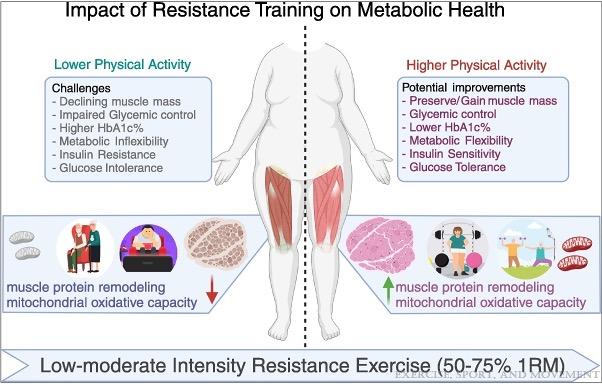
Beyond the immediate benefits of strength and appearance, the type of training described by Eastwood has significant implications for metabolic health and bone density. For women in their 40s, these factors become increasingly critical due to hormonal shifts.
Bone Density and Osteoporosis Prevention
Weight-bearing and resistance exercises are primary drivers of bone remodeling. When muscles pull on bones during strength training, it stimulates osteoblasts—the cells responsible for bone formation. This process is essential for maintaining bone mineral density and reducing the risk of osteoporosis, particularly as women transition through perimenopause and menopause.
Metabolic Regulation
Muscle tissue is metabolically active, meaning it requires more energy to maintain than fat tissue. Increasing lean muscle mass through strength training can improve insulin sensitivity and basal metabolic rate (BMR). This helps in regulating blood glucose levels and managing body composition, which are key components of long-term cardiovascular health.
Implementing a strength-based routine safely
While the specifics of a celebrity’s routine are often kept private, the principles of Eastwood’s approach can be applied to general fitness with proper guidance. To replicate the benefits of a strength, mobility, and power-focused program, practitioners should consider the following evidence-based guidelines:
- Progressive Overload: To continue building strength, the resistance or intensity must gradually increase over time.
- Compound Movements: Prioritize exercises like presses, rows, and carries that engage multiple muscle groups.
- Controlled Tempo: Focus on the eccentric (lowering) phase of movements to build control and improve mobility.
- Consistency: Long-term adaptations in muscle and bone density require regular, scheduled training sessions.
Individuals starting a new strength or power program should consult with a healthcare provider or a certified fitness professional to ensure the movements are appropriate for their current physical condition and to mitigate the risk of injury.
As fitness science continues to evolve, the emphasis on functional longevity—building a body that performs well in real-world environments—is expected to remain a cornerstone of high-performance training.
The next scheduled update regarding professional fitness trends or celebrity health reports will be released following the upcoming international health and wellness summits. We encourage you to share this article and comment below with your thoughts on functional training.
Related reading