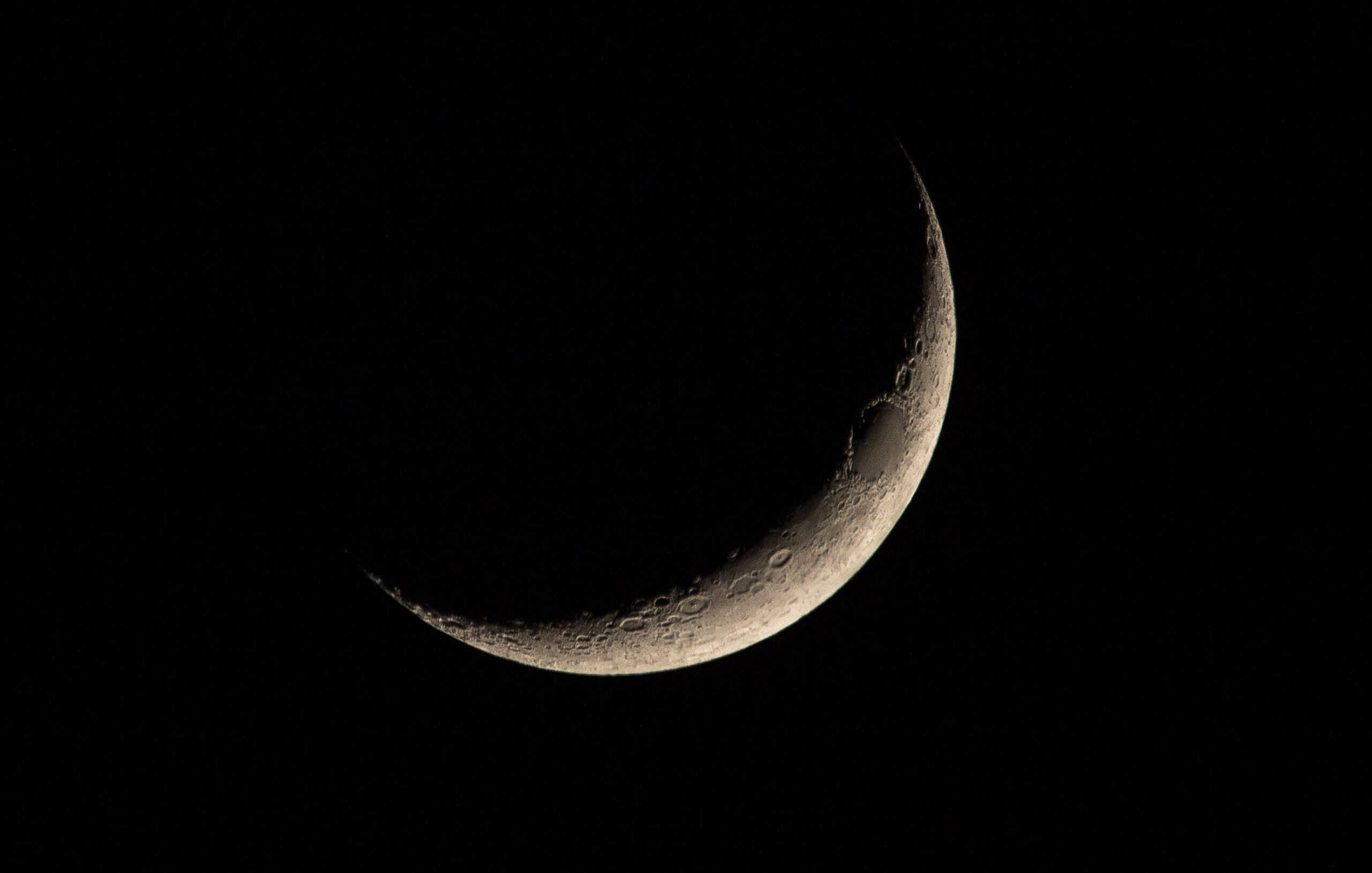
On Saturday, June 13, 2026, the Moon will be in its waning crescent phase as it approaches the new moon scheduled for June 15. This phase is characterized by a thin sliver of illumination visible in the eastern sky during the pre-dawn hours, providing minimal light interference for nocturnal observers and astronomers.
The waning crescent represents the final stage of the lunar cycle before the Moon enters its new moon phase. During this period, the illuminated portion of the Moon is shrinking, moving from the last quarter toward the sun from the perspective of Earth. Because the Moon’s brightness is significantly reduced, the night sky remains dark, which benefits deep-space observation.
The Mechanics of the Waning Crescent Phase
The waning crescent phase occurs when the Moon is positioned between the Earth and the Sun, but slightly to the side, such that only a small portion of its illuminated side is visible from our vantage point. As the Moon continues its orbit, the sliver of light becomes thinner each night until the Moon is positioned almost directly between the Earth and the Sun.
Astronomical data indicates that during the waning crescent, the Moon rises in the early morning hours, typically after midnight, and sets shortly after sunrise. For observers in the Northern Hemisphere, the illuminated crescent appears on the left side of the lunar disk. This geometric positioning explains why the Moon is most visible in the eastern sky just before dawn.
The low level of lunar illumination during this stage has specific implications for environmental conditions. With less reflected sunlight hitting the Earth’s surface, nocturnal animals often experience more natural light cycles, and the lack of moonlight allows for clearer views of the Milky Way and distant nebulae.
Observation Guide for June 13, 2026
To observe the waning crescent on June 13, 2026, timing is the most critical factor. Because the Moon is nearing its new moon phase, it will not be visible during the evening hours. Instead, observers should look toward the eastern horizon in the hours immediately preceding sunrise.
For those using optical equipment, the following settings and conditions are recommended:
- Timing: Between 3:00 AM and dawn.
- Location: An area with a clear view of the eastern horizon, away from heavy urban light pollution.
- Binoculars: A standard pair of 7×50 or 10×50 binoculars can reveal the texture of the lunar craters along the “terminator” line—the boundary between the dark and light sides of the Moon.
- Telescopes: Low-magnification telescopes are effective for capturing the crescent shape, while higher magnification can highlight the rugged terrain of the lunar highlands.
- Photography: For astrophotographers, using a wide-aperture lens and a tripod is essential. The low light of a waning crescent requires longer exposure times to capture the subtle details of the lunar surface against the dark sky.
Tidal Impacts and Environmental Effects
The lunar cycle directly influences Earth’s ocean tides through gravitational pull. During the transition from the last quarter to the new moon, the Earth experiences neap tides. These are periods of moderate tidal range, where the difference between high and low tide is at its smallest.
Neap tides occur because the Sun and the Moon are at approximately right angles to each other relative to Earth, partially canceling out each other’s gravitational pull. For coastal residents and maritime activities, this results in less dramatic water movement compared to the “spring tides” seen during full or new moons. Surfers and sailors often monitor these phases to predict wave energy and current strength, as the waning crescent period tends to produce calmer, more predictable water conditions.
June 2026 Lunar Calendar Overview
Understanding the position of the Moon on June 13 requires context within the broader June 2026 lunar cycle. The month features several key transitions that affect visibility and tidal patterns.
| Date (2026) | Lunar Phase | Significance |
|---|---|---|
| June 1 | Full Moon | Maximum illumination; highest tidal range (Spring Tide). |
| June 8 | Last Quarter | Moon is half-illuminated; visible in the morning sky. |
| June 13 | Waning Crescent | Thin sliver visible pre-dawn; approaching New Moon. |
| June 15 | New Moon | Zero visible illumination; optimal for stargazing. |
| June 23 | First Quarter | Half-illuminated; visible in the afternoon and evening. |
| June 30 | Full Moon | Return to maximum illumination. |
Frequently Asked Questions
Will the Moon be visible on the night of June 13?
No. Because it is in a waning phase approaching the new moon, the Moon will not rise until the early morning hours. It will not be present in the sky during the evening or early night.
Is the waning crescent good for stargazing?
Yes. The waning crescent provides very little light pollution. This makes the night of June 13 and the following night of June 14 some of the best times in the month for observing faint stars, planets, and deep-sky objects.
How does the waning crescent differ from a waxing crescent?
A waxing crescent appears in the evening sky after sunset and grows larger each night as it moves toward a full moon. A waning crescent appears in the early morning sky before sunrise and grows smaller each night as it moves toward a new moon.
The next major lunar event is the New Moon on June 15, 2026, which will mark the beginning of a new lunar cycle and provide the darkest skies for astronomical observation.
What are your favorite tips for nighttime stargazing? Share your experiences and questions in the comments below.