
The United States government has not issued a formal order for the withdrawal of Anthropic’s Claude services. However, federal agencies are significantly increasing oversight through the AI Safety Institute and mandates under the recent Executive Order on AI, requiring developers of frontier models to share safety testing data and undergo rigorous “red-teaming” to mitigate national security risks.
Recent reports concerning potential service suspensions have centered on the intensifying relationship between the White House and leading artificial intelligence developers. While some discussions have suggested the possibility of government-mandated service withdrawals, current federal actions focus on transparency, mandatory reporting, and the establishment of safety benchmarks rather than the immediate removal of existing AI models from the market.
Anthropic, a leading competitor in the generative AI space, remains under the scrutiny of the U.S. Department of Commerce and the National Institute of Standards and Technology (NIST). This scrutiny follows the implementation of the Executive Order on the Safe, Secure, and Trustworthy Development and Use of Artificial Intelligence, which targets “frontier” models that possess capabilities posing potential risks to national security, economic stability, or public health.
What is driving U.S. government scrutiny of Anthropic?
The primary driver of increased oversight is the concern that large language models (LLMs) could be leveraged to facilitate cyberattacks, develop biological weapons, or engage in large-scale disinformation campaigns. Under the current regulatory framework, companies developing models that exceed specific computational thresholds—measured in floating-point operations (FLOPs)—are required to notify the federal government and share the results of their safety evaluations.
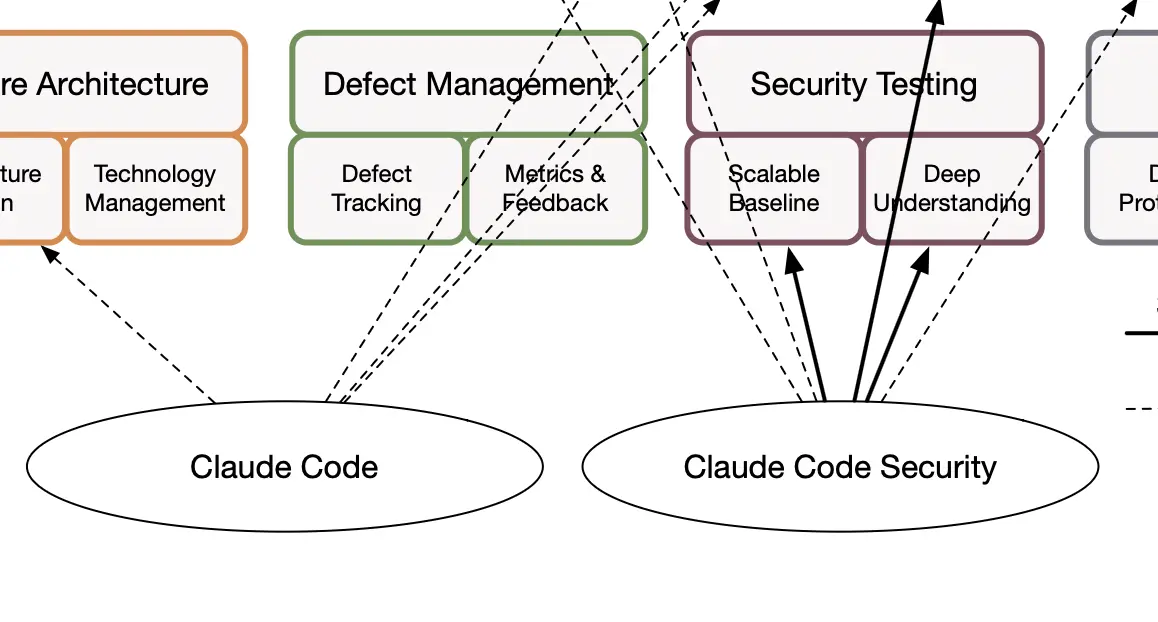
Anthropic’s development of the Claude series has placed it directly within this regulatory spotlight. Because Claude is designed with a specific focus on “Constitutional AI”—a method where the model is trained to follow a set of predefined principles—the company is often at the center of debates regarding how much control developers should have over a model’s “moral” or “safety” constraints. Federal regulators are currently evaluating whether these internal safety protocols are sufficient to prevent the misuse of AI in high-stakes environments.
According to recent policy discussions within the Department of Commerce, the goal is not to stifle innovation but to ensure that the “race to AI supremacy” does not bypass critical safety guardrails. This includes “red-teaming,” a process where experts attempt to bypass a model’s safety filters to identify vulnerabilities. The government is moving toward making these red-teaming results a standard part of the regulatory compliance process for all major AI providers.
How do federal AI safety mandates work?
The mechanism for government intervention is largely defined by the guidelines established by the AI Safety Institute (AISI), which operates under NIST. Rather than an immediate “on/off” switch for services, the government utilizes a series of escalating requirements designed to ensure model stability and security.
- Mandatory Reporting: Developers must inform the government when they begin training a model that reaches a certain level of computing power.
- Safety Test Sharing: Companies are required to submit detailed summaries of their safety testing, including how they addressed potential risks related to chemical, biological, radiological, and nuclear (CBRN) threats.
- Standardized Benchmarking: NIST is working to develop standardized tests that all AI companies must pass to prove their models are not prone to “hallucinations” or malicious manipulation.
If a model is found to pose an imminent and unmitigated threat to national security, the government possesses the authority to impose restrictions on its deployment or usage. However, such a move would represent an unprecedented step in the tech industry and would likely face significant legal challenges regarding the First Amendment and commerce regulations.
The debate between rapid innovation and security oversight
The tension between the speed of AI deployment and the necessity of government oversight has created a rift within the technology sector. On one side, developers argue that overly stringent regulations could cede technological leadership to geopolitical rivals, particularly China, which is also aggressively pursuing AI capabilities.
On the other side, security experts and policymakers argue that the “move fast and break things” mentality of previous tech eras is unsuitable for artificial intelligence. The potential for an AI model to provide actionable instructions for creating hazardous materials or executing sophisticated cyber warfare makes the stakes fundamentally different from previous software revolutions.
Anthropic has positioned itself as a “safety-first” company, often cooperating with researchers to demonstrate the efficacy of its Constitutional AI approach. This strategy is intended to preempt more heavy-handed regulation by proving that the industry can self-regulate effectively. However, the effectiveness of these self-imposed constraints remains a subject of intense debate among federal regulators.
Comparing U.S. and European AI regulatory approaches
To understand the trajectory of the U.S. approach, it is necessary to compare it with the European Union’s Artificial Intelligence Act (EU AI Act), which represents a more structured and prescriptive legal framework. While the U.S. currently relies heavily on Executive Orders and agency-led guidelines, the EU has moved toward a formal, tiered system of regulation based on the “risk level” of the AI application.

| Feature | United States (Executive Order/NIST) | European Union (AI Act) |
|---|---|---|
| Primary Mechanism | Executive Orders and agency guidelines | Comprehensive legislation (AI Act) |
| Regulatory Style | Sector-specific and risk-based reporting | Strict, tiered risk classification |
| Enforcement Focus | National security and critical infrastructure | Fundamental rights and consumer safety |
| Compliance Driver | Voluntary cooperation and agency mandates | Heavy fines for non-compliance |
The U.S. strategy is widely viewed as more flexible, allowing for rapid adjustments as technology evolves, but critics argue it lacks the teeth necessary to ensure global compliance. Conversely, the EU approach provides much greater certainty for businesses regarding legal requirements but is often criticized for potentially stifling the very innovation it seeks to regulate.
Market implications for AI developers and investors
For investors and stakeholders in the AI ecosystem, the current regulatory environment introduces a new layer of “compliance risk.” The uncertainty regarding exactly how the U.S. government will define “unacceptable risk” can influence capital allocation and the timelines for product launches. Companies that can demonstrate high levels of transparency and robust safety frameworks, such as Anthropic, may find themselves at a competitive advantage in securing government contracts and enterprise-level partnerships.
Furthermore, the potential for “interoperability” issues—where a model approved in the U.S. may not meet the criteria for the EU market—adds complexity to the global business models of AI firms. As the industry matures, the ability to navigate these diverging regulatory landscapes will likely become as important as the underlying technical capabilities of the models themselves.
The next significant checkpoint in this regulatory evolution will be the release of the first set of standardized safety benchmarks by the NIST AI Safety Institute. These benchmarks will serve as the litmus test for whether current AI safety protocols are sufficient or if more drastic government interventions, including service restrictions, will become necessary.
What are your thoughts on the balance between AI innovation and government oversight? Share this article and join the conversation in the comments below.