The cinematic world has long struggled to translate the visceral, high-stakes energy of fighting games to the silver screen. Often, these adaptations fall into the trap of over-explaining their lore or stripping away the very elements that made the source material iconic. With the release of “Mortal Kombat II,” director Simon McQuoid returns to the helm, attempting to balance a fan-driven desire for carnage with the structural requirements of a feature film.
As an editor who has watched the evolution of the “video game movie” from the campy failures of the 1990s to the polished successes of today, I find “Mortal Kombat II” to be a fascinating case study in polarizing entertainment. It is a film that seems to exist in two different states: it is simultaneously a chaotic, narrative mess and a high-octane thrill ride that delivers exactly what its core audience craves. For some, it is a “guilty pleasure”; for others, it is an exercise in sensory overload.
At its core, the sequel doubles down on the spectacle. While the first reboot focused on establishing the stakes of the tournament, the second installment throws the viewer directly into the deep end of Outworld’s brutality. The film is an R-rated assault on the senses, characterized by non-stop fight sequences and a commitment to the “fatalities” that defined the gaming franchise. However, this commitment to action comes at a steep cost to the storytelling, leaving the plot feeling more like a series of connective tissues between battles than a coherent narrative.
The central conflict revolves around the sinister realm of Outworld and its intent to conquer Earthrealm. This invasion is spearheaded by the formidable Emperor Shao Kahn, played by Martyn Ford, who portrays the villain as an inevitable, Thanos-like force of nature. The stakes are high, but the journey to the climax is often confounding, leaving even seasoned fans of the lore wondering how certain characters ended up in specific situations.
The Debut of Johnny Cage and the Ensemble Dynamic
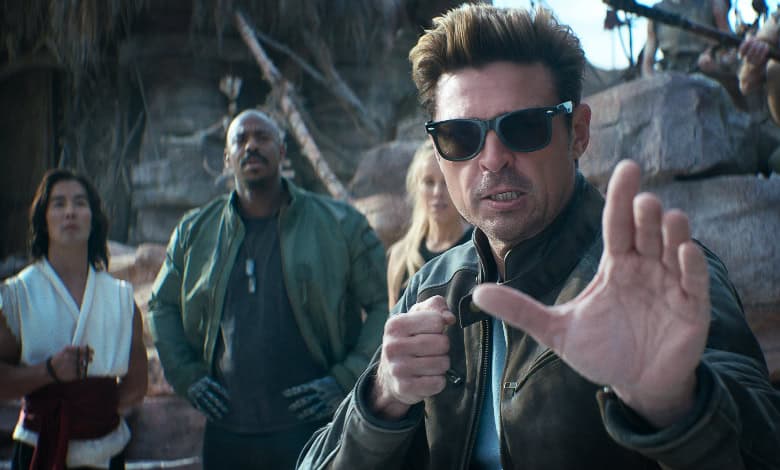
The most anticipated addition to the cast is undoubtedly Karl Urban, who makes his debut as the arrogant yet charismatic movie star Johnny Cage. Urban handles the absurd nature of the character with a level of humor and confidence that provides a necessary counterbalance to the film’s grim atmosphere. His portrayal of a washed-up action hero summoned to save the world is the film’s strongest asset, offering a rare glimpse of genuine charisma amidst the chaos.

While Urban shines, the supporting ensemble receives a more mixed reception. Adeline Rudolph delivers a fierce performance as Kitana, managing to bring a sense of urgency to her role. Meanwhile, Jessica McNamee and Mehcad Brooks return as Sonya Blade and Jax, respectively, providing stable, if unremarkable, turns. Josh Lawson’s portrayal of the wisecracking warrior Kano remains a highlight for those who appreciate the character’s rogue persona, though his motivations within this specific plot are often opaque.
The film’s approach to its characters is largely ensemble-based, which unfortunately works against the development of any single emotional arc. By splitting the focus between Johnny Cage and Kitana, the movie ensures that neither receives the depth necessary to make their heroism feel earned. The result is a cast of “cardboard champions” who are more defined by their fighting styles than their personalities.
Action as the Primary Language
If “Mortal Kombat II” fails as a traditional piece of cinema, it succeeds as a showcase for fight choreography. Simon McQuoid understands how to make over-the-top slugfests “pop” on screen. From the deployment of fireballs to the use of massive, otherworldly weapons, the battle sequences are executed with a precision that rivals the high-energy action of a “John Wick” film. For viewers seeking “cool kills” and visceral combat, the film delivers in spades.
However, the sheer volume of combat becomes a double-edged sword. With a running time of approximately 116 minutes, the relentless pace of the fights can leave some viewers feeling woozy. The film relies heavily on green-screen backdrops of lava and gravel, which, while visually striking in isolated moments, can feel repetitive over two hours. The action is the only part of the movie that feels fully realized, making the dialogue-heavy scenes feel like interruptions rather than essential plot progression.
Narrative Gaps and the “Fan Service” Trap
The most significant hurdle for “Mortal Kombat II” is its confounding story. The plot introduces elements—such as a mysterious and vital amulet—that are mentioned but never given sufficient weight in the grand scheme of the movie. Subplots are introduced and abandoned and the moral ambiguity of Johnny Cage’s transition from a narcissist to a hero is barely explored.
Here’s the classic “fan service” trap: the creators assume that because the audience knows the characters from the games, the movie does not need to provide a traditional narrative structure. For the hardcore fan, these gaps are easily filled with external knowledge. For the casual moviegoer, however, the experience can be alienating. The film asks the audience to accept absurdities—such as a wounded warrior floating in a coma-like state—without providing the necessary context to make those moments meaningful.
In many ways, the film feels less like a structured movie and more like a collection of high-budget game clips. It is as if the studio provided a “satchel of quarters” and told the audience to have fun at the arcade. While this approach is liberating for those who only care about the spectacle, it prevents the film from achieving the status of a truly great adaptation.
Verdict: A Guilty Pleasure for the Hardcore
“Mortal Kombat II” is a movie that refuses to play by the rules of traditional filmmaking. It is silly, it is bloated, and it is often a mess. Yet, there is something undeniably infectious about its commitment to being a “guilty pleasure.” It does not take itself seriously, and in doing so, it manages to be fun in a way that transcends its technical flaws.

For those who want to see Karl Urban bring Johnny Cage to life and witness some of the most imaginative violence put to film this year, “Mortal Kombat II” is a must-watch. For those seeking a cohesive story with emotional resonance, it may be a frustrating experience. It is a film designed for the “basement-dwelling diehards” and the gaming community, prioritizing the “Kombat” over the “Plot.”
As the franchise continues to expand, the challenge for future installments will be to integrate this high-level action with a story that respects the intelligence of the audience. Until then, we are left with a sequel that is as mind-numbing as it is exhilarating.
The film is currently playing in theaters, including IMDb listed formats and IMAX screens, where the visual scale of Outworld is most apparent. Produced by Warner Bros. Pictures, the movie serves as a litmus test for how much “fan service” a modern audience can tolerate before the narrative collapses.
With the initial critical wave now complete, all eyes turn to the box office returns to see if the “guilty pleasure” appeal translates into commercial success. We will be monitoring the official financial reports following the opening weekend for a clearer picture of the film’s impact.
What did you think of Karl Urban’s Johnny Cage? Did the action make up for the plot gaps? Share your thoughts in the comments below.